
There are six SaaS pricing models that matter: flat rate, tiered, per seat, usage based, hybrid, and freemium. Listing them is the easy part, and most guides stop there. The decisions that actually carry risk are choosing one from how your product delivers value, and testing that choice with customers before your whole base lives inside it.
This guide compresses the model list into one section, then spends its time on those two decisions.
The six SaaS pricing models
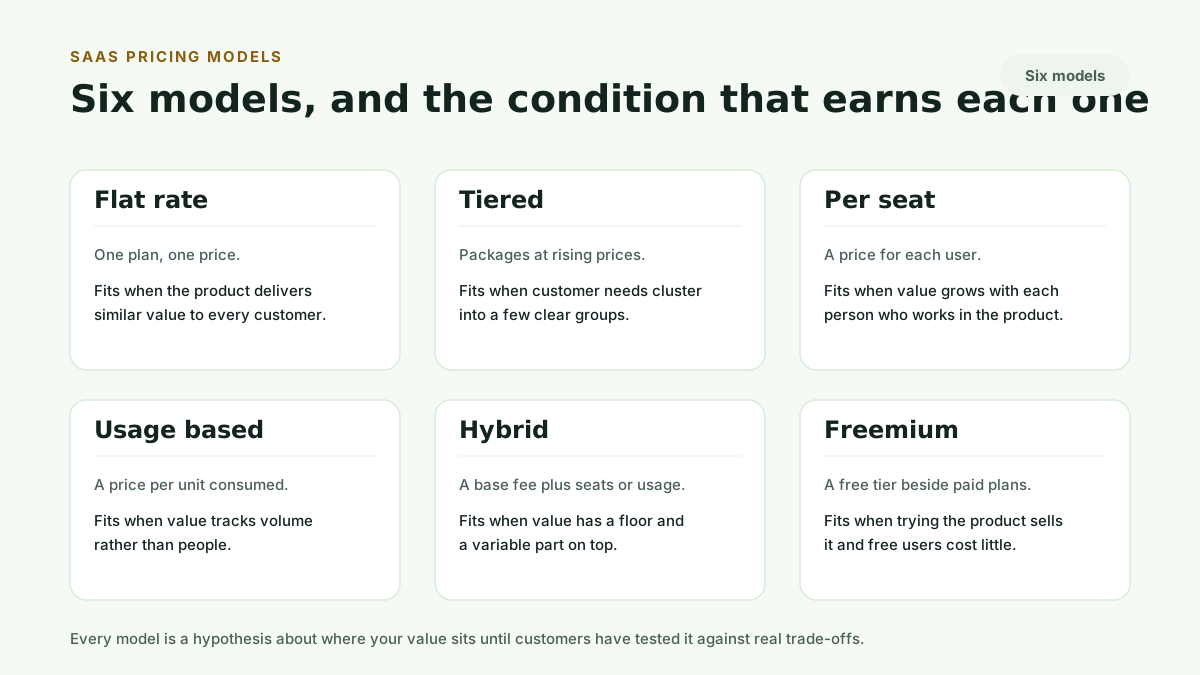
Flat rate is one plan at one price. It fits when the product delivers similar value to every customer, and it buys simplicity at the cost of capturing nothing extra from heavier users.
Tiered packages the product at rising prices. It fits when customer needs cluster into a few clear groups. Most SaaS companies land here, which is also why tier design is where most pricing research effort goes.
Per seat charges for each user. It fits when value grows with each person working in the product. It scales revenue with adoption, and it quietly taxes collaboration when value does not actually grow per person.
Usage based charges per unit consumed: requests, messages, gigabytes, transactions. It fits when value tracks volume rather than people. Revenue follows customer success in both directions, which finance teams experience as upside and as forecasting pain.
Hybrid combines a base fee with seats or usage on top. It fits when value has a floor and a variable part, which describes a lot of products, at the price of a harder story to tell on the pricing page.
Freemium adds a free tier beside paid plans. It is an acquisition strategy wearing a pricing model's clothes, and it fits when trying the product is what sells it and free users cost little to serve.
Choosing a model from your product's value metric
The model is downstream of one question: what is the unit of value your customers would say they pay you for? That unit is your value metric, and the right model is the one that meters it.
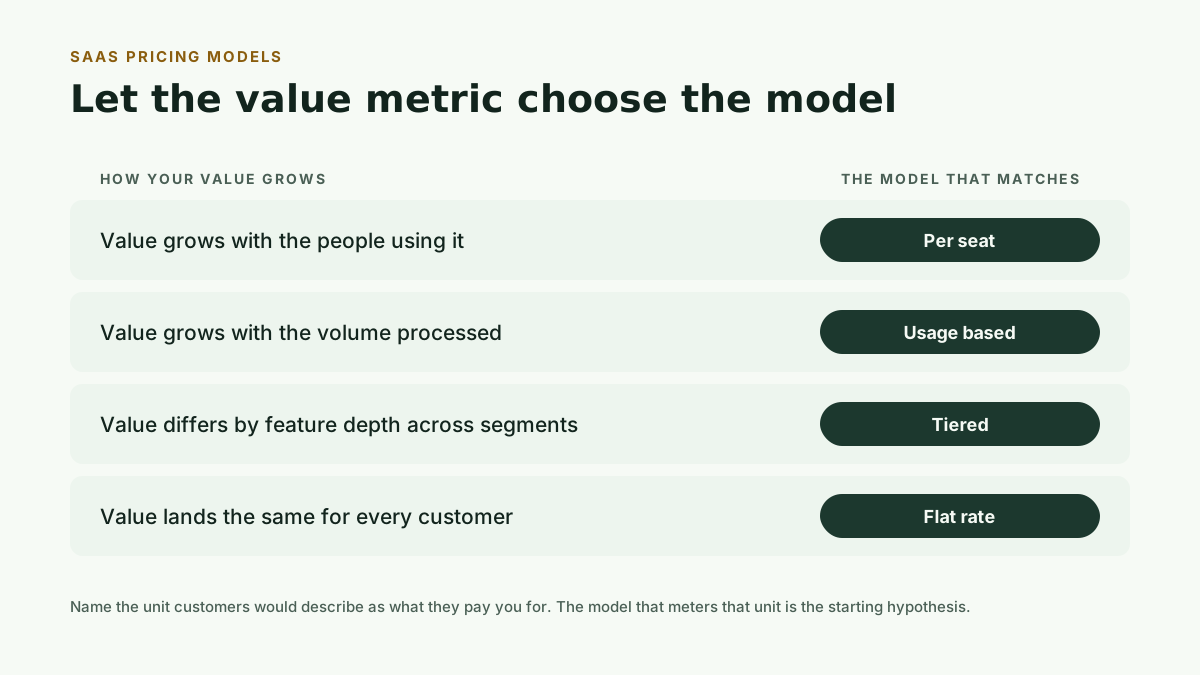
If value grows with the people using the product, per seat matches. If it grows with volume processed, usage matches. If it differs by feature depth across segments, tiers match. If it lands roughly the same for everyone, flat rate matches, and hybrid covers the common case where value has both a floor and a variable part.
Two tests tell you whether a candidate metric is sound. The fairness test: would a customer getting little value under this metric pay little, and a customer getting a lot pay a lot? A metric that fails it generates resentment on one side or leaves money on the other. The predictability test: can a customer roughly forecast their own bill? Metrics that surprise customers create churn regardless of how fair they are in aggregate.
When two metrics both pass, you have a segmentation finding, not a tie to break by intuition. Different segments may value different units, which is an argument for tiers or hybrid structures, and a reason to measure rather than debate.
Testing the model before you commit
A pricing model is a hypothesis about where your value sits. Until customers have faced it as a trade-off, it is an untested one, and model changes are among the most expensive pricing mistakes to unwind. The good news is that structures are testable before anyone migrates.
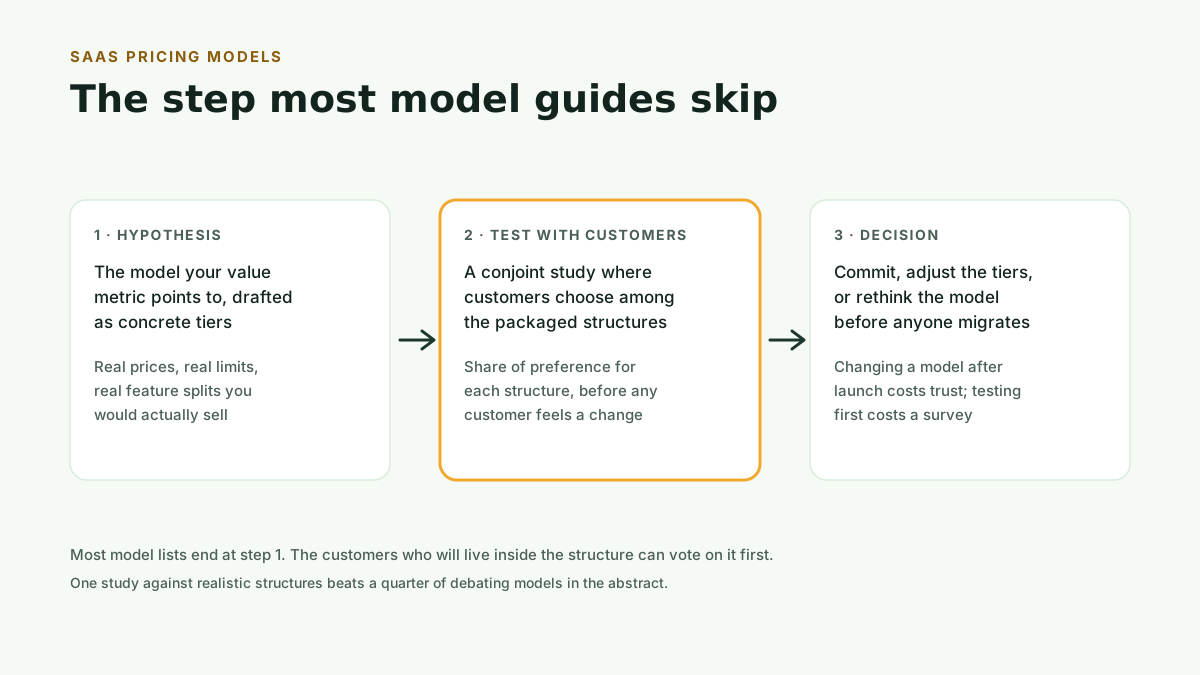
Match the method to the question the model raises. CBC Conjoint is the primary tool, because it shows respondents complete packaged structures, tiers with features, limits, and prices, and forces the same trade-off a pricing page will. Presented with a seat-based structure against a usage-based one at realistic prices, respondents' choices estimate share of preference for each structure before you build either.
The supporting methods answer the inputs. MaxDiff ranks which features carry enough value to gate a higher tier. Van Westendorp finds the credible price range for a new tier, and Gabor-Granger compares specific price points once the structure is set. The wider sequence, from hypothesis to study to shipped change, is the subject of how to test SaaS pricing with real customers.
The test costs a survey and a week. Debating models in the abstract routinely costs a quarter and settles nothing, because the argument has no data to end it.
Migrating an existing base to a new model
Choosing the model is half the decision. The other half is moving the customers who chose your old one.
Grandfather deliberately. Letting existing customers keep their current terms, permanently or for a defined window, trades revenue for trust and removes the migration cliff from your churn risk. The middle path, a scheduled migration with a long runway and a locked price for the first renewal, captures most of the revenue with most of the goodwill.
Communicate the metric, not just the price. A model change reads as arbitrary until customers see the logic. Customers accept "we now charge by the unit you actually consume" more readily than an unexplained restructuring, even at the same bill.
Watch the losers, not the average. Any model change redistributes bills. Model who pays more under the new structure before announcing anything, because that list is your churn exposure, and it is knowable in advance from your own usage data. If the projected losers include your best accounts, the model is wrong or the migration terms are.
Sequence the risk. Ship the new model to new customers first. Their conversion behavior is revealed evidence at full scale, and it either confirms the research or catches a problem while your existing base is still untouched.
Run this method with your users
Kinetic Pro includes unlimited customer-recruited CBC Conjoint, MaxDiff, Van Westendorp, and Gabor-Granger studies, plus Kinetic Workspace, for $99 per month or $990 per year. The monthly plan starts with a 30-day free trial: card required, cancel anytime.
For a single model decision, a CBC Conjoint study costs $499, and the supporting methods start at $149. You define the structures, share the survey with your customers, and receive share-of-preference estimates for each package before anyone migrates.
Start 30-day free trial to test your pricing model with your users, or Buy one study when one structural decision needs evidence first.