
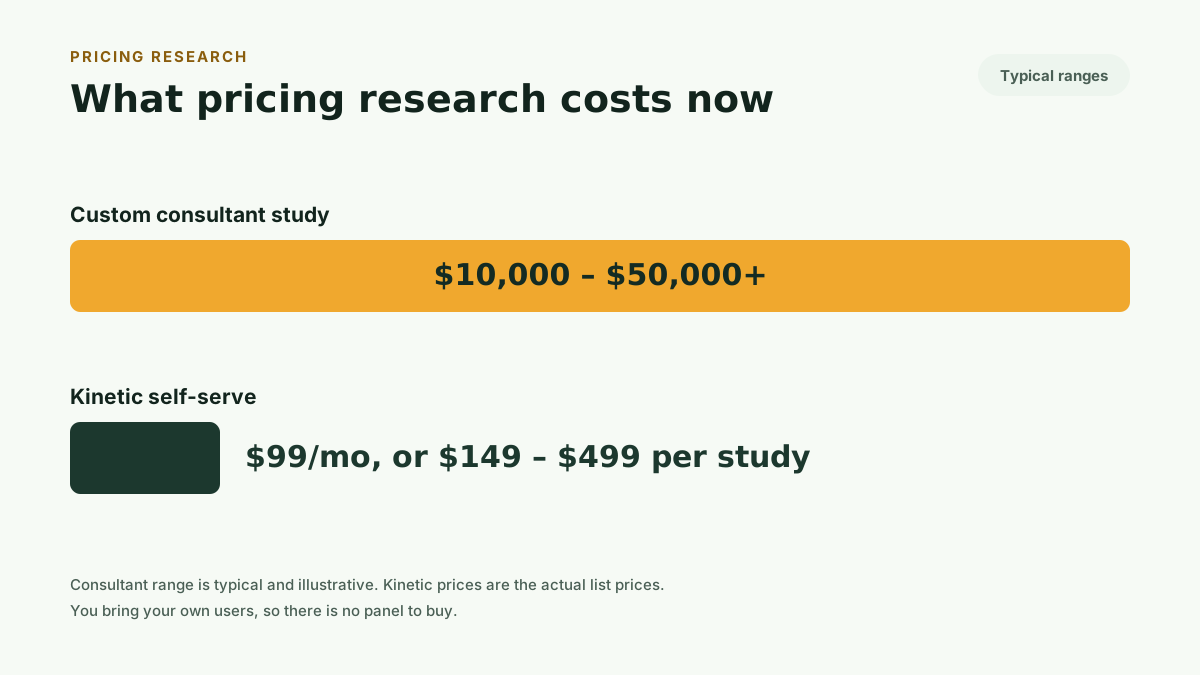
For a long time, real pricing research meant hiring a consultant. A custom willingness-to-pay or packaging study commonly ran into five figures and took weeks. So most founders skipped it. They copied a competitor's price, added a round number, and moved on.
That barrier is gone. The methods a consultant uses are documented and self-serve, the math is deterministic, and the hardest input, people who can judge your offer, is something you already have: your own users. This guide covers how to run pricing research yourself, what it costs, and the cases where a consultant is still the right call.
What a pricing consultant actually does
A good pricing consultant does four things: designs a study around your decision, finds people to answer it, runs the analysis, and writes up a recommendation.
Each part has real value, and each has a catch. The study design uses standard methods you can learn. The respondents often come from a bought panel, which may not match your actual buyers. The analysis is math that software now runs directly. The recommendation is judgment, and judgment about your business is something you hold more of than an outside firm does.
The expertise was worth paying for when the methods were obscure and the tools did not exist. Both of those things changed.
The methods are not the moat
The four methods behind most SaaS pricing decisions are established and well documented:
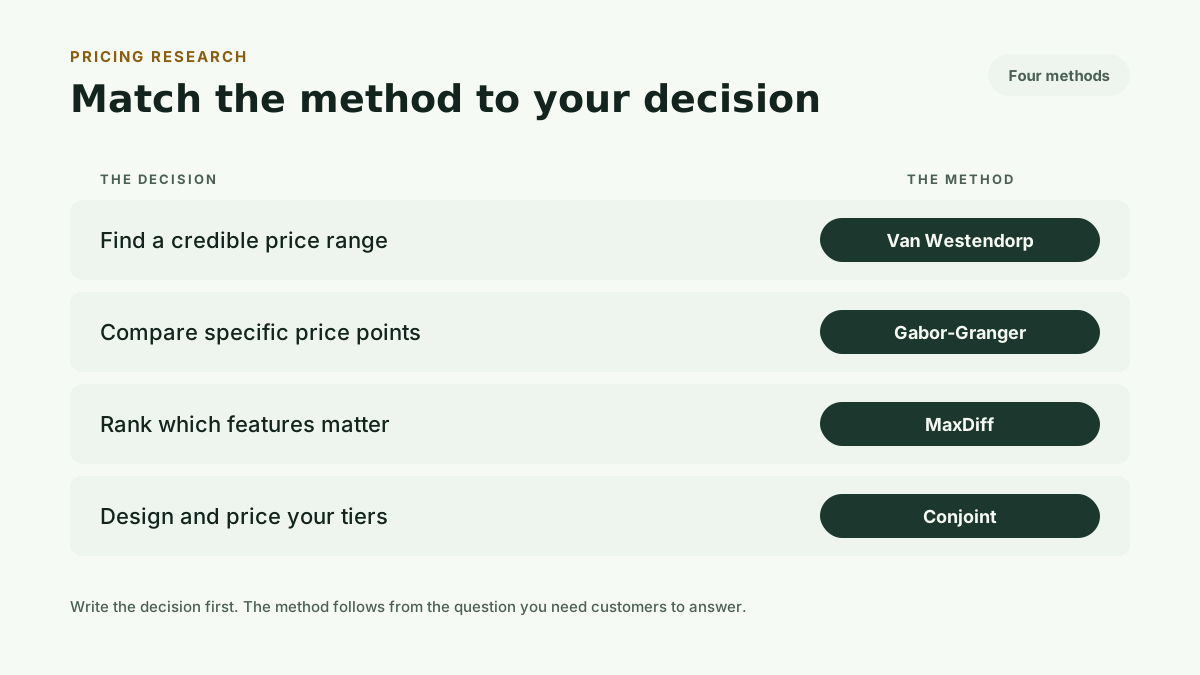
- Van Westendorp finds a credible price range from four questions.
- Gabor-Granger compares specific price points and models revenue.
- MaxDiff ranks which features or messages customers value most.
- Conjoint shows how customers trade off price, limits, and features so you can design tiers.
None of these is secret. What used to be scarce was access to the expertise, a panel, and the analysis at the same time. Software now packages the method and the deterministic math, so the method stops being the thing you pay a firm for.
You already have the hard part
The real constraint in pricing research is not the method. It is finding people who can judge your specific offer.
A bought panel gives you strangers who match a demographic. Your own users match the buying decision. Current customers understand the product and the problem. Trial users have seen the value. A prospect on your mailing list already raised a hand for the category.
You can send a study link to that audience directly. That is the input a consultant has to go out and buy, and yours is better, because it reflects the people who actually pay you.
Match the method to your decision
Pricing research goes wrong when it starts with a survey instead of a decision. Write the decision first, then pick the method that answers it.
For the full walkthrough of choosing a method and writing the decision brief, see how to test SaaS pricing with real customers. If your question spans more than one study, covering internal margins, competitor benchmarks, and customer research, our pricing analysis guide maps how the three jobs fit together.
Do it yourself in four steps
The self-serve version of a pricing study is short:
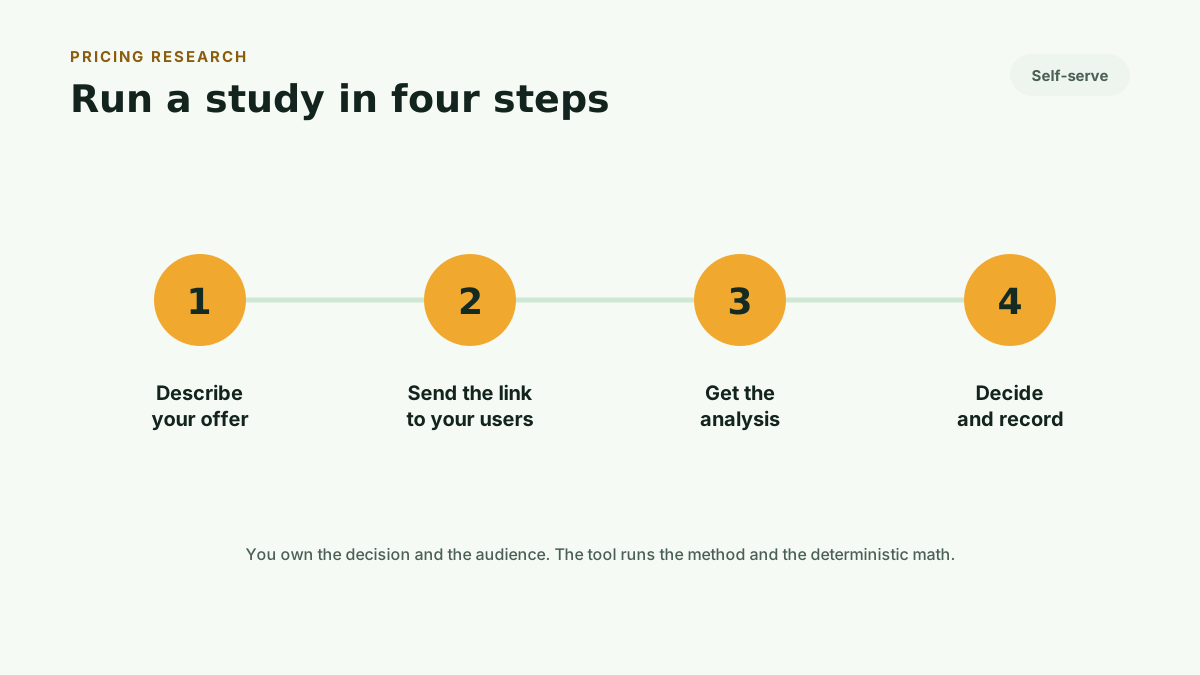
- Describe the offer. State the product, billing period, included usage, and buyer, and hold that description steady across the study.
- Recruit your own users. Send the link to customers, trial users, or qualified prospects who can judge the offer. Screen for buying context, not broad interest.
- Get the deterministic analysis. The engine computes the range, curve, ranking, or simulation. Kinetic's numbers come from deterministic math, and the written narrative is code-checked so it cannot invent figures.
- Decide and record. Add margin, cost to serve, and positioning, choose the price or package, and write down the decision and the outcome you will watch.
When a consultant still makes sense
Self-serve does not fit every situation, and it is worth being honest about the exceptions.
A consultant earns the fee when the decision is large and complex enough that a custom design and a facilitator reduce real risk, when the research is regulated or must stand up in a formal setting, when you need deep qualitative work such as moderated interviews, or when you have no audience to survey. That last one matters most for a brand-new product with no users yet, where a bought panel may be the only way to reach the market.
If you have paying users and a clear pricing decision, that is exactly the case self-serve handles well.
What self-serve does not remove
Cheaper tools do not remove the parts that need judgment. You still need a real decision to make, an audience that fits it, and the business context that turns a chart into a choice. Survey answers measure stated preference, not observed purchases, so the result reduces uncertainty rather than guaranteeing an outcome.
The tool runs the method. You own the decision. That split is the whole point: it puts rigorous pricing research within reach of a founder on a budget, without pretending the software makes the call for you.
Run your first study
Kinetic Pricing gives founders the consultant's toolkit at self-serve prices. Kinetic Pro includes unlimited customer-recruited studies across all four methods, three seats, and Kinetic Workspace for $99 per month or $990 per year, and the monthly plan starts with a 30-day free trial (card required, cancel anytime).
If you have one decision to make, a single study starts at $149, so you can run real pricing research for under $200:
- Advanced Van Westendorp: $149
- Gabor-Granger: $199
- MaxDiff: $279
- CBC Conjoint: $499
Start your 30-day free trial to run every method with your users, or Buy one study when you have a single decision and want the evidence without a consultant.