
Direct answer: Choose Kinetic Pricing when the decision is about price, packaging, willingness to pay, or modeled revenue scenarios. Choose Qualtrics CoreXM or QuestionPro when enterprise governance and larger research programs are the priority. Choose Attest for fast consumer or brand testing, Prolific for participant sourcing, Quantilope for automated quantitative workflows, or Typeform and another general-purpose builder when lightweight survey creation matters most.
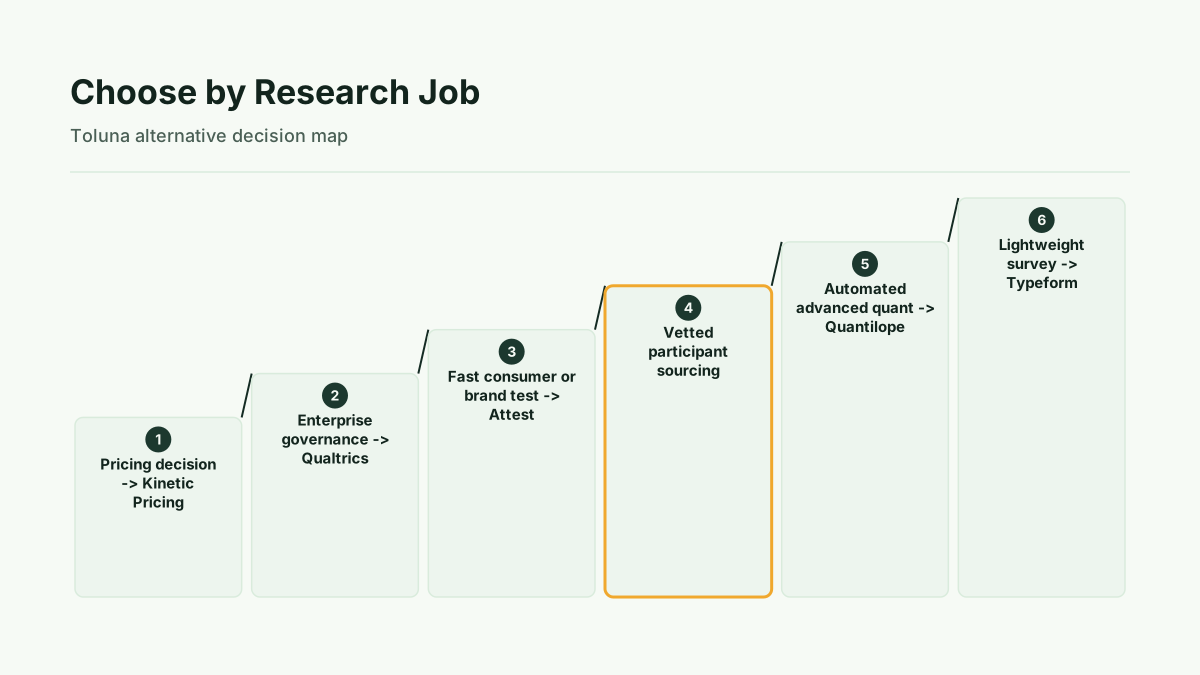
The decision is not a contest between feature lists. It is a question of which research job must be completed, which evidence the team needs, and how quickly the result must become usable.
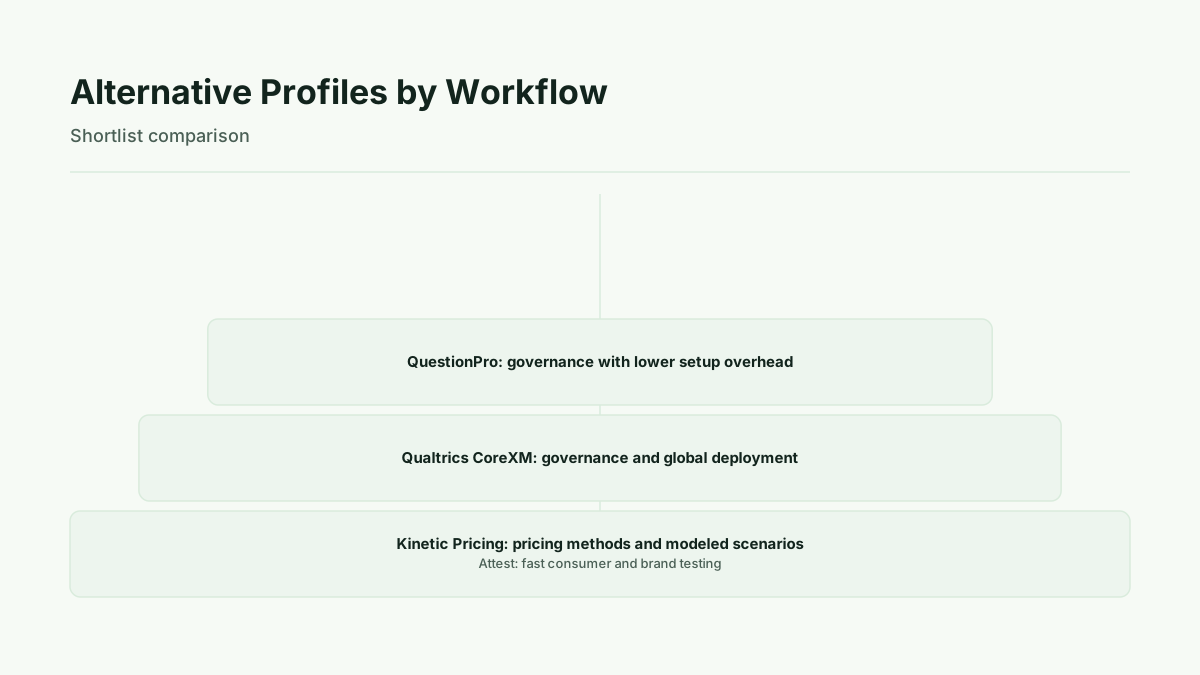
The Shortlist by Research Need
Start by naming the decision before comparing tools. A pricing study needs a different workflow from a global governance program, a consumer brand test, or a survey that mainly needs to be built and distributed quickly.
For pricing and packaging decisions, Kinetic Pricing is the focused option in this comparison. It supports Van Westendorp, Gabor Granger, MaxDiff, and conjoint methodologies for pricing and packaging research. The distinction matters because each method addresses a different analytical question, from acceptable price ranges to price-point response, feature prioritization, and package trade-offs. [Kinetic Pricing]
For enterprise governance and larger research programs, Qualtrics CoreXM and QuestionPro are positioned as alternatives to consider. Their relevance increases when the buying requirement is program governance rather than a single pricing decision. [Distill Intelligence's competitive landscape for Toluna]
Attest and Prolific address different fast-insight needs. Attest is oriented toward consumer and brand testing, while Prolific is oriented toward participant sourcing. Those are not interchangeable strengths, so the choice should follow whether the immediate constraint is a consumer test workflow or access to participants. [SurveySensum's roundup of Toluna alternatives]
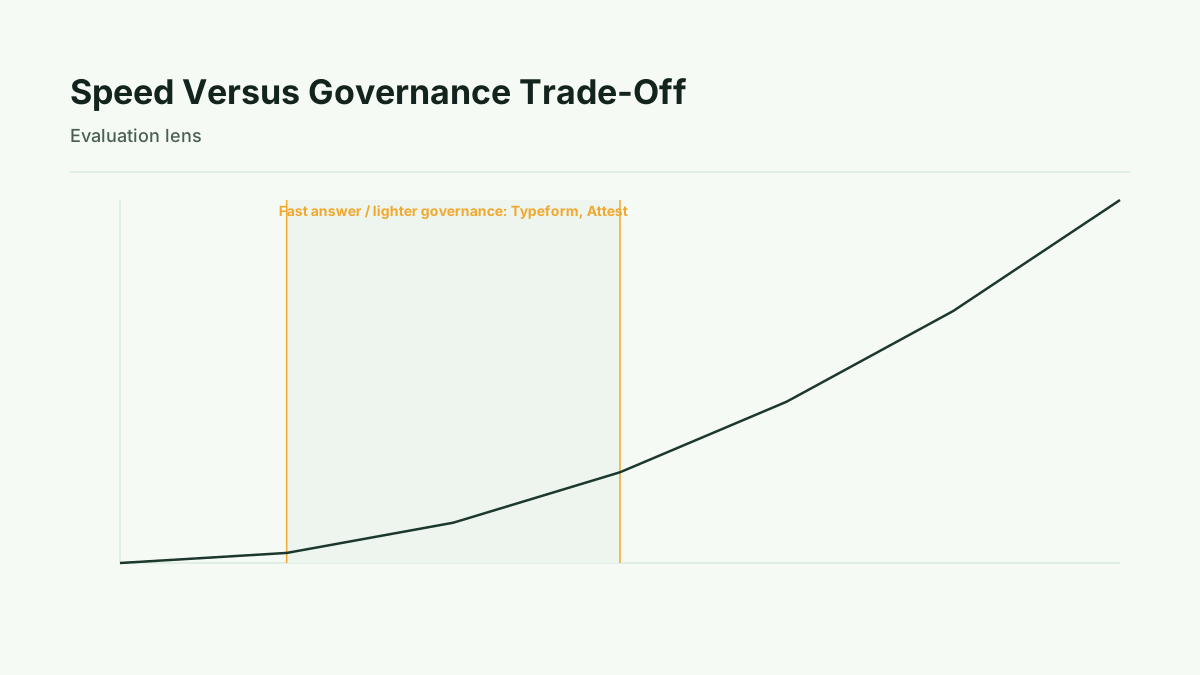
Quantilope belongs on the shortlist when automated quantitative research is the primary requirement. Typeform or another general-purpose survey builder may be more appropriate when the priority is a lightweight respondent experience and straightforward survey creation. These are fit categories, not universal rankings.
Compare Toluna Alternatives by Workflow
Use six dimensions to compare finalists: time to insight, governance depth, methodology support, panel or participant sourcing, export capability, and pricing shape. The aim is not to award a winner in every dimension. It is to expose the trade-off that could slow or weaken the specific study.
A founder making a pricing decision may value a defined pricing methodology and a direct path from responses to a modeled scenario more than broad program administration. A research team operating across markets may place governance, localization, and repeatable deployment first. A team under a tight launch window may care more about consumer testing or participant sourcing. A survey-led project may need a clean build experience without the depth of a specialized pricing workflow.
Ask each vendor to demonstrate the full path, not only the questionnaire builder. Can the team define the study, apply the intended sample filters, run the research, export usable raw data, and explain the resulting analysis? If the answer requires several manual handoffs, record that as workflow cost even when the platform has extensive features.
For a pricing study, separate three kinds of output. Stated purchase intent is what respondents say they might do. Modeled revenue is a calculation based on assumptions and research results, and should be labeled modeled or simulated. Observed behavior is actual purchasing or usage evidence. A survey result should not be presented as observed purchasing behavior unless behavioral evidence exists.
When Kinetic Pricing Is the Better Fit
Kinetic Pricing is the starting point when the central question is, “What should we charge, and how should we package it?” Its supported methods include Van Westendorp, Gabor Granger, MaxDiff, and conjoint. Together, these give a pricing-focused team a method menu for price ranges, price points, feature value, and package construction. [Van Westendorp]
Kinetic Pricing also converts pricing research into modeled revenue scenarios and supports raw-data export for independent analysis. That combination is useful when the team wants to inspect the underlying responses, preserve an analysis path outside the platform, and distinguish a calculated scenario from a claim about actual market behavior. [Kinetic Pricing]
The buying path can be matched to the size of the decision. The supplied product options include one-time study choices for the listed methods. Kinetic Pricing Pro costs $99 per month or $990 per year and includes a 30-day free trial. [pricing directly]
The strongest case for this option is therefore methodological fit. If the original decision is a price, package, or revenue scenario, start with a pricing-specific workflow rather than asking a general survey tool to provide an answer it was not selected to produce.
When Another Toluna Alternative Makes More Sense
Choose an alternative when its primary job matches the project better than a pricing-specific workflow.
Qualtrics CoreXM or QuestionPro may be the better finalist when enterprise governance and larger research programs dominate the brief. Attest may be the better fit when the immediate requirement is fast consumer or brand testing. Prolific may be preferable when participant sourcing is the central problem. Quantilope may deserve evaluation when quantitative automation is the main requirement. Typeform or another general-purpose builder may be enough when the team needs a lightweight survey experience.
Do not turn these categories into unsupported promises about cost, recruit speed, data quality, security, or support. The supplied evidence does not establish standardized benchmarks across these dimensions. Instead, write the requirement into the evaluation: “We need this governance control,” “we need this participant source,” or “we need this analysis output,” then test it with the finalist.
Run a Fair Two-Week Side-by-Side Trial
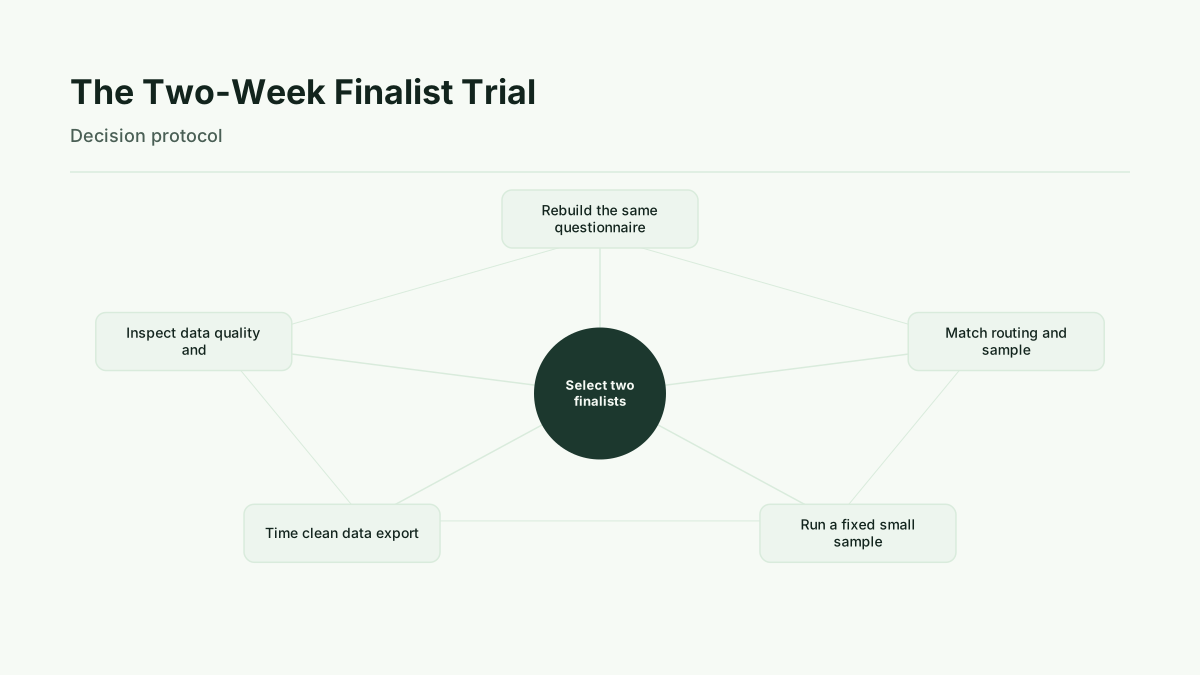
A credible comparison uses the same questionnaire, routing, sample filters, and fixed sample size across vendors. [SurveySensum's roundup of Toluna alternatives] Changing the study between platforms makes it difficult to tell whether a difference came from the tool or from the research design.
Use this process:
- Select two finalists. Choose them because they match the same primary research need, or because they represent the two most plausible workflow choices.
- Rebuild the same questionnaire. Keep wording, answer options, required questions, and method logic consistent.
- Match routing and sample filters. Document the rules before launch rather than adjusting them after seeing results.
- Run a fixed small sample. Keep the sample size and fielding conditions comparable, while recording any difference in participant availability.
- Time the path to a clean export. Include setup, launch, review, export, and preparation for analysis.
- Inspect data quality and method output. Check whether the raw data is usable and whether the platform answers the original decision.
- Choose the fastest defensible fit. Speed counts only when the resulting answer is sufficiently transparent and useful.
The objective is not to manufacture a universal ranking. It is to learn which finalist removes the most friction from the actual study.
Cost, Migration, Support, and Integration Trade-Offs
Compare total cost of ownership, not only subscription price. Include analyst time, panel or participant costs where applicable, study setup, data cleaning, governance work, localization, exports, and the time required to connect results to the existing analytics stack. The available evidence does not establish standardized costs or support levels for every vendor, so treat vendor quotations and trial observations as current inputs rather than permanent market facts.
Migration from an established Toluna program can involve historical-data export, sample re-recruitment, governance setup, and localization work. [G2's comparison data] Ask what must be rebuilt, what can be exported, and which historical comparisons the team must preserve. Also test raw exports and any API or analytics-stack integration that the decision depends on. A platform that looks inexpensive at purchase can create additional work if the handoff into analysis or reporting is unclear.
Method
This editorial comparison classifies each alternative by its primary research job, then compares workflow trade-offs across time to insight, governance, methodology depth, participant sourcing, export needs, and pricing shape. The recommended two-week trial uses identical questionnaire logic, sample filters, and a fixed sample size. Product-specific Kinetic Pricing facts use the supplied authoritative product information.
Interpretation
This is a fit assessment, not a universal ranking. Kinetic Pricing is the focused recommendation when the decision concerns price, packaging, willingness to pay, or modeled revenue scenarios. Enterprise governance, fast consumer sampling, automated quantitative research, participant sourcing, or simple survey creation may justify another platform.
Keep the evidence labels disciplined. A respondent's answer is stated purchase intent. A revenue output based on assumptions is modeled or simulated revenue. Neither should be described as observed purchasing behavior without behavioral evidence.
Limits
Vendor plans, panel availability, enterprise contracts, support levels, and capabilities can change. The supplied material does not establish independent, standardized benchmarks for cost, recruit speed, data quality, security, support service levels, or feature parity across every named vendor. Enterprise pricing may be custom, and panel availability varies by audience and market. Validate current terms through a trial or demo before committing.
Next step
Choose two finalists based on the primary research need. Build the same questionnaire with identical routing and sample filters, run a fixed small sample, time the path from build to clean export, inspect the raw data, and compare whether each platform answers the original decision. For a pricing study, start with a Kinetic Pricing one-time study or evaluate Pro with its 30-day free trial.
Additional context on these methods is available from AI-led automation you actually need, Kinetic Pricing's comparison of self-serve research versus a consultant, Comparably's competitive rankings, research and benchmark resources, Toluna competitors: Complete list & market landscape — Distill Intelligence, Toluna competitors — Comparably and 7 Best Toluna Alternatives and Competitors in 2026 — SurveySensum.
Run this method with your users
Start 30-day free trial to run every method with your users, or Buy one study when one decision needs evidence now.
Sources
Kinetic Pricing, Kinetic Pricing homepage
Kinetic Pricing, Van Westendorp pricing research for SaaS
Kinetic Pricing, Research resources
Kinetic Pricing, Pricing
SurveySensum, 7 Best Toluna Alternatives and Competitors in 2026
Distill Intelligence, Toluna competitors: Complete list and market landscape
G2, SurveyMonkey versus Toluna Start comparison