
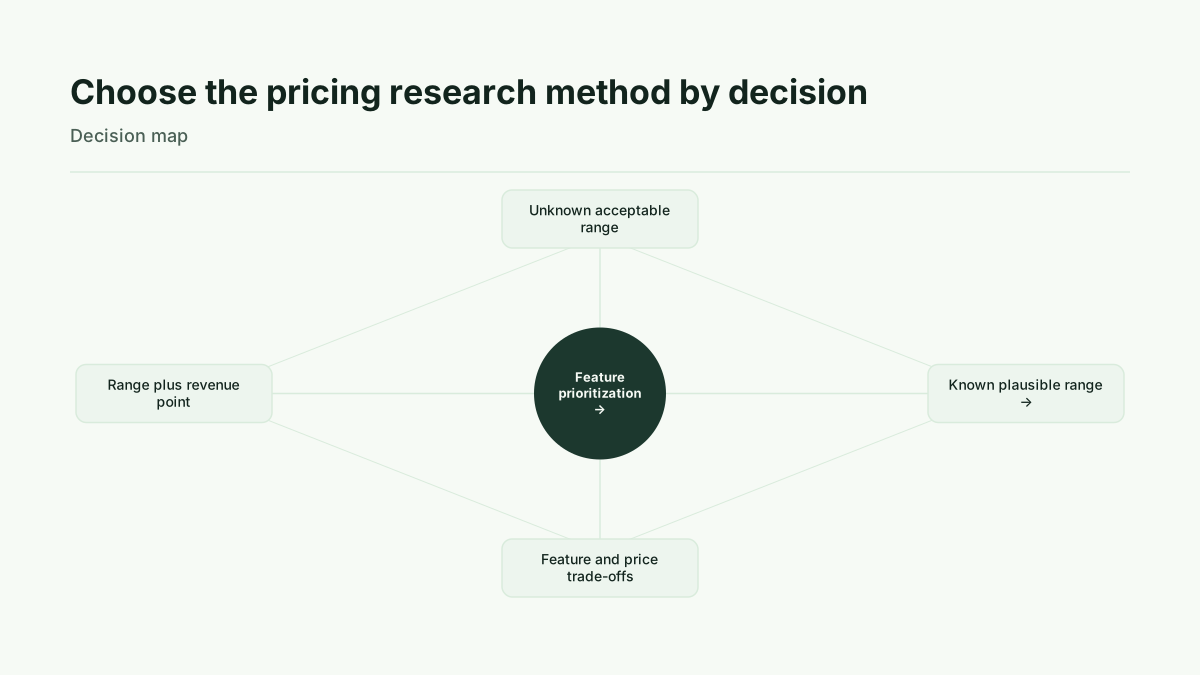
Use Van Westendorp when the acceptable price range is unknown, Gabor-Granger when the plausible range is known, MaxDiff for feature prioritization, conjoint for feature and package trade-offs, and a combined Van Westendorp plus Gabor-Granger workflow when an early-stage SaaS team needs both a price corridor and a modeled price point. Treat every survey result as stated intent or modeled evidence, then validate it with observed behavior before a full rollout.
Start with the pricing decision, not the research method
Pricing research is most useful when it answers one commercial choice. A founder may need to choose a new price or tier, assess a price increase, establish a discount floor, or decide which features belong in a package. These questions require different evidence, so selecting a familiar method first can create an answer that is precise but irrelevant.
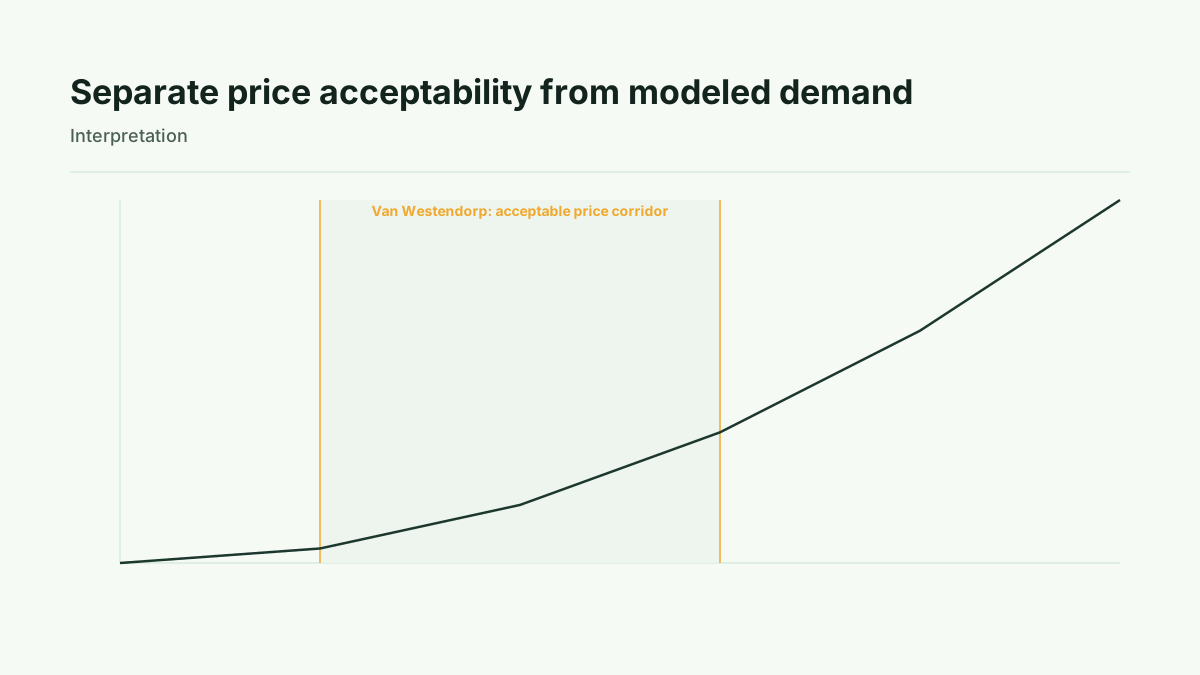
For an unknown acceptable range, Van Westendorp is the starting point. It identifies four price-perception intersection points and an acceptable price corridor, but it does not directly produce a demand curve or revenue estimate. Van Westendorp produces these four boundary points.
For a known plausible range, Gabor-Granger tests researcher-defined price points. It builds a demand curve from purchase intent and estimates a revenue-maximizing tested price by combining price with purchase probability. That output is modeled revenue, not observed revenue.
MaxDiff answers a feature question. It ranks the relative importance of features or attributes, but it does not independently identify a price point. Conjoint answers a package question by estimating feature and price trade-offs and supporting simulated choice or market-share scenarios. It requires more complex design and analysis than simpler willingness-to-pay methods.
The distinction matters: stated purchase intent is what respondents say they would do, modeled revenue is a calculation based on that intent, and observed behavior is what happens in an in-market test. They should not be presented as interchangeable evidence.
Match the method to the evidence you need
Van Westendorp is appropriate when the team needs psychological boundaries around price. Its output helps frame what respondents perceive as acceptable, too cheap, expensive, or too expensive. The method is useful for finding a range, but it is not a direct demand or revenue model.
Gabor-Granger is appropriate when the team can define the prices to test. Its purchase-intent responses can be organized into a demand curve across those tested points. Combining each tested price with its purchase probability produces a modeled revenue comparison among the tested options. The result supports a price decision, but it remains a model based on stated intent.
MaxDiff is appropriate when the immediate decision is feature prioritization. It can rank attributes relative to one another, helping a team decide what deserves attention in a package or roadmap. Because it does not independently identify a price point, it should not be treated as a substitute for a pricing test.
Conjoint is appropriate when buyers evaluate combinations of features and prices. It can support simulated choice or market-share scenarios, but the design and analysis are more complex than simpler willingness-to-pay methods. Use it when the package trade-off is the decision, not merely because it is more elaborate.
When both the acceptable range and the modeled revenue point are needed, use Van Westendorp first and Gabor-Granger second. The first method frames the range; the second tests defined prices within the decision space. This combined workflow is usually more informative than asking one method to answer both questions.
Method: design and recruit a defensible study
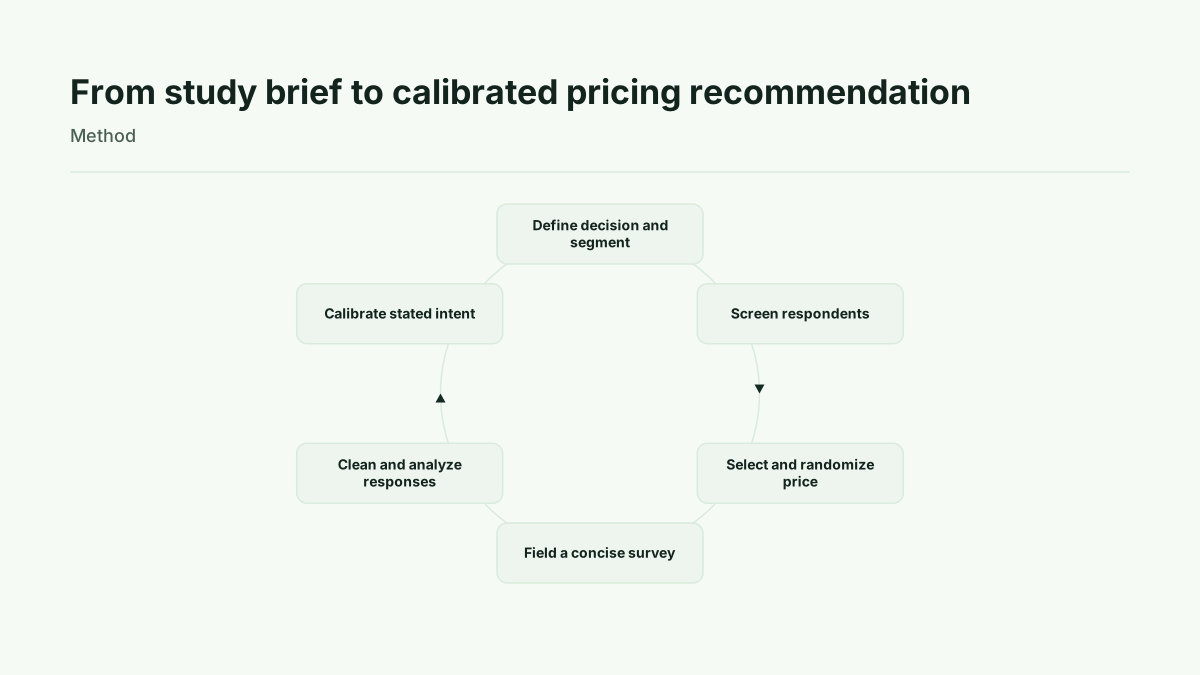
Begin with a short study brief. State the decision, product or package being evaluated, target segment, price unit, and action the result should inform. Then screen for the segment relevant to that decision. Survey screening, concise wording, and structured pricing questions are necessary design considerations for a usable study. Use the pricing survey question guidance when turning the brief into questions.
For Van Westendorp, write the four price-perception questions clearly and keep the product context consistent. For Gabor-Granger, define the tested price points before fielding. The selected points should cover the plausible decision range rather than merely cluster around a preferred answer. Keep the price unit and billing context explicit.
Decide how price points will be presented. Randomized Gabor-Granger presentation can reduce anchoring relative to a fixed sequential order, while sequential presentation can reduce question burden. Sequential and randomized designs each carry trade-offs, so the choice belongs in the study brief rather than being left to the survey tool's default.
Keep the survey concise, pretest the wording, and check that respondents understand the offer and price context. Recruit screened respondents who fit the intended segment, then apply data-quality checks before analysis. Do not treat an unexamined sample as a representation of the actual customer base.
For the combined workflow, field the range-finding questions first, use their output to define a defensible set of Gabor-Granger prices, and then analyze both outputs together. The workflow should end with a calibration plan, not only a chart.
Interpretation: turn survey responses into a pricing decision
Read Van Westendorp as a corridor of price perception. It helps identify boundaries within which the offer may be considered acceptable by the surveyed audience. It does not tell stakeholders how many customers will buy at a price or what revenue will be observed.
Read Gabor-Granger as a tested-price purchase-intent curve. For each price point, retain the purchase probability implied by the responses. A modeled revenue comparison can then use the formula: tested price multiplied by purchase probability. Every input must retain its unit and price context. The result identifies the strongest modeled option among the tested prices, not a guaranteed revenue outcome.
Conjoint outputs require the same discipline. A simulated choice or market-share scenario is a model of trade-offs among the attributes and prices included in the design. It is not observed market share. MaxDiff results should likewise be read as relative feature rankings, not as willingness to pay for a feature.
The stakeholder brief should include the original decision, target segment, method, tested prices or attributes, response-quality rules, the main output, assumptions, uncertainty, and the verification plan. Pricing analysis guidance supports keeping modeled revenue separate from observed behavior and checking the result with an in-market price test before full rollout.
Limits: treat survey outputs as directional evidence
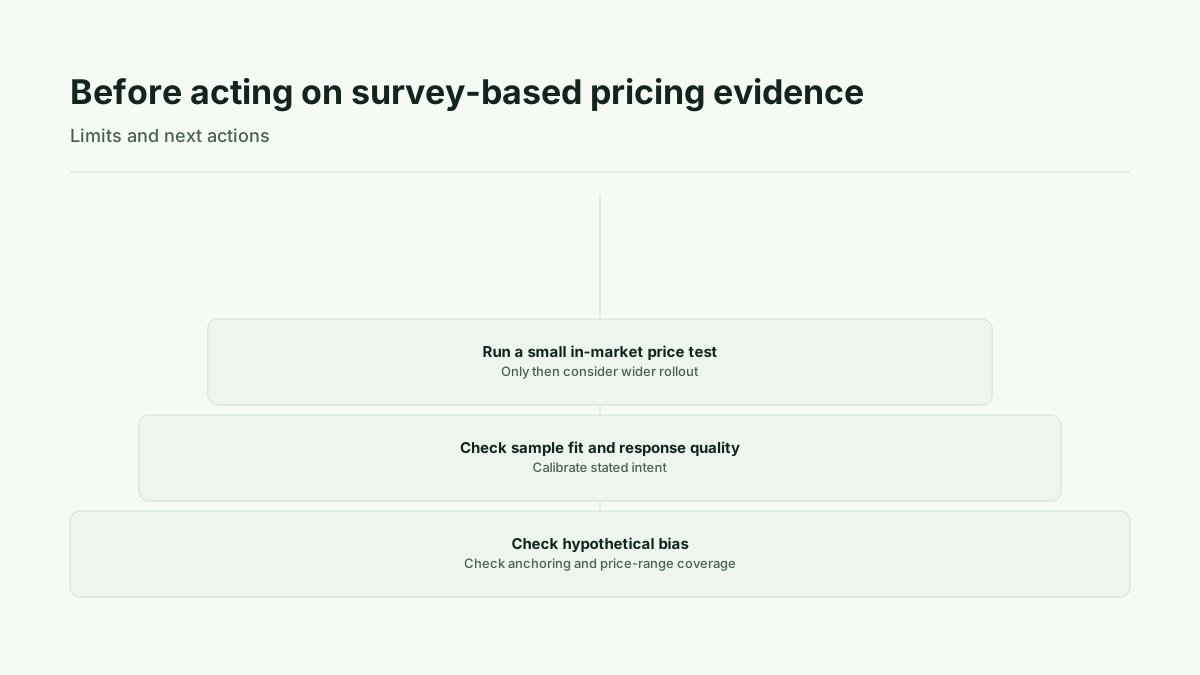
Pricing surveys are hypothetical. Respondents may state an intention that does not become a purchase, so purchase intent should be calibrated against behavior rather than treated as conversion. A price corridor is also not the same thing as a purchase-probability curve.
Anchoring is another design risk. A fixed sequence may influence responses through the order in which prices appear, while a poorly chosen range can miss the prices that matter to the decision. Randomization can address one presentation concern, but it does not repair an unsuitable set of price points or unclear wording.
Sample fit is a separate limitation. A screened survey sample may differ from the actual customer base in needs, budget, or buying context. Response-quality checks and segment screening improve study usability, but they do not turn stated intent into observed behavior.
Finally, modeled revenue is not observed revenue. Before a full rollout, run a small in-market price verification test where feasible. Use the result to calibrate the survey interpretation and to decide whether the proposed price should advance. The goal is not to claim certainty from a survey. It is to reduce the risk of making a pricing decision without connected evidence.
Choose the execution path and next step
DIY execution fits a team that can write a precise brief, recruit the right respondents, manage quality checks, and interpret the outputs. A self-serve SaaS path fits a team that wants named research methods in a product workflow while retaining responsibility for the decision and interpretation. Consultant execution fits a team that needs external expertise for a more complex design, recruitment problem, or analysis process. The trade-off is control and simplicity versus support and complexity management.
Kinetic Pricing offers a self-serve execution path with named methods and published product pricing facts. Its methods are labelled Price range finder, Price point tester, Feature value ranker, and Package and price builder. Kinetic Pro is listed at 9,900 cents monthly or 99,000 cents annually, with a 30-day trial. Kineticpricing's plans and Kinetic Pro provide the product context. Choose the execution path that matches the decision's complexity, not the perceived prestige of the method.
Next step:
- Write the decision and segment brief, including the price unit, package context, and intended action.
- Select the least complex suitable method: Van Westendorp for an unknown range, Gabor-Granger for defined prices, MaxDiff for feature ranking, conjoint for package trade-offs, or the combined workflow when both range and modeled price point are required.
- Draft and pretest a concise survey, recruit screened respondents, apply data-quality checks, and analyze the results while labeling stated intent and modeled revenue correctly.
- Calibrate the recommendation with a small in-market price verification test before considering a full rollout.
This sequence keeps the research decision-first and makes the final price a testable operating choice rather than an unsupported conclusion.
Additional context on these methods is available from pricing survey question guidance, pricing analysis guidance, Kineticpricing's plans, external consulting expertise, Kineticpricing's pricing research resources, Van Westendorp vs Gabor-Granger: Which to Choose | Quali-Fi and Gabor-Granger Pricing: Method, Steps & Van Westendorp Comparison | TestFeed.
Run this method with your users
Start 30-day free trial to run every method with your users, or Buy one study when one decision needs evidence now.
Sources
Quali-Fi, “Van Westendorp vs Gabor-Granger: Which to Choose”
TestFeed, “Gabor-Granger Pricing: Method, Steps & Van Westendorp Comparison”