
The right pricing survey questions depend on the decision you are trying to make. There is no universal question bank, because a survey that finds a credible price range asks different questions than one that compares two specific prices or ranks the features a tier should carry.
Four decisions cover most pricing surveys, and each has an established method with its own question set. Ask the questions that belong to your decision and the analysis is deterministic. Borrow questions across methods, or improvise your own, and you collect answers no analysis can use.
Match the questions to the decision
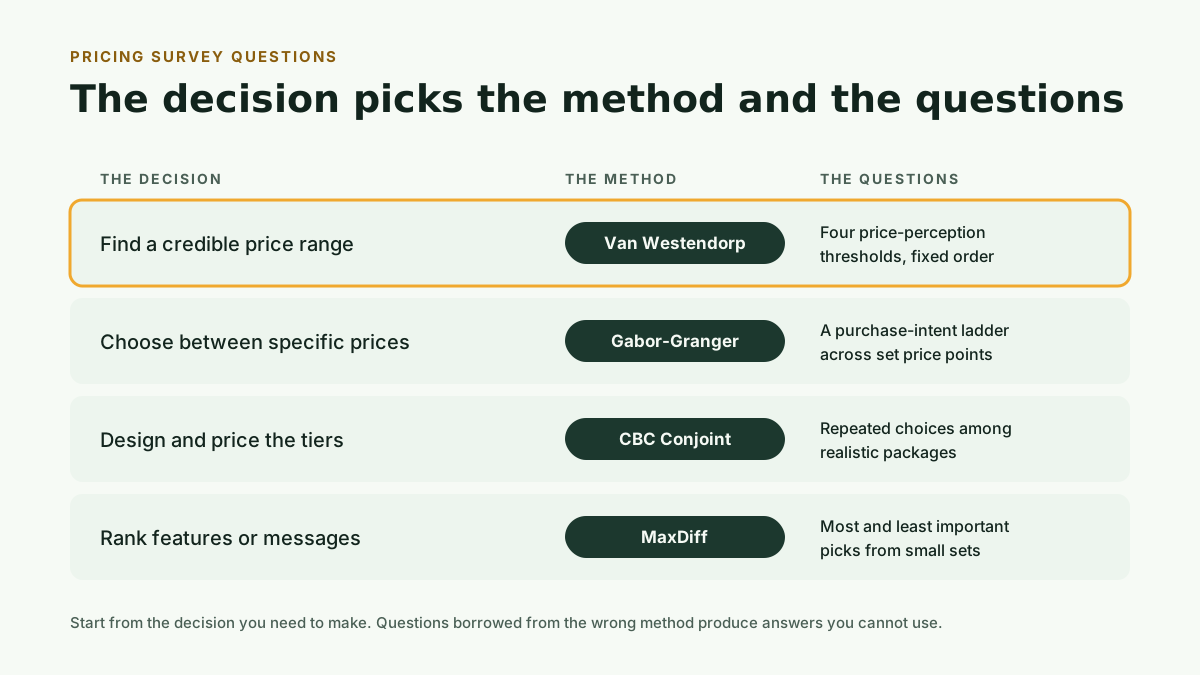
If you need a credible price range for something unpriced, ask Van Westendorp's four threshold questions. If you are choosing between specific prices, ask Gabor-Granger purchase-intent questions. If you are designing tiers, present conjoint choice tasks. If you need to rank features or messages, present MaxDiff best-worst sets.
The sections below give the wording for each, plus the screening questions every pricing survey needs and the wording mistakes that quietly ruin results.
The four Van Westendorp questions
Van Westendorp measures price perception with four questions about the same product, asked in a fixed order:
- At what price would the product feel so cheap that you would question its quality?
- At what price would the product feel like a bargain?
- At what price would the product begin to feel expensive, while remaining worth consideration?
- At what price would the product feel too expensive to consider?
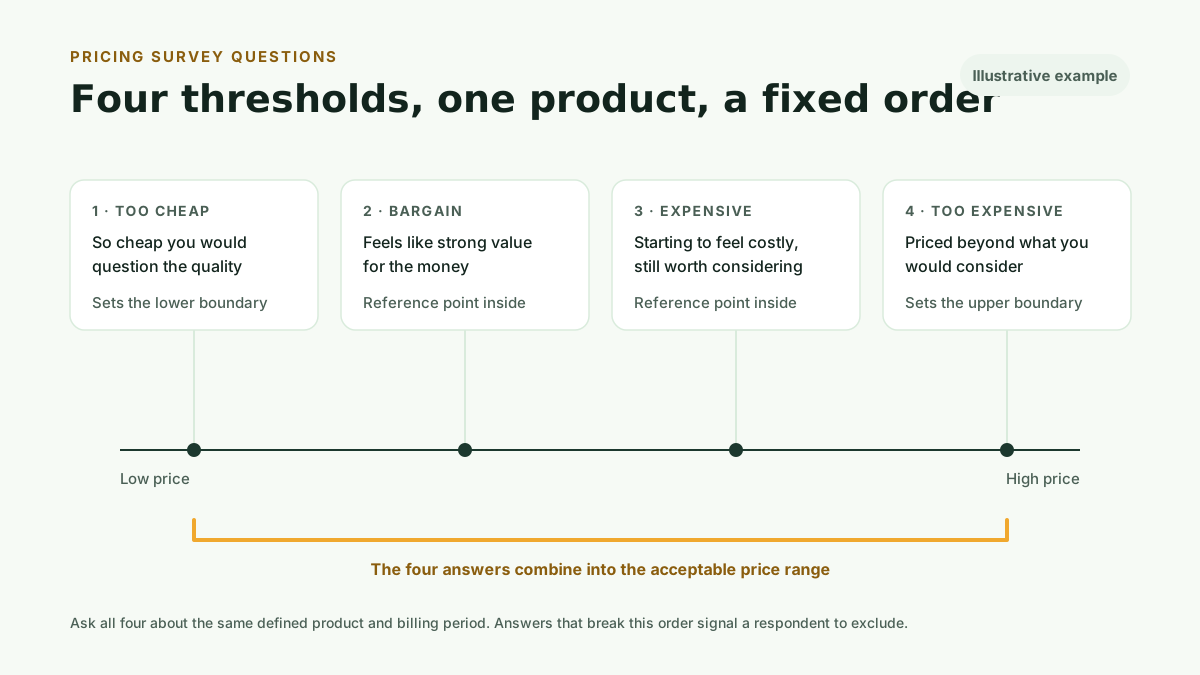
The phrasing matters more than it looks. Each question asks for a perception threshold the respondent actually holds, rather than a commitment they would have to invent. Nobody knows what they would pay, but almost everyone can name the price where a product starts to feel expensive.
The questions work only as a set, in that order, about one clearly described offer: the product, the intended customer, the billing period, and the currency. Answers that break the natural order, such as a "bargain" price above a "too expensive" price, identify respondents to exclude before analysis.
Gabor-Granger purchase-intent questions
Gabor-Granger asks one question repeatedly, at prices you choose in advance:
"At $X per month, would you purchase this product?"
The survey adjusts the next price based on each answer. A yes moves the respondent to a higher price, a no moves them lower, and the sequence narrows the point where their intent flips. Across respondents, the answers become a demand curve: the share who would buy at each tested price.
Two wording details keep stated intent as honest as a hypothetical can be. First, the question offers a concrete price and asks for a decision, which is closer to real buying than an open estimate. Second, the price list is fixed before fieldwork, so the study compares the exact candidates you are deciding between rather than whatever numbers respondents volunteer.
Some implementations soften the yes-or-no into a likelihood scale. Keep the decision binary if you can. A scale invites the polite middle option, and the analysis then depends on where you draw the line you could have asked about directly.
MaxDiff and conjoint task wording
MaxDiff and conjoint do not look like question-and-answer surveys, and that is the point. Both replace opinions with forced choices.
A MaxDiff task shows a small set of items, usually four or five, and asks two things: which matters most, and which matters least. There is no wording about price at all. Repetition across many sets produces a ranked, spaced measurement of what customers value, which then informs what a paid tier should contain.
A conjoint task shows two or three complete packages, each with features, limits, and a price, and asks one question: which would you choose? Some designs add a "none of these" option so respondents are never forced into a package they would not buy. The wording burden shifts from the question to the packages themselves. Every attribute must be concrete enough to judge, and every combination shown must be plausible enough that the choice feels like a purchase rather than a puzzle.
For both formats, the instruction text should tell respondents to answer as the buyer they are, for their own team and budget, not as an imagined average user.
Screening and segmentation questions
The pricing questions are only half a pricing survey. The other half qualifies who is answering and captures the attributes you will segment by.
Screening questions come first and filter for people who can judge the offer: whether they are involved in buying tools like yours, whether they use a product in the category, and which role they play in the decision. A respondent who has never faced the buying decision produces noise in whatever method follows.
Segmentation questions capture the handful of attributes you expect willingness to pay to vary by: company size, plan or usage level, use case, industry. Ask them in the survey rather than joining them later, and keep the list short. Every added question costs completion rate, and a pricing survey earns its sample by staying under ten minutes.
One ordering rule: place segmentation questions before the pricing questions, or after the method's task block, but never interleaved. Interruptions reset the pricing context you carefully established.
Question-wording mistakes that ruin a pricing study
A handful of wording mistakes account for most unusable pricing surveys.
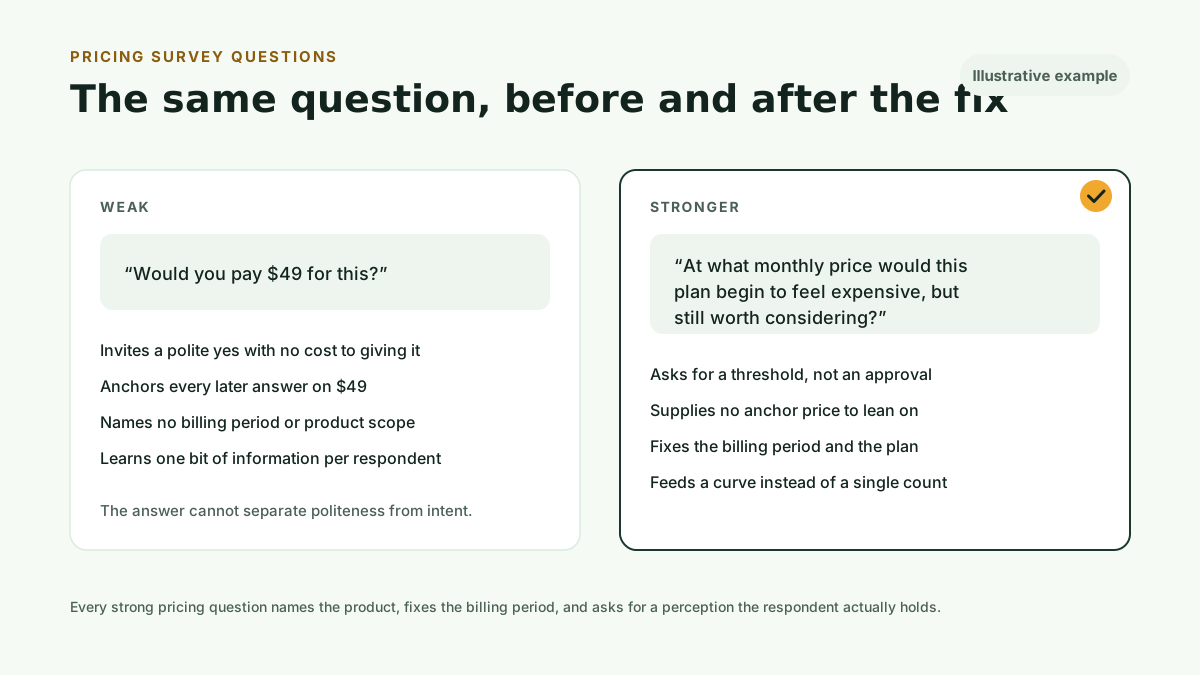
Leading with approval. "Would you pay $49 for this?" invites a yes that costs nothing to give. Ask for thresholds or force choices instead.
Anchoring early. Any price you mention before the method's own questions becomes a reference point that drags every later answer toward it. Keep intro copy price-free.
Underspecifying the offer. If respondents do not know what the price includes, the billing period, or the currency, each one prices a different imagined product. Fix all three in the product description.
Asking non-buyers. Users who do not touch the buying decision will still answer pricing questions. Screen for buying involvement instead of assuming it.
Mixing frames. Switching between monthly and annual prices, or between currencies, mid-survey produces answers on different scales that cannot be combined. Pick one frame and hold it.
Each mistake is invisible in the response data. The survey completes, the charts render, and the numbers are quietly wrong. Wording discipline up front is the only defense.
Run this method with your users
Kinetic Pricing generates the question sets in this guide for you. Define the product description, audience, and prices, and each study ships the method's exact wording: Van Westendorp's four thresholds, the Gabor-Granger ladder, MaxDiff best-worst sets, or CBC Conjoint choice tasks, plus screening.
Kinetic Pro includes unlimited customer-recruited studies across all four methods, plus Kinetic Workspace, for $99 per month or $990 per year. The monthly plan starts with a 30-day free trial: card required, cancel anytime. Single studies start at $149.
Start 30-day free trial to run every method with your users, or Buy one study when one decision needs the right questions now.