
The best Qualtrics alternative depends on the research job your team must complete after data collection. Enterprise CXM and governance point toward Medallia or Forsta; advanced mid-market research toward QuestionPro or Alchemer; fast NPS, CSAT, or pulse programs toward SurveyMonkey or Delighted; in-product feedback toward Sprig; and pricing-specific modeling toward Kinetic Pricing. This job-based approach is also consistent with [Perspective AI's guide for insights teams] and [Sopact's comparison].
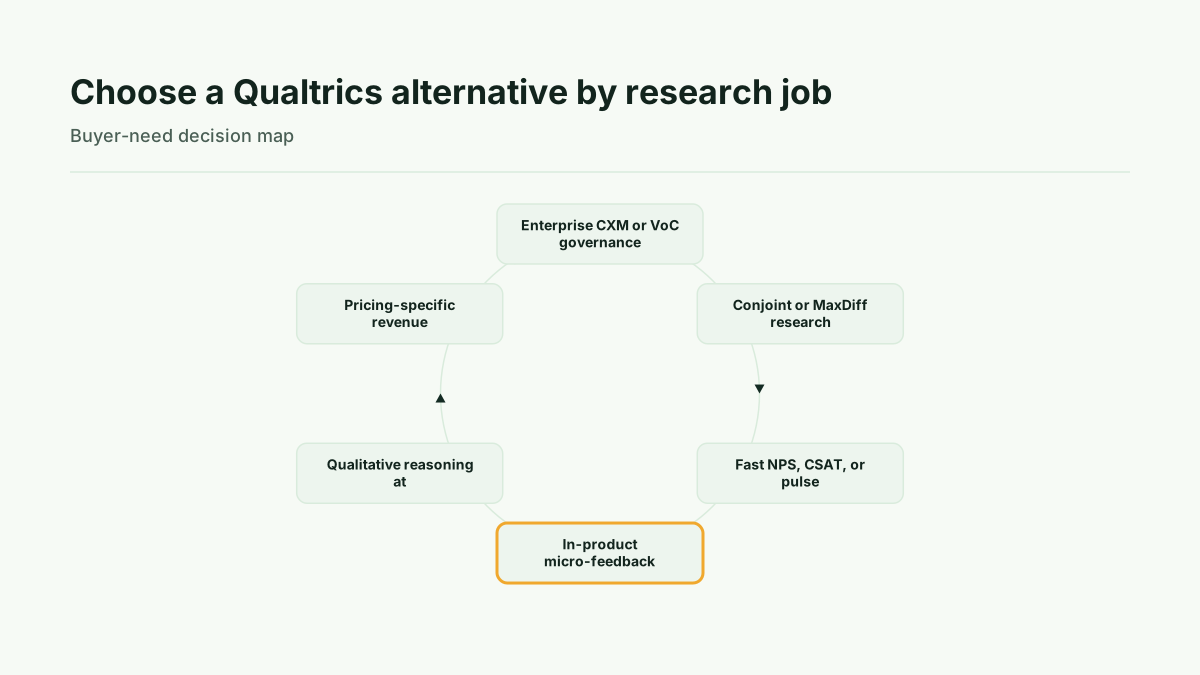
Qualtrics alternatives by buyer need
Start by naming the primary workflow rather than comparing every feature in a broad platform. The shortlist changes depending on whether the team needs enterprise customer experience management, advanced research methods, fast feedback collection, in-product micro-feedback, qualitative reasoning, or pricing research. These are related jobs, but they do not require the same operating model.
For enterprise CXM, governance, complex integrations, or mixed-method research, Medallia and Forsta are the relevant starting points. Their fit is strongest when the replacement must support a substantial organizational workflow rather than a single survey program. The decision still requires confirmation against current vendor documentation and the team's own governance requirements.
For mid-market teams that need advanced research methods, flexible logic, or workflow automation without a full enterprise platform, QuestionPro and Alchemer are relevant candidates. The [G2 reviews] for Alchemer can add review-platform context, but reviews should inform investigation rather than substitute for a requirements check.
For faster NPS, CSAT, or pulse programs, SurveyMonkey and Delighted are positioned as more relevant options. Their appeal is the narrower feedback job, not a claim that either platform replaces every Qualtrics workflow. Sprig and similar contextual tools fit in-product micro-feedback. Analytics layers such as Chattermill or SentiSum can complement survey platforms rather than replace them.
If the primary job is pricing research, a method-specific workflow deserves its own evaluation. Kinetic Pricing is scoped to Van Westendorp, Gabor-Granger, MaxDiff, and conjoint analysis. That makes it a pricing research candidate, not a general VoC, longitudinal panel management, or full CXM replacement.
Compare depth, speed, governance, and analytics
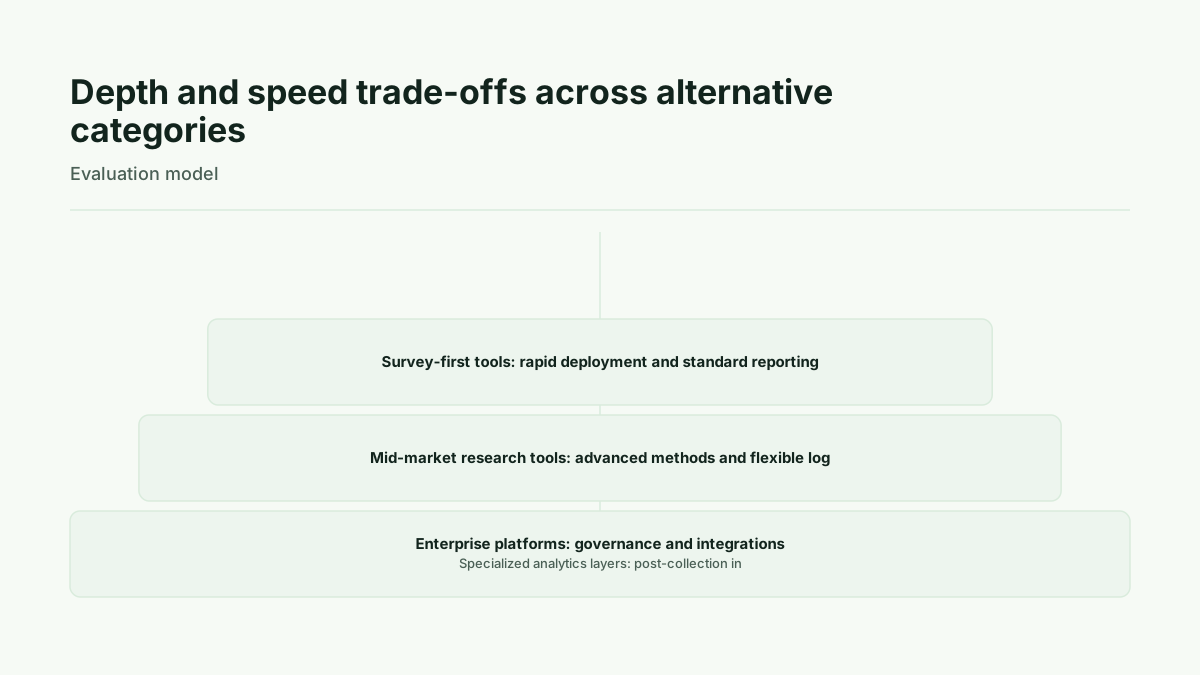
A useful comparison separates five capability groups: enterprise governance and integrations, research depth and logic, deployment speed, post-collection analytics, and pricing-specific modeling. A broad platform may be appropriate when several of these capabilities must operate inside one governed workflow. A focused tool may be more appropriate when only one job is central.
Enterprise platforms are positioned around governance, integrations, and mixed-method needs. Mid-market research tools emphasize advanced methods, flexible logic, and workflow automation. Survey-first tools address rapid NPS, CSAT, or pulse collection. Contextual tools capture feedback inside a product, while specialized analytics layers interpret information collected elsewhere. Pricing research tools apply specific methods to pricing decisions.
This framing avoids treating survey collection and analysis as the same capability. A team may need a way to collect responses, a separate layer to reason over qualitative or sentiment data, and a method-specific workflow to model pricing scenarios. Replacing all three with one suite may be unnecessary for a narrow job, while combining tools may introduce governance and integration work that must be evaluated directly.
The central trade-off is therefore depth versus speed, with governance and analytics as separate checks. The shortlist is directional, not a universal ranking. Current documentation should confirm access controls, data residency, integrations, export behavior, and available methods before procurement.
Match each platform to its strongest use case
Medallia and Forsta: Begin here when enterprise CXM, governance, complex integrations, or mixed-method research is the primary requirement. The fit boundary is a narrow study where the organization does not need the broader enterprise workflow.
QuestionPro and Alchemer: Consider these for mid-market research teams that need advanced methods, flexible logic, or workflow automation without automatically selecting a full enterprise platform. The fit depends on the specific method and workflow the team must run.
SurveyMonkey and Delighted: Shortlist these when the work centers on faster NPS, CSAT, or pulse programs. They are not presented here as universal replacements for enterprise governance or advanced pricing analysis.
Sprig: Use this category when the research job is contextual, in-product micro-feedback. It addresses feedback capture in the product environment, while a separate survey or analytics platform may still be needed for other research jobs.
Chattermill and SentiSum: Treat these as analytics layers that complement survey platforms rather than replace them. Their role belongs in the post-collection interpretation part of the stack.
Kinetic Pricing: Use this specialist path when the core decision concerns price points, price ranges, feature value, or package design. Its supported methods include Van Westendorp, Gabor-Granger, MaxDiff, and conjoint analysis. The [conjoint analysis] workflow and [MaxDiff] research explain two of those method families, while the [methodology is documented in detail] for pricing research.
A focused stack or specialist tool can be more appropriate than a broad CXM platform for a narrow research job. That is a workflow-fit decision, not a guaranteed cost or time outcome. The right answer may be one platform, or a combination in which collection, analytics, and pricing modeling have distinct roles.
A practical evaluation checklist
Use the same checklist for every finalist. First, define the primary job and the two or three modules currently used in the Qualtrics workflow. Then identify requirements that cannot be compromised.
Check panel management and respondent workflows if the study depends on them. Confirm whether the required advanced methods and logic are available. Review text analytics needs separately from survey collection. Examine access controls, data residency, and governance requirements with the relevant internal owners. Test BI integration, exports, APIs, and mobile collection using a realistic use case rather than a generic demonstration.
During vendor demonstrations, ask the team to show the path from response collection to the first usable insight. Ask how raw data is exported, how analysis is reviewed, and which steps require manual work. For a pricing study, ask how the method produces a price range, price-point result, feature ranking, or package comparison, and how the output distinguishes survey evidence from a decision scenario.
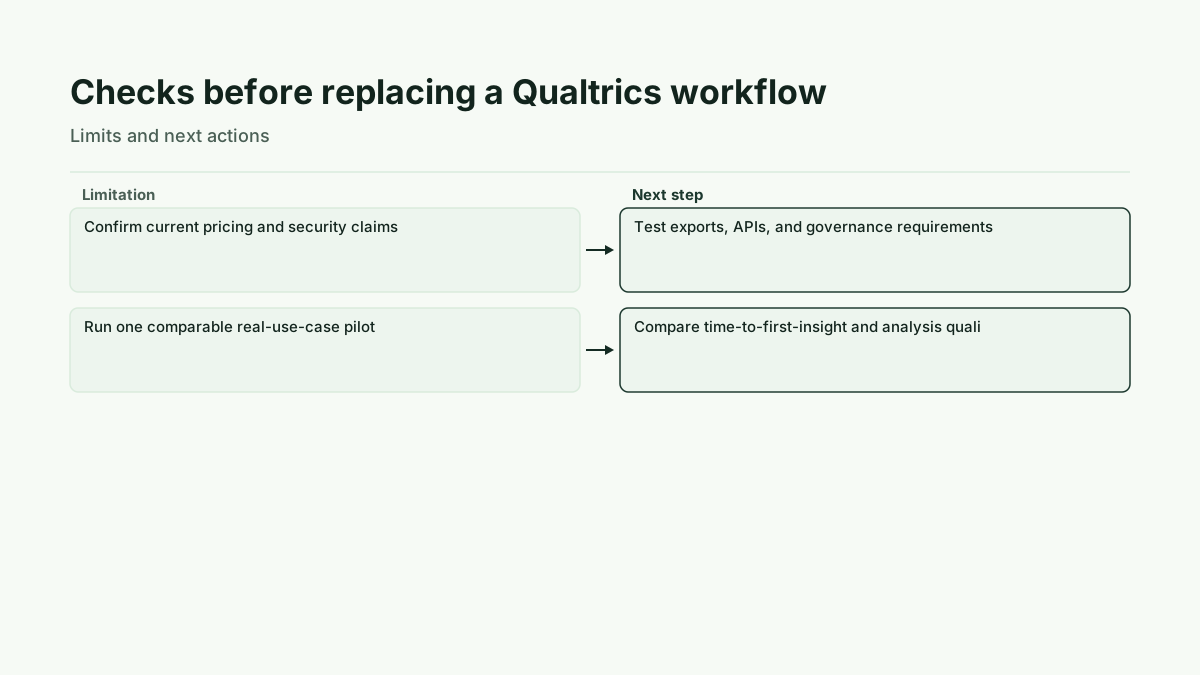
Procurement red flags include unclear current pricing, unconfirmed security or residency claims, inability to test exports, and demonstrations that avoid the workflow your team actually uses. These are validation prompts, not claims that any named vendor fails them. Vendor capabilities and pricing can change, so current documentation remains necessary.
Pricing-specific research is a separate buying decision
A general CXM platform may be excessive for an occasional pricing study because the study's central requirement is methodological rather than a complete customer-experience operating system. Kinetic Pricing is scoped to pricing research methods, including price range finding with Van Westendorp, price point testing with Gabor-Granger, feature value ranking with MaxDiff, and package and price design with conjoint analysis.
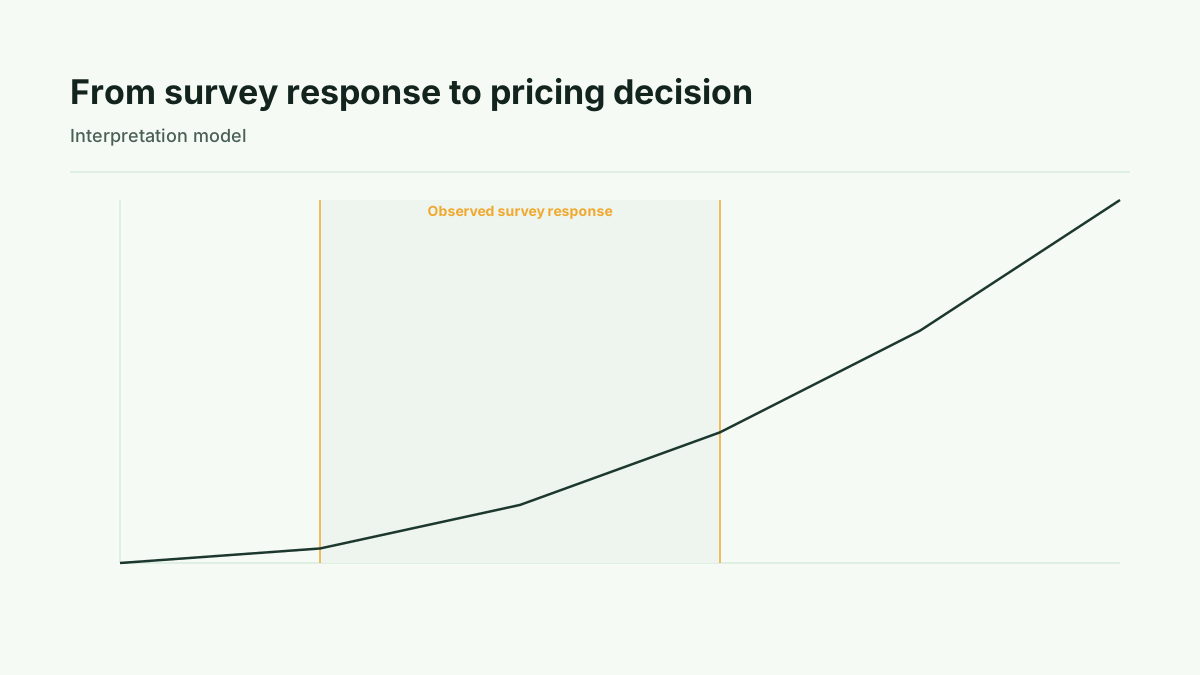
The output should be interpreted carefully. Survey responses provide stated purchase intent. Kinetic Pricing frames resulting outputs as deterministic revenue scenarios from survey evidence. A modeled scenario is not observed purchasing behavior, realized revenue, or a guarantee of future performance. The pricing decision still requires validation against the team's market context and an appropriate real-use-case pilot.
This distinction matters when comparing tools. A broad survey suite may collect the study, while a pricing specialist structures the method and makes the decision model explicit. Neither choice should be justified by treating stated intent as proof of what customers will buy.
Method
The selection process mapped buyer needs to the post-collection job, then compared the resulting categories by use-case fit rather than feature count. The supplied verification used vendor feature documentation, Gartner Peer Insights, G2, Capterra, Guideflow, and Sopact. The [Guideflow's 2026 survey tool roundup] supplied comparison context for survey-first tools, while the named review sources supplied review-platform signals.
Material platform positioning was retained only where the verified claims supported it. The analysis did not conduct independent load testing. It also does not convert review frequency into market share or treat vendor descriptions as independent performance findings.
Interpretation
Interpret the shortlist as a routing model. The best alternative is determined by the workflow after data collection: governance, advanced methods, rapid feedback, contextual capture, qualitative reasoning, or pricing modeling. A two-tool or three-tool stack may fit better than one monolithic replacement when those jobs are genuinely separate.
The decision should be based on the smallest credible workflow that satisfies the team's requirements. That does not mean choosing the narrowest product automatically. It means comparing the work the team must perform, the controls it must maintain, and the evidence it needs to produce before selecting a platform category.
Limits
Review-platform signals can overrepresent strong opinions and should not be treated as market share. Vendor pricing, capabilities, and security or integration claims can change and require confirmation in current documentation. The supplied material reports no independent load testing, so this article makes no independent performance claim.
Pricing evidence has a further limit. Stated purchase intent and modeled revenue scenarios are not observed customer behavior or realized revenue. Kinetic Pricing's comparison is scoped to pricing research and should not be read as a claim to replace general VoC, longitudinal panel management, or full CXM governance.
Next step
Identify the two or three Qualtrics modules your team actually uses. Name the primary post-survey job, record must-have governance and integration requirements, and shortlist two finalists. Run one comparable real-use-case pilot, then compare time-to-first-insight, data export, and analysis quality. Keep the evaluation grounded in the workflow rather than in a universal feature ranking.
Additional context on these methods is available from free pricing benchmarks and research assets, Qualtrics Alternatives: Market Research and Insights Teams in 2026 | Perspective AI, Qualtrics Alternatives: 9 Options Compared (2026) | Sopact and 15 best survey software tools tested in 2026 - Guideflow Blog.
Run this method with your users
Start 30-day free trial to run every method with your users, or Buy one study when one decision needs evidence now.
Sources
Perspective AI, “Qualtrics Alternatives: Market Research and Insights Teams in 2026”
Sopact, “Qualtrics Alternatives: 9 Options Compared (2026)”
Guideflow, “15 best survey software tools tested in 2026”
G2, “Alchemer Reviews”
Kinetic Pricing, “Test SaaS Pricing With Real Customers”
Kinetic Pricing, “Compare SaaS Packages With Conjoint”
Kinetic Pricing, “MaxDiff Analysis”