
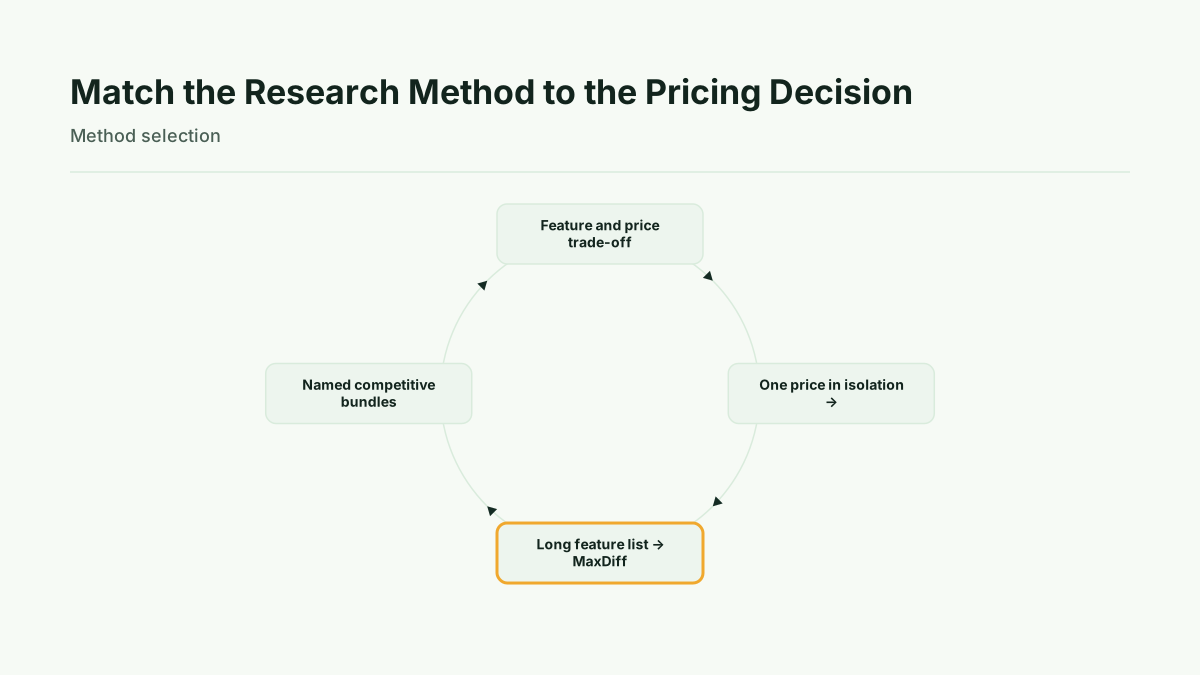
Use conjoint analysis when the decision requires testing feature and price trade-offs together, comparing realistic product bundles, or simulating competing scenarios. Use Van Westendorp or Gabor-Granger when the question is price in isolation, and use MaxDiff when the immediate need is feature prioritization before a fuller package study.
What Conjoint Analysis Measures and When It Fits
Conjoint asks respondents to evaluate product profiles that combine attributes and price. Their choices are used to estimate part-worth utilities, which represent the relative value associated with attribute levels, and relative-importance measures, which show how much each attribute contributes within the study design. This is the core of a discrete-choice approach.
The method fits a decision such as: which package should we launch, which features belong in each tier, or how will a proposed bundle compare with named alternatives? In each case, the team is not asking only whether a feature sounds attractive. It is asking respondents to make trade-offs between complete offers. That makes conjoint useful when product configuration and price must be considered together.
The narrower methods answer different questions. Van Westendorp and Gabor-Granger are focused options when the subject is price in isolation. MaxDiff can help rank a long feature list before the team selects a smaller attribute set for conjoint. The practical distinction is simple: choose the method that mirrors the decision you need to make, rather than using conjoint for every pricing question.
Five Conjoint Applications That Led to Different Decisions
The examples in the available research show that conjoint can support different types of decisions. They include Courtyard by Marriott, Honda Odyssey, Apple versus Samsung, VIVO smartphones, and the Portland Trail Blazers. The value of this set is not a single universal result. It is the range of business contexts in which teams can use bundle and attribute trade-offs.
For Courtyard by Marriott, the application illustrates experience design. A hospitality team can use a choice framework to examine how combinations of service and offer attributes affect preference. The decision is about the design of an experience, not simply the price of a room.
The Honda Odyssey example represents product design and feature valuation. A vehicle team can study which combinations of features and price make one configuration more attractive than another. The result supports a product decision about what to include and how to position it.
The Apple versus Samsung example shows how conjoint can examine competitive alternatives. The relevant decision is not just whether one feature is liked. It is how a complete offer compares with another complete offer when several attributes change together.
The VIVO smartphone example provides another application of feature valuation and regional pricing. The findings can be understood as a way to examine how preferences differ across a smartphone offer and its price, rather than treating willingness to pay as a single universal number.
The Portland Trail Blazers example represents experience design in a sports context. Product and pricing teams can take the same principle into subscriptions, memberships, or other packaged experiences. These cases point to the same decision rule: conjoint is strongest when the offer has several meaningful components that customers evaluate together.
Method: Design a Choice-Based Conjoint Study
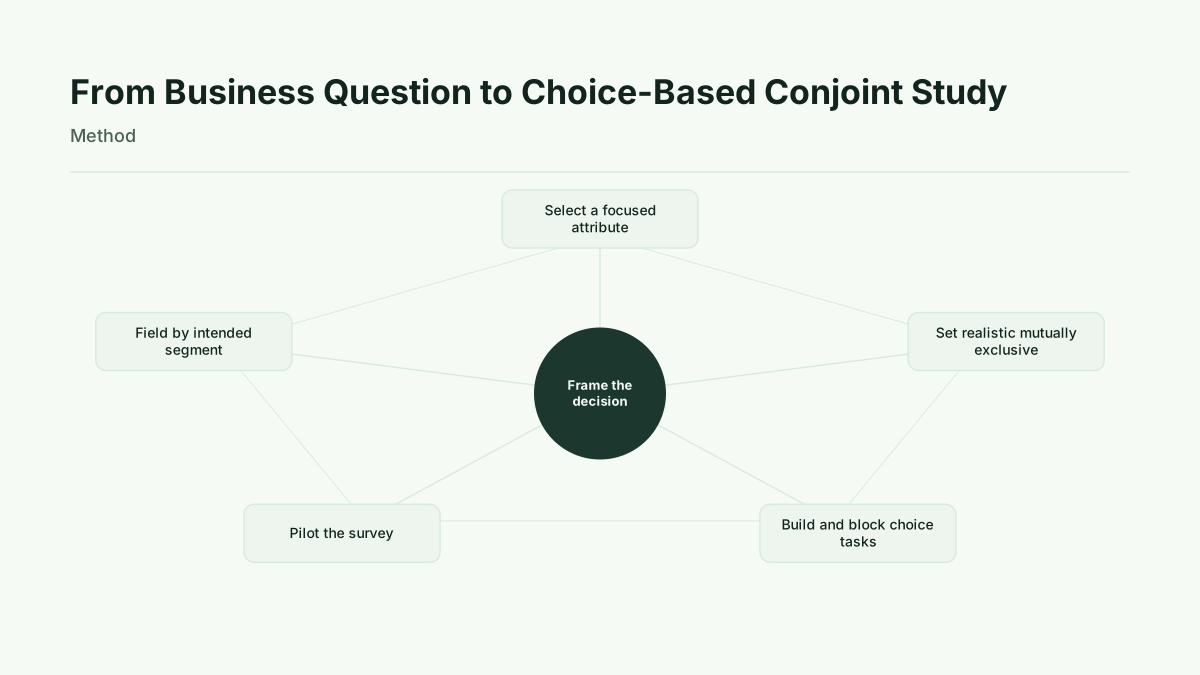
A sound study begins with the business decision, not with a survey template. Follow this sequence:
- Frame the decision. State whether the output will guide package design, feature inclusion, price positioning, competitive response, or another defined choice.
- Select a focused attribute set. Include the attributes that can realistically change the decision. If the list is too long, use MaxDiff or other research to prioritize features before conjoint.
- Set realistic, mutually exclusive levels. Each level should describe a plausible offer. Respondents should be able to understand the differences and accept the combinations as credible.
- Build choice tasks. Choice-based conjoint asks respondents to choose among complete product profiles and commonly includes a no-choice option. The task should resemble the decision customers would actually face.
- Create the experimental design and blocks. The design determines which profiles appear together. Blocking distributes tasks across respondents so that no individual receives every possible combination.
- Plan the sample by intended segment. Decide which segments require separate interpretation before fielding. A pooled sample can conceal meaningful differences if the business decision depends on segment-specific preferences.
- Pilot the survey. Check comprehension, realism, task burden, and whether the price and feature descriptions work as intended. Revise before the main fieldwork.
- Field the study by intended segment. Keep the respondent definition aligned with the market or customer group whose decision the team will make.
The types section provides additional framing for conjoint formats and survey structure. The design should remain subordinate to the decision. More attributes, more levels, or more tasks do not automatically make the study more useful.
Interpretation: From Part-Worths to Pricing Scenarios
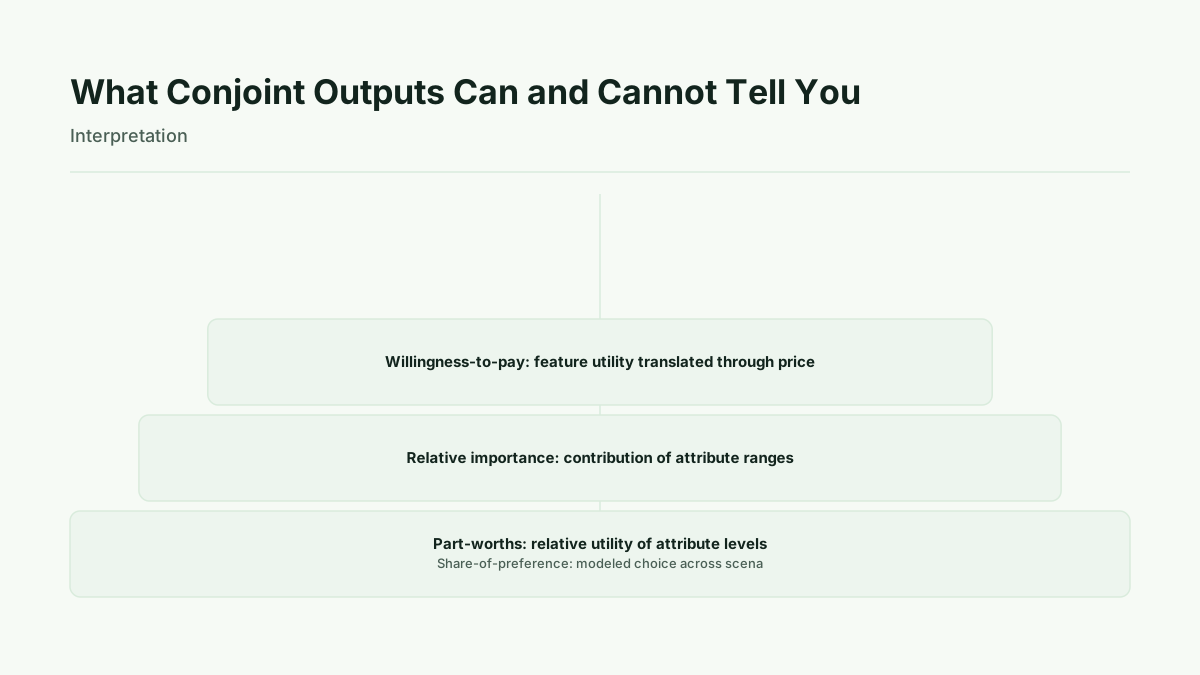
Start with the part-worths. They show the utility associated with each level within the model. Relative importance can be derived from the range of an attribute's part-worths and compared with the summed ranges across attributes. An attribute with a larger range contributes more variation to the modeled preference in that study, but this is not a universal ranking outside the defined attributes, levels, and sample. See the Conjoint Analysis: Examples, Challenges, & Survey discussion for this interpretation.
Next, translate feature value into willingness to pay. A willingness-to-pay estimate can be modeled by comparing the utility gained from a feature with the utility loss associated with a price increase. This is a model-based translation of trade-offs, not a guaranteed transaction price. It is most useful when the price attribute is designed credibly and the comparison stays within the study's tested range.
Market simulation can then convert summed utilities into share-of-preference estimates and compare modeled revenue across scenarios. A team might compare several complete packages, prices, or competitive sets using the same estimated utilities. These outputs are Simulated and modeled. They represent stated choice translated through the model, not observed purchases.
Keep the evidence types separate. Stated purchase intent is what a respondent says they would choose in the research task. Modeled share of preference is an analytical estimate across scenarios. Modeled revenue combines that estimate with scenario assumptions. Observed purchases are actual customer or sales behavior. Conjoint does not turn the first three into the fourth.
Limits: Where Conjoint Results Can Mislead
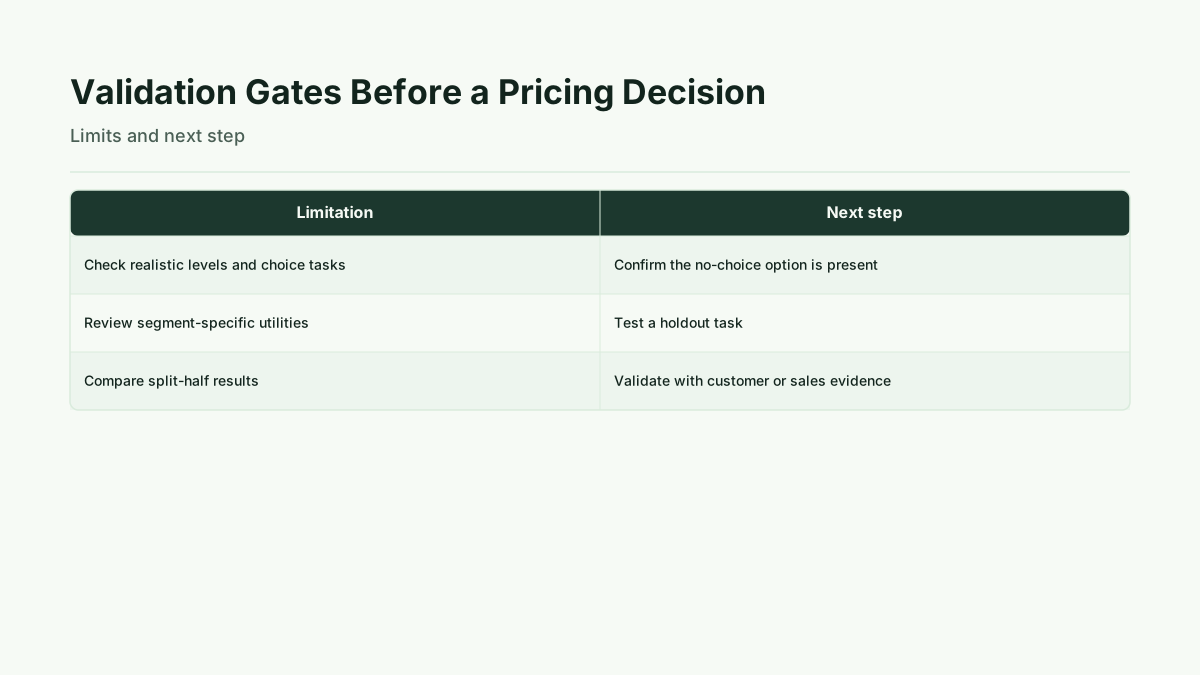
Conjoint results can mislead when the attribute set is overloaded. Too many features or levels can make tasks difficult and increase respondent fatigue. Implausible levels create a different problem: the model may estimate preferences for offers that customers would not seriously consider.
Omitting a no-choice option can force a selection when none of the presented profiles is acceptable. Poorly designed tasks can therefore make modeled demand appear stronger than the decision context supports. Pooled segments can also hide different utilities, while a small sample may make segment-level interpretation unstable. These are reasons to treat numeric guidance as a study-specific heuristic, not a universal threshold.
Hypothetical bias is the principal limitation. Conjoint measures hypothetical stated choices rather than guaranteed purchases, so important decisions should be validated with real customer or sales evidence. The real-customer validation guidance describes why research should be connected to observed behavior before a consequential change is committed.
Use holdout tasks and split-half checks to assess model reliability before acting on the results. A holdout task tests whether the model can reproduce choices that were not used in the same way during estimation. A split-half check compares results across portions of the data. Neither replaces external validation, but both can reveal whether the model is dependable enough for scenario analysis.
Next step: Turn the Decision Into a Study Brief
Write a one-page brief with the decision, target segment, proposed alternatives, attributes, price levels, and the action the result may support. Mark which outputs are required: feature valuation, package comparison, willingness-to-pay estimates, or modeled share of preference.
Then choose the narrowest adequate method. If the question is feature-price trade-off together, select conjoint. If it is price acceptance alone, consider Van Westendorp or Gabor-Granger. If the challenge is a long list of features, prioritize with MaxDiff before designing conjoint. A research template can help organize the brief without replacing judgment about the decision.
Build the tasks, include a no-choice option where appropriate, and pilot the wording and realism. After fieldwork, review utilities by intended segment, run holdout and split-half checks, and label every scenario output as modeled or Simulated. Finally, compare the recommendation with customer or sales evidence. If the study and observed behavior disagree, investigate the gap before changing the product or price.
For teams that want a structured way to run pricing research, Explore Pro is the appropriate next step.
Additional context on these methods is available from drum-divider case, validate results with real customers, research templates and How to Conduct Pricing Research - TRC Insights.
Run this method with your users
Start 30-day free trial to run every method with your users, or Buy one study when one decision needs evidence now.
Sources
TRC Insights, How to Conduct Pricing Research
Sawtooth Software, Conjoint Analysis Examples
Quali-Fi, Conjoint Analysis Examples
Management Consulted, Conjoint Analysis: Examples, Challenges, & Survey
Kinetic Pricing, Test SaaS Pricing With Real Customers