
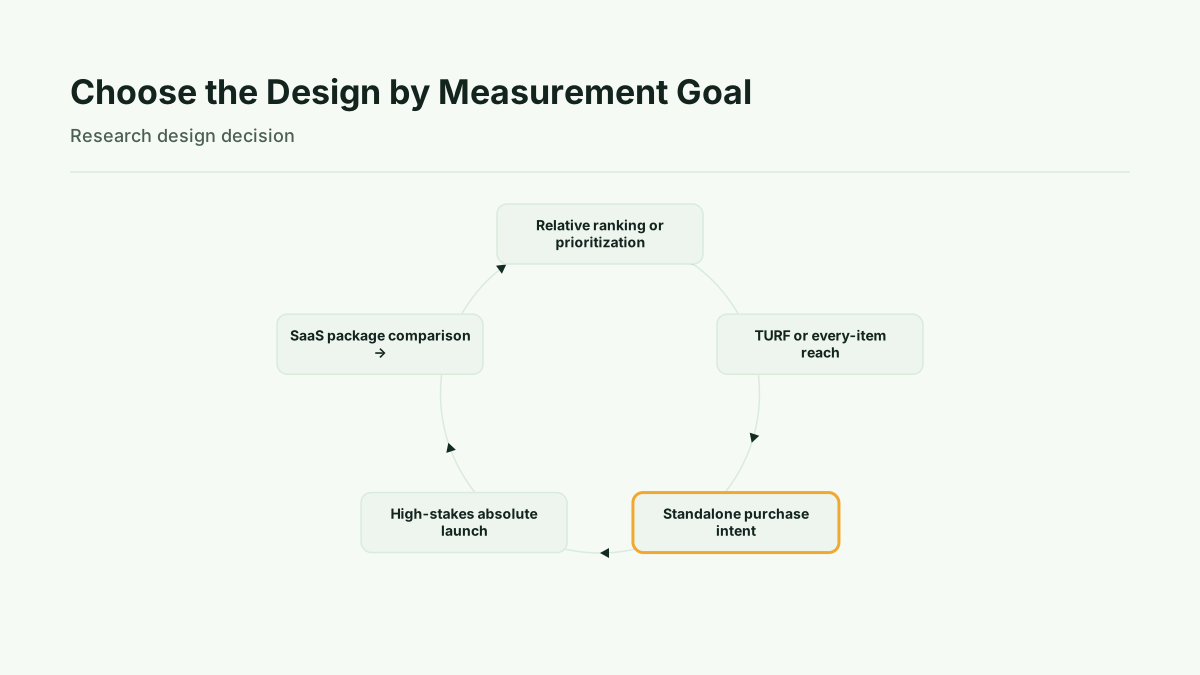
Choose sequential monadic testing when the decision is relative, such as ranking concepts, prioritizing packages, or estimating TURF-style reach. Choose monadic testing when each concept needs an independent absolute evaluation, especially for a launch decision, standalone purchase-intent score, or first-impression category. Do not choose sequential monadic testing on respondent cost alone. The research objective determines which design produces useful evidence.
What Each Design Measures
Monadic testing exposes each respondent to one concept. Researchers compare results between independently assigned groups, with each group evaluating a different concept. This structure is designed to produce a standalone read for each concept without asking one respondent to judge several alternatives in sequence. Enumerate defines the distinction between monadic and sequential monadic testing, and aytm describes the corresponding concept-testing designs.
Sequential monadic testing exposes each respondent to multiple concepts. The respondent answers a repeated question battery for each concept, which supports within-respondent comparison. The output is therefore well suited to relative preference, ranking, and prioritization. The same repeated exposure also creates the design's central risk: a later rating may be influenced by what the respondent saw earlier.
In operational terms, a monadic study assigns people to separate concept cells. A sequential study assigns people to sequences, repeats the measurement battery, and compares responses within the same person as well as across sequence groups. Randomization changes the order across respondents. Counterbalancing gives the sequences planned representation rather than allowing one order to dominate.
TURF-style reach is another reason to consider sequential exposure. Reach and frequency calculations require every respondent to evaluate every item in the set, so a design that exposes each respondent to the full set can support that comparative task. aytm explains the every-item requirement for reach and frequency calculations.
Sample Efficiency Versus Measurement Purity
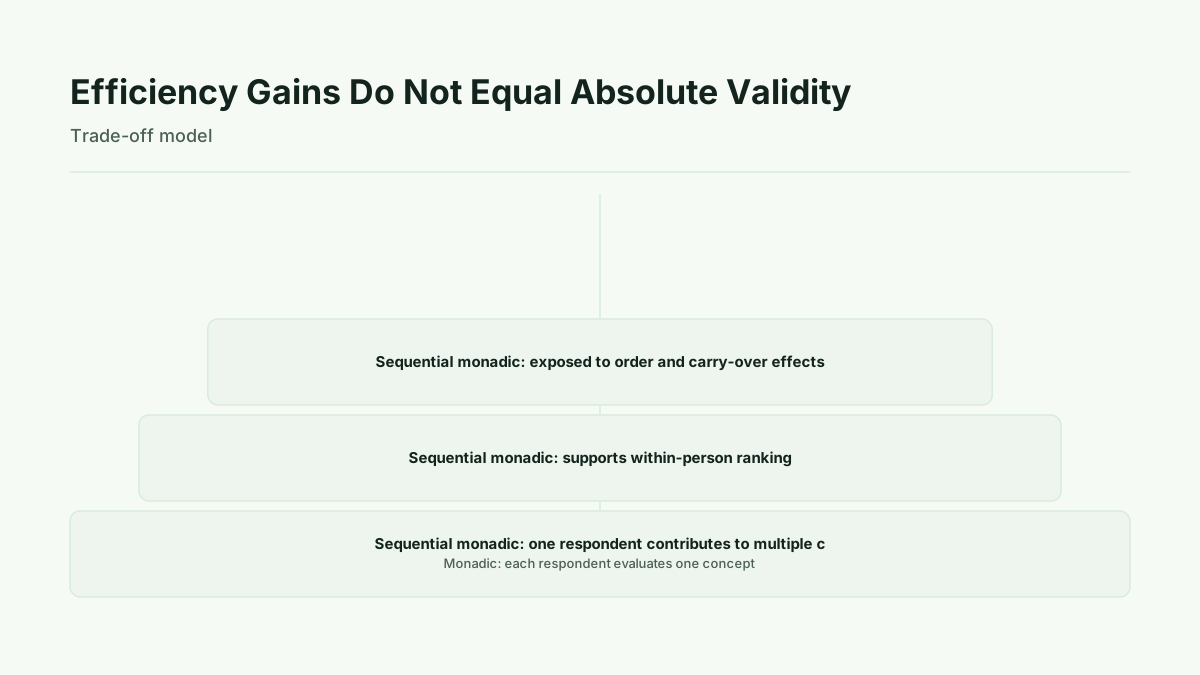
When every respondent evaluates every concept, a sequential monadic design can reduce the total respondent requirement compared with assigning independent respondents to each concept. Sogolytics discusses this respondent-efficiency trade-off. Any efficiency figure should be treated as an illustrative example, not as a universal planning formula. The actual design still depends on the metric, audience, number of concepts, quotas, and decision stakes.
The gain is not free. Sequential exposure gives one respondent information about multiple concepts, making comparative analysis possible. It also means that the respondent's later judgments may not be independent of earlier exposure. Order and carry-over can change later concept ratings. Enumerate describes the efficiency benefit alongside these risks.
That distinction is measurement purity versus comparative usefulness. Monadic testing is stronger when the question is, “What is the standalone score for this concept?” Sequential monadic testing is stronger when the question is, “Which concept is preferred, or how should this set be prioritized?” A sequential purchase-intent score remains stated intent in a comparative design. It is not observed buying behavior, a standalone demand estimate, or an independent revenue forecast.
For SaaS, sequential comparison can help rank packaging options. It should not turn package preference into willingness-to-pay by implication. Price-range and price-point questions require methods suited to those measurements. Kinetic Pricing's Van Westendorp and Gabor-Granger references address different pricing questions than package ranking.
How Order Effects Change the Read
Order effects occur when a concept's position in the sequence affects its rating. A first concept may establish an anchor for later judgments. A later concept may be evaluated in light of features, language, or prices already seen. This is carry-over: the respondent's response to one item is not fully isolated from the sequence around it.
Randomization and counterbalancing distribute directional bias across respondents. If different respondents see different orders, a single fixed sequence is less likely to determine the overall result. But rotation reduces directional bias without eliminating within-respondent carry-over. The respondent still experiences the concepts in a particular order, and that experience can affect the response path. Enumerate outlines this limitation and mitigation.
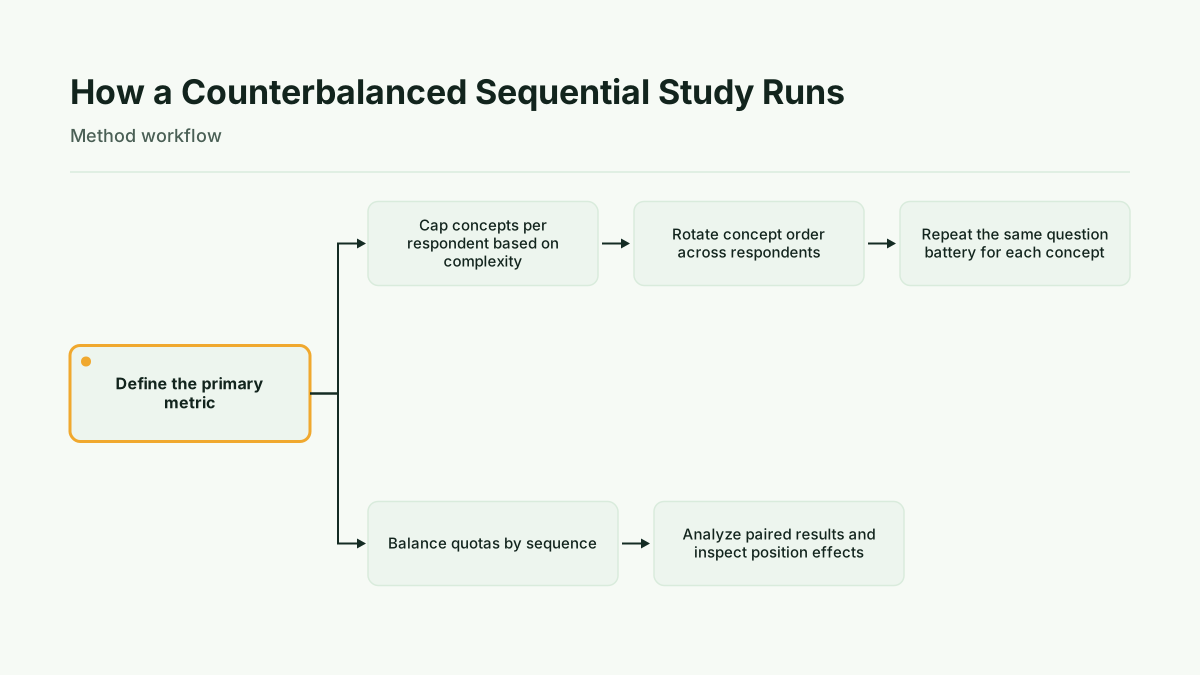
Method: Start with the primary metric, then cap concept exposure based on concept complexity and the burden of the repeated battery. Rotate sequence order, balance quotas by sequence, and repeat the same core questions for each concept. Add fatigue or attention safeguards. Survey programming can use loops and group logic so the battery repeats consistently rather than requiring a separate survey for each concept. Koji describes these programming patterns.
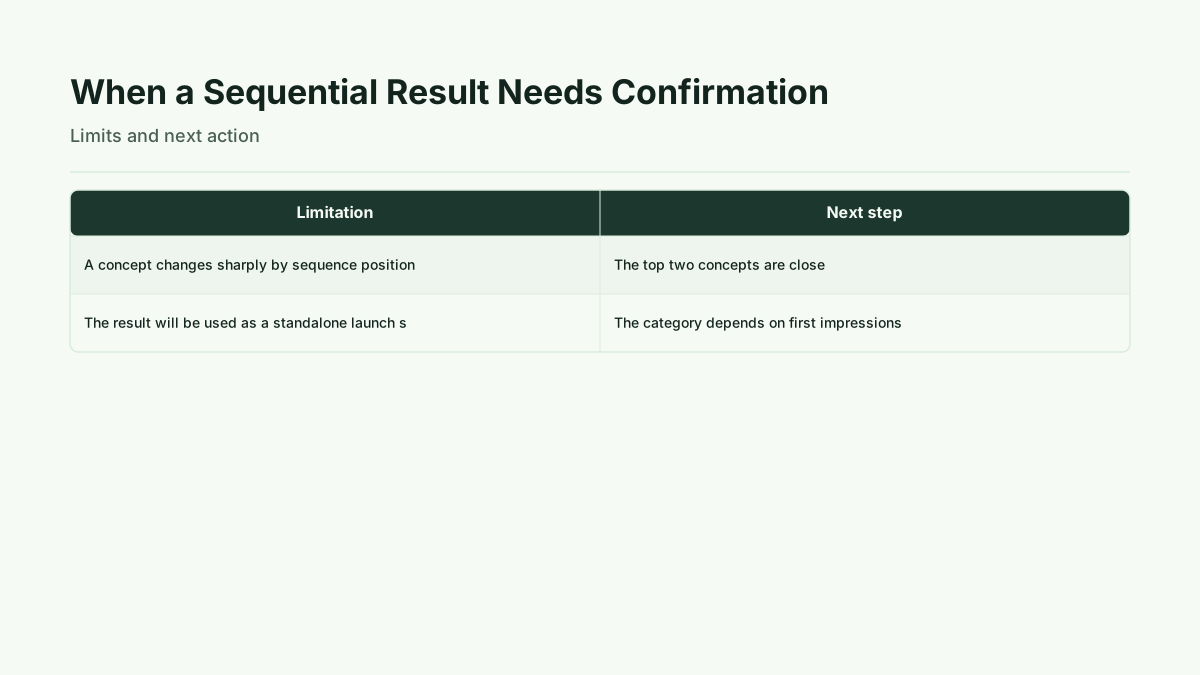
After fieldwork, inspect whether ratings vary by sequence position. A sharp position pattern does not automatically invalidate the study, but it changes how confidently the result can be interpreted. It is evidence that the comparative result may be sensitive to exposure order.
Match the Design to the Research Question
Use sequential monadic testing when the decision requires comparison across the same set of alternatives. Suitable questions include which concepts rank higher, which features deserve prioritization, which packages respondents prefer, or which combination produces broader reach in a TURF-style exercise. These tasks depend on comparative judgments or exposure to every item.
Use monadic testing when each concept needs a clean standalone score. This includes standalone purchase intent, uncontaminated absolute measures, and high-stakes launch or go-no-go decisions. It is also preferable when first impressions are especially important, including categories such as fragrance and personal care, where earlier exposure could affect the next evaluation.
A useful rule is to name the decision output before naming the design. If the output is a rank, shortlist, priority order, or reach calculation, sequential monadic may be appropriate. If the output is an absolute score that will be read on its own, monadic is the safer starting point. If a sequential study produces a shortlist but the final decision needs an absolute score, use a focused monadic follow-up.
Build and Analyze a Sequential Monadic Study
Process:
- Define the primary metric and the decision it will inform.
- Set a concept-load limit based on complexity, survey length, and fatigue risk. The evidence supports capping exposure, but it does not establish a universal concept limit.
- Program the repeated battery so wording and scale remain consistent across concepts.
- Rotate sequence order and set quotas so sequence groups are balanced.
- Add attention and fatigue safeguards before launch.
- Analyze paired responses, position effects, rankings, effect sizes, and confidence intervals as appropriate to the metric.
The analysis must respect the data structure. Sequential observations from one respondent are paired or within-subject observations, not independent monadic cells. Treating them as independent can misrepresent the comparison. Enumerate emphasizes analysis that respects the paired structure.
For a ranking question, examine the ordering and the uncertainty around close results rather than treating a small difference as a decisive win. For a purchase-intent question, report the result as stated purchase intent. Do not describe it as observed conversion, realized revenue, or a launch estimate. Any modeled or simulated revenue analysis would be a separate model and must remain clearly distinguished from survey responses.
Interpretation
Interpret sequential monadic results as evidence about relative preference, prioritization, or reach within the tested set. The design can show which option respondents favor relative to the alternatives they evaluated. It cannot, by itself, establish an uncontaminated standalone score for every option or independently forecast revenue.
Interpretation should combine the overall comparison with sequence-position checks. A stable ordering across sequence groups supports a clearer comparative read. A result that changes materially by position should be treated as order-sensitive and may require confirmation. Close rankings also call for restraint: the right conclusion may be that the shortlist is unresolved rather than that one concept has definitively won.
For SaaS pricing, use package-ranking results to decide which packaging options deserve further work. Then connect that shortlist to a price-range or price-point method. A package comparison and a willingness-to-pay measurement answer different questions.
Limits
Counterbalancing distributes order effects, but it does not erase carry-over within a respondent. Fatigue safeguards reduce burden but do not guarantee uncontaminated responses. Efficiency assumptions are not a universal sample-size formula, and the supplied evidence does not establish a universal concept limit or category-specific effect magnitude.
Category transferability also matters. A design that works for comparative package prioritization may be less suitable where the first impression is itself the decision signal. Dense SaaS packages can be especially difficult to compare because respondents must retain multiple details across repeated evaluations. Absolute willingness-to-pay should not be inferred from sequential preference or stated purchase-intent scores.
Next step
Write the primary metric before choosing the survey design. If the metric is relative preference, rank, or reach, build a counterbalanced sequential design with capped exposure and sequence quotas. Pilot the questionnaire, inspect position effects, and analyze the responses as paired data. If the metric must stand alone for a launch or business case, use monadic testing or confirm the sequential shortlist with a focused monadic follow-up. For SaaS pricing, connect package-ranking work to an appropriate price-range or price-point method rather than reading sequential purchase intent as willingness to pay.
Additional context on these methods is available from roughly a quarter of the total respondents, rotation reduces directional bias but does not eliminate within-respondent carry-over, an uncontaminated, absolute measure, reach and frequency calculations require every respondent to evaluate every item in the set, Smart loop and group logic features handle this repetition without requiring a separate survey per concept, attribution framework, self-serve pricing research, free pricing research and benchmarks, plans, Monadic vs Sequential Monadic Testing: Key Differences — Enumerate and Monadic vs Sequential Monadic Concept Testing – aytm Help Center.
Run this method with your users
Start 30-day free trial to run every method with your users, or Buy one study when one decision needs evidence now.
Sources
Enumerate, “Monadic vs Sequential Monadic Testing: Key Differences”
a yt m Help Center, “Monadic vs Sequential Monadic Concept Testing”
Sogolytics, “Monadic vs Sequential Monadic Survey Design”
BrandSpeak, “Monadic vs Sequential Monadic Testing”
Koji, “Monadic Testing Guide”
Kinetic Pricing, “Test SaaS Pricing with Real Customers”
Kinetic Pricing, “Test SaaS Price Points with Gabor-Granger”
Kinetic Pricing, “Pricing Research Without a Consultant”