
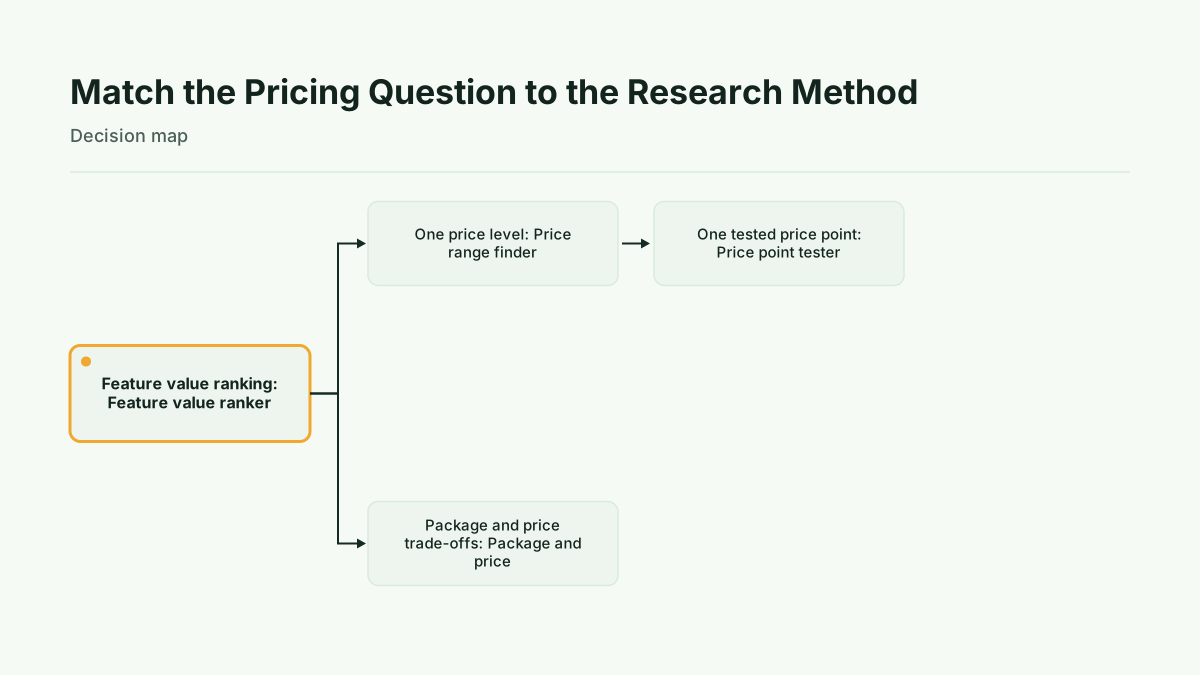
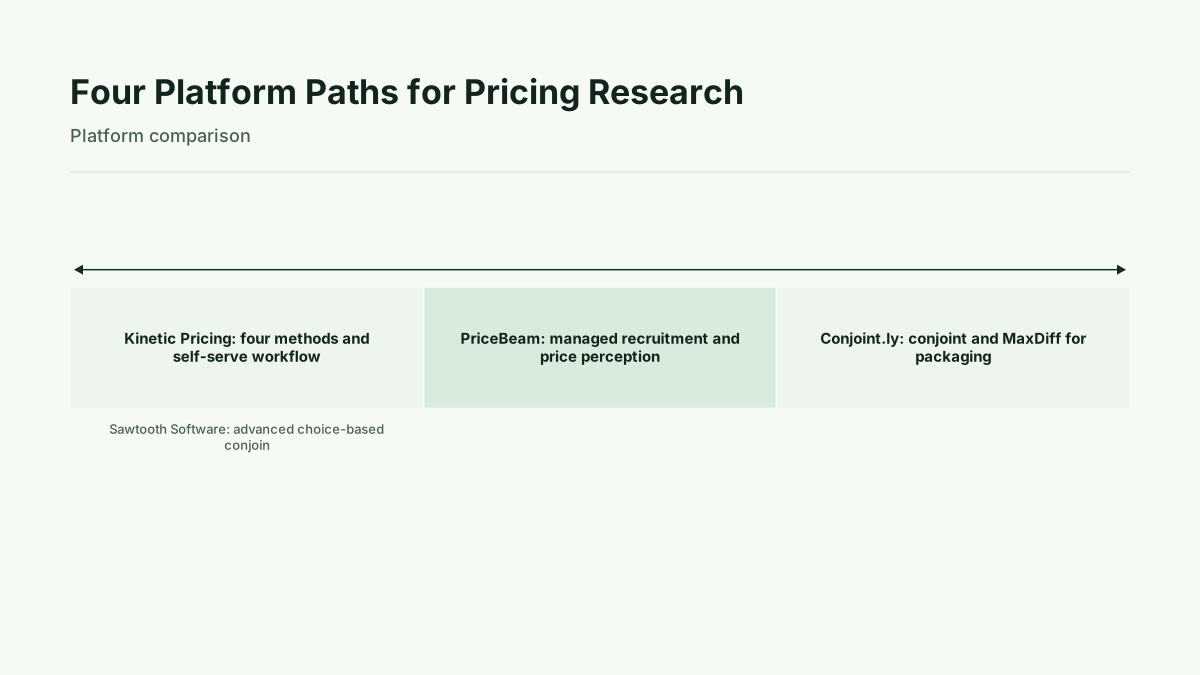
The best Qualaroo alternative depends on the pricing decision you need to make. Use Kinetic Pricing for self-serve research across four methods, PriceBeam when managed respondent recruitment is the priority, Conjoint.ly for feature and package trade-offs, or Sawtooth Software for complex enterprise conjoint programs. Start with the question: an initial price range calls for Van Westendorp, a tested price point calls for Gabor-Granger, feature value calls for MaxDiff, and package trade-offs call for conjoint.
Start With the Pricing Question, Not the Platform Name
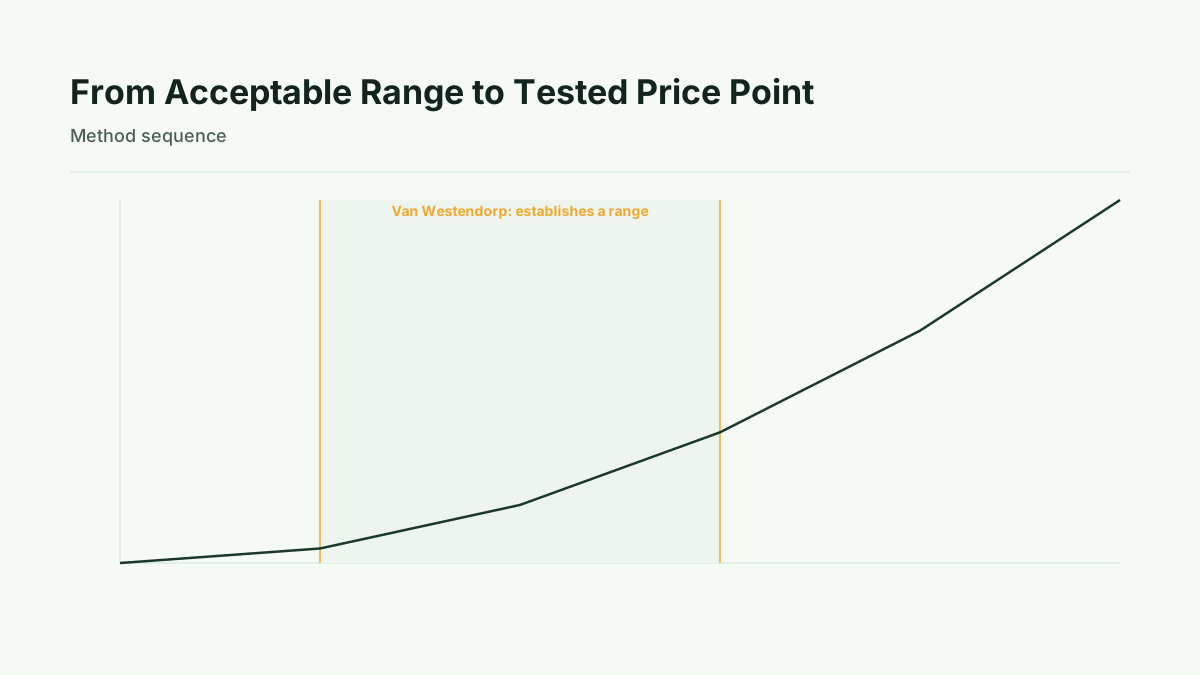
A feedback tool and a pricing research workflow answer different questions. If the decision is whether a single offer feels too cheap, expensive, or acceptable, Van Westendorp produces an acceptable price range. The method uses price-perception thresholds rather than asking respondents to choose among a portfolio of packages. Penn State course materials describe the method as price research based on those perceptions.
If the decision is which price point to test, Gabor-Granger presents predefined prices and measures stated purchase likelihood at each one. Those responses can identify a revenue-maximizing point in a model based on stated likelihood. That is useful for narrowing a price decision, but it is not the same as observing completed purchases.
When the question includes features, tiers, or bundles, a single-price method is incomplete. Conjoint and MaxDiff are appropriate when respondents must express trade-offs. Conjoint can examine package and price combinations, while MaxDiff ranks feature value. Guidance on feature-level willingness-to-pay makes the same method-first distinction: use a trade-off design when the product decision involves more than one price level.
This produces a simple first decision rule:
- Choose Van Westendorp for an initial acceptable range.
- Choose Gabor-Granger for predefined price points.
- Choose MaxDiff for feature value ranking.
- Choose conjoint for package and price trade-offs.
Compare Kinetic Pricing, PriceBeam, Conjoint.ly, and Sawtooth Software
The four alternatives fit different operating models and research decisions.
| Platform | Positioning in the supplied evidence | Best fit | |---|---|---| | Kinetic Pricing | Self-serve workflow supporting Van Westendorp, Gabor-Granger, MaxDiff, and conjoint, with outcome or scenario modeling | Teams that want to move among range, price-point, feature, and package questions | | PriceBeam | Managed price-perception research with vendor-sourced recruitment | Teams for which managed recruitment is the priority | | Conjoint.ly | Conjoint or advanced choice-based research positioning | Feature, tier, and package trade-offs | | Sawtooth Software | Advanced choice-based conjoint positioning | Complex enterprise conjoint programs |
This comparison is about fit, not a claim that one platform has universally better results. Kinetic Pricing is the broadest self-serve match when the research sequence may move from a range to a price point and then to feature or package choices. PriceBeam is the more relevant path when the central operational need is managed recruitment. Conjoint.ly and Sawtooth Software are more directly aligned with conjoint-centered work, with Sawtooth positioned for advanced choice-based conjoint programs.
The respondent-access distinction matters. A platform can support a research method without supplying the people who must answer it. Before selecting a tool, confirm whether your team already has access to suitable respondents or needs vendor-sourced recruitment. The decision should also account for the type of output required: a price range, a stated-likelihood model, a feature ranking, or a package-choice model.
Method: Sequence Research From Range to Price Point to Package
A practical sequence starts with the least complex method that can answer the current decision.
First, use Van Westendorp to establish a defensible acceptable range. It is a screening step for the boundaries of a price conversation, not a final observation of demand. Next, use Gabor-Granger to test predefined points within that range. The resulting purchase-likelihood responses can support a modeled price-point comparison.
Only then escalate when the remaining uncertainty concerns the product itself. Use MaxDiff when the unresolved issue is which features carry more value. Use conjoint when buyers must weigh features, tiers, packages, and price together. This sequence prevents a packaging question from being reduced to a single-price question and prevents an advanced choice model from being used when a range is all the decision requires.
The process is therefore: define the decision, select the lightest suitable method, confirm respondent access, and escalate only when the next decision requires richer trade-offs. Kinetic Pricing supports this sequence in a self-serve workflow across Van Westendorp, Gabor-Granger, MaxDiff, and conjoint.
Interpretation: Separate Stated Intent, Modeled Revenue, and Observed Behavior
Survey answers, model outputs, and live pricing behavior are different evidence types. Stated purchase likelihood is a response to a presented question. Modeled revenue combines those stated responses with a price assumption. Observed behavior is what people do in an actual purchasing environment. One should not be presented as another.
Illustrative example. Simulated scenario: suppose a study includes 220 trial users, produces an acceptable range of $39 to $69 per subscription period, and indicates a Gabor-Granger point near $54 per subscription period. The current price in the scenario is $45 per subscription period. These values can illustrate how a team might move from a range to a tested point, but they do not establish observed revenue, a guaranteed lift, or a causal result from changing the price.
The correct interpretation is narrower. The $39 to $69 per subscription period range is an illustrative stated threshold, and the $54 per subscription period point is a simulated model output based on stated purchase likelihood. The $45 per subscription period figure is the scenario’s current price. To learn whether behavior changes, the team would need an appropriate live pricing test or other behavioral validation. Practitioner guidance on B2B SaaS pricing emphasizes this separation between survey research, modeling, and validation.
Limits: Sample Access, Reference Prices, and Survey Bias
Research quality depends on who answers, what they know, and how closely the situation resembles a real purchase. Consumer Van Westendorp studies may require larger samples for stability. Some guides recommend thousands of responses for stable B2C results. That is sample guidance, not a guarantee that a large response count removes bias.
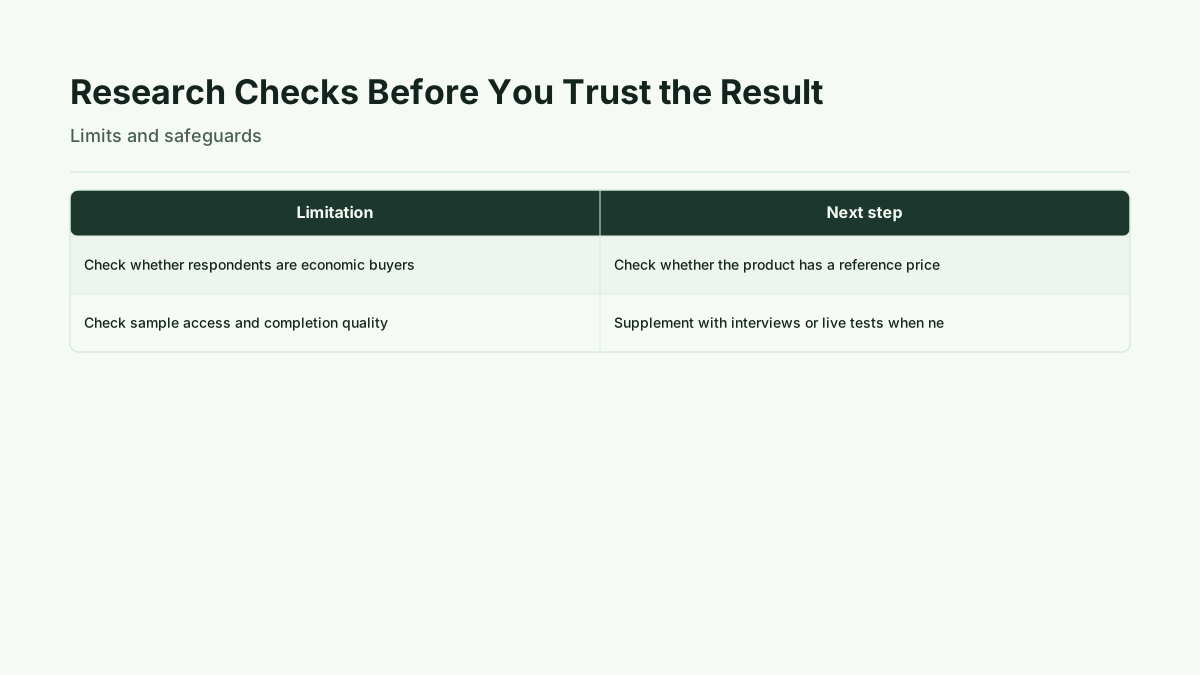
Targeted B2B research has a different priority: genuine economic buyers should be represented. Respondents who cannot approve, influence, or pay for the purchase may provide useful perceptions, but their answers should not automatically stand in for buying decisions. Practitioner guidance also suggests supplementing targeted B2B research with four to eight interviews when qualitative context is needed.
Reference prices create another limit. Van Westendorp results can be less reliable when respondents have little basis for judging the product’s price. Novel products, unfamiliar categories, or unclear alternatives can make stated thresholds harder to interpret. In those situations, interviews can clarify the language and comparison points before a larger survey is treated as decision-ready.
Finally, a survey does not remove the need for validation. A range study may narrow the decision, and a price-point study may model stated likelihood, while a live test can examine observed behavior. The appropriate evidence depends on the risk and reversibility of the pricing change.
Next Step: Select the Lightest Method That Answers the Decision
Use this decision map:
- Identify whether the decision concerns one price level, a tested price point, feature value, or a package and price combination.
- Confirm whether you can reach the right respondents, especially genuine economic buyers for a B2B decision.
- Select Van Westendorp, Gabor-Granger, MaxDiff, or conjoint according to that decision.
- Start with a range study before committing to advanced conjoint or enterprise research unless package trade-offs are already the central question.
- Treat stated intent, modeled revenue, and observed behavior as separate evidence, then supplement with interviews or live tests when the result needs validation.
Choose Kinetic Pricing when self-serve access across these methods matches the decision. Choose PriceBeam when managed recruitment is the priority, Conjoint.ly when conjoint-centered packaging work fits, and Sawtooth Software when the program requires advanced enterprise choice-based conjoint. The lightest suitable method is usually the clearest starting point.
Additional context on these methods is available from self-serve model against hiring a consultant, research and benchmarks page, Penn State course materials — Price research (Van Westendorp) (node 733), Van Westendorp price sensitivity meter (LogRocket blog), Pricing Research Methods: A Complete Comparison (Quali‑Fi) and Pricing Research for B2B SaaS: What to Charge (Glasgow Research Blog).
Run this method with your users
Start 30-day free trial to run every method with your users, or Buy one study when one decision needs evidence now.
Sources
- Penn State course materials, “Price research (Van Westendorp)”
- Quali-Fi, “Pricing Research Methods: A Complete Comparison”
- Glasgow Research Blog, “Pricing Research for B2B SaaS: What to Charge”
- LogRocket, “Van Westendorp price sensitivity meter”