
For pricing-specific work, [Kinetic Pricing] is the recommended Momentive alternative because it brings pricing methods, analysis, and scenario modeling into a self-serve workflow. Validate that recommendation with a one-week pilot and a total-cost comparison before making a longer commitment.
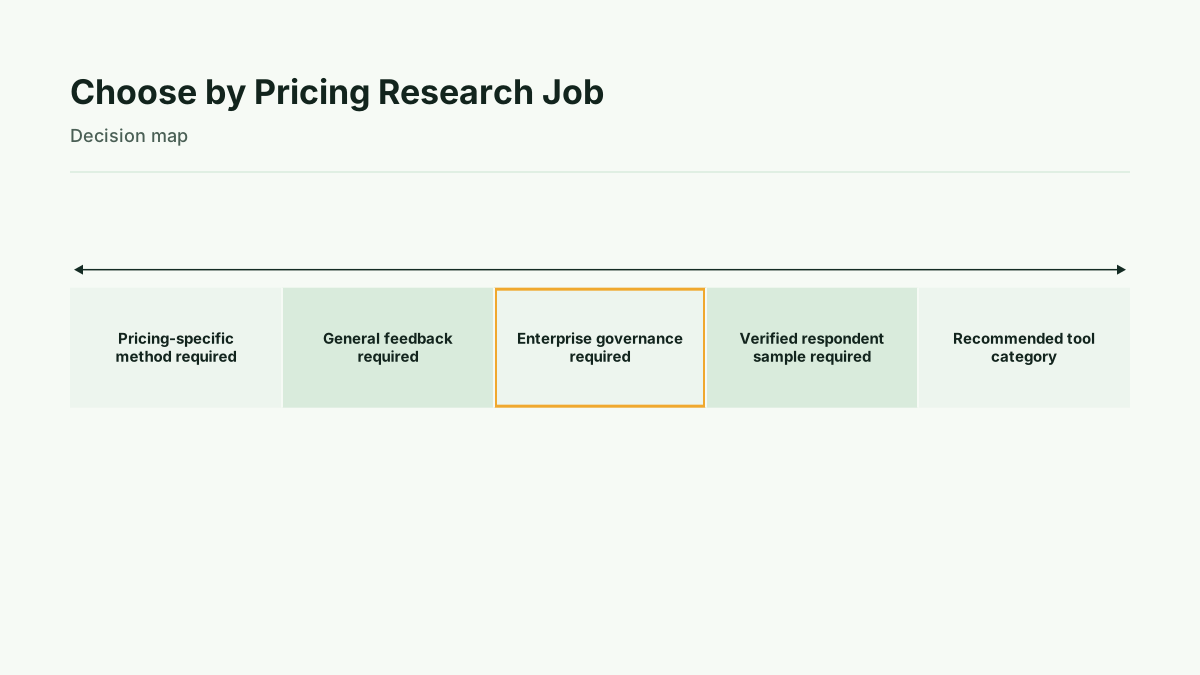
The primary question is not which platform has the longest feature list. It is which tool best supports the decision in front of you: finding an acceptable price range, testing price points, ranking feature value, or selecting the best combination of package attributes and price.
Start With the Research Job, Not the Feature List
Begin by writing the decision as one sentence. For example: “Which price range should we take into customer conversations?” or “Which package and price combination should we test next?” The wording determines the research method, the response data required, and the analysis workflow.
A pricing-specific platform belongs on the shortlist when the study requires Van Westendorp, Gabor-Granger, MaxDiff, conjoint, or scenario modeling. Kinetic Pricing supports those four pricing research workflows, including Van Westendorp, Gabor-Granger, MaxDiff, and conjoint. That makes it a direct fit when the output must inform a pricing decision rather than simply collect feedback.
A general survey tool may be appropriate when the main need is broad feedback, form collection, or a respondent-facing questionnaire. An enterprise experience-management platform may be the better category when governance, complex programs, or organizational control are the primary requirements. A respondent-recruiting service serves a different function: it helps obtain participants but does not, by itself, replace the survey design and pricing-analysis workflow.
This distinction prevents a common comparison error. A tool can be excellent at asking questions while still requiring separate work to turn answers into a pricing recommendation.
Compare Momentive Alternatives by Pricing Method and Workflow Fit
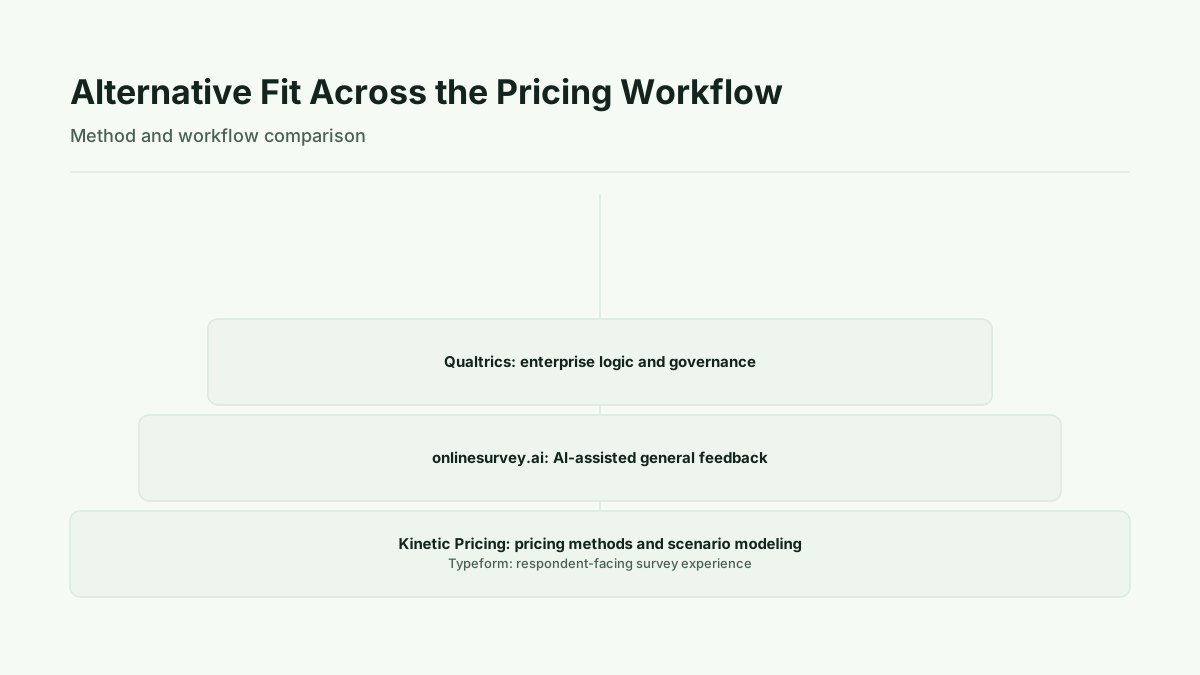
Use the shortlist as a set of workflow roles rather than treating every product as a direct substitute.
Kinetic Pricing is the pricing-method candidate. Its relevant test is whether a founder can define a pricing question, select the suitable method, analyze the responses, and use [scenario modeling] without stitching together separate analysis steps.
onlinesurvey.ai belongs in the general-feedback comparison. Its evaluation should focus on whether AI-assisted survey creation helps the team produce useful feedback for the decision at hand, and whether the resulting data can be interpreted without adding avoidable work.
Qualtrics belongs in the enterprise-governance comparison. Test the controls, ownership model, data handling, and operational fit required by the organization. Those capabilities matter more when governance is the buying constraint than when the immediate need is a focused pricing study.
Typeform belongs in the respondent-experience comparison. Evaluate the clarity and flow of the questionnaire, especially when presentation and completion experience are central to the project. Tally belongs in the simple-form comparison, where speed and straightforward collection may matter more than specialized pricing analysis.
Respondent belongs in the recruitment comparison. If the problem is access to a verified B2B sample, assess recruitment separately from the platform that designs and analyzes the pricing study.
Method: Compare each candidate on method support, setup, analysis, panel access, exports, governance, onboarding, integrations, and data portability. Then test the leading options with the same production-like pricing question. The objective is not to award a universal winner. It is to identify the smallest workflow that can answer the decision reliably and be owned by the team.
Model Total Cost of Ownership Beyond the Sticker Price
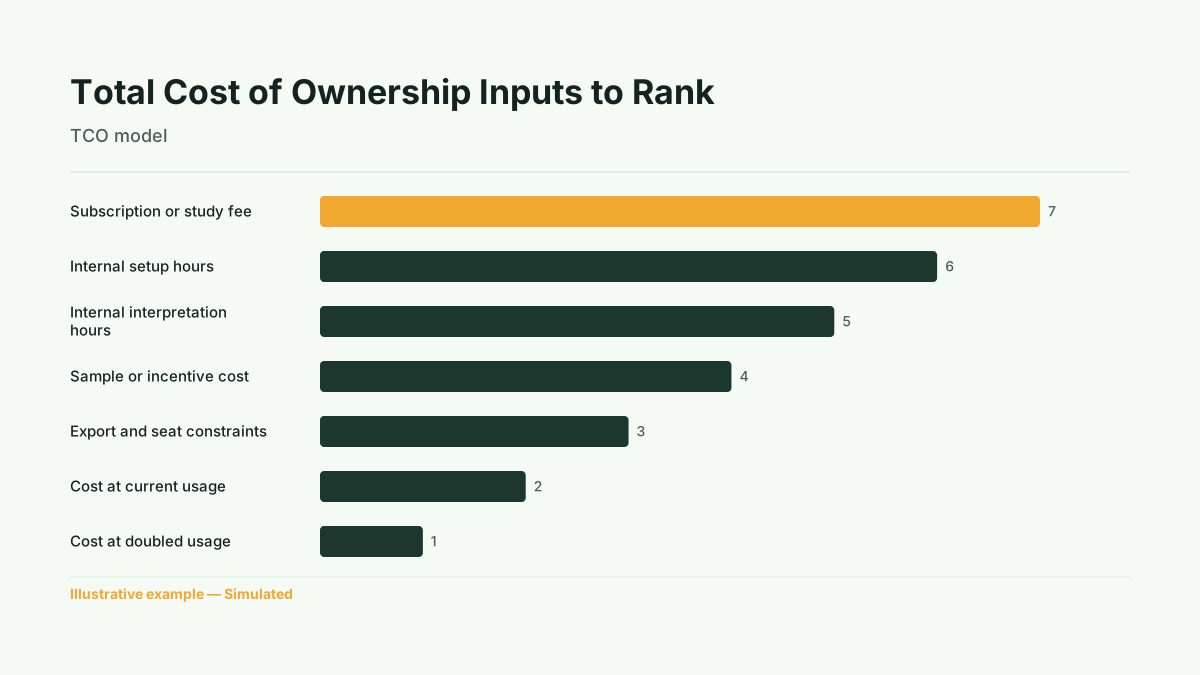
Subscription price is only one input. A useful total-cost model includes the subscription or study fee, internal setup time, internal interpretation time, respondent incentives or panel costs, export constraints, seat requirements, training, and integration work.
For Kinetic Pricing, the supplied pricing information includes a $149 one-time study option and a Pro plan priced at $99 per month. The Pro plan includes a 30-day trial and unlimited studies, according to the [plans page]. These are stated plan terms, not a prediction of a founder’s final project cost.
Calculate cost at current usage and at doubled usage. A founder running one study may prefer a one-time study option. A team repeating studies may value a recurring plan if it reduces repeated setup and analysis work. The comparison should also record who owns the work, how long setup takes, whether interpretation is included in the normal workflow, and whether the export can be used in the existing stack.
Do not hide labor inside a vague “ease of use” score. Record setup hours and interpretation hours as separate line items. Add sample or incentive costs where they apply. Then compare the six-month total under the current research cadence and under a doubled cadence. This makes the decision sensitive to actual use rather than only to the advertised entry price.
Any revenue output belongs in a separate section of the model. A result based on stated purchase intent is not observed buying behavior. A scenario calculated from response assumptions is modeled or simulated revenue, not realized revenue.
Use a Pilot to Test Support, Usability, and Integration Risk
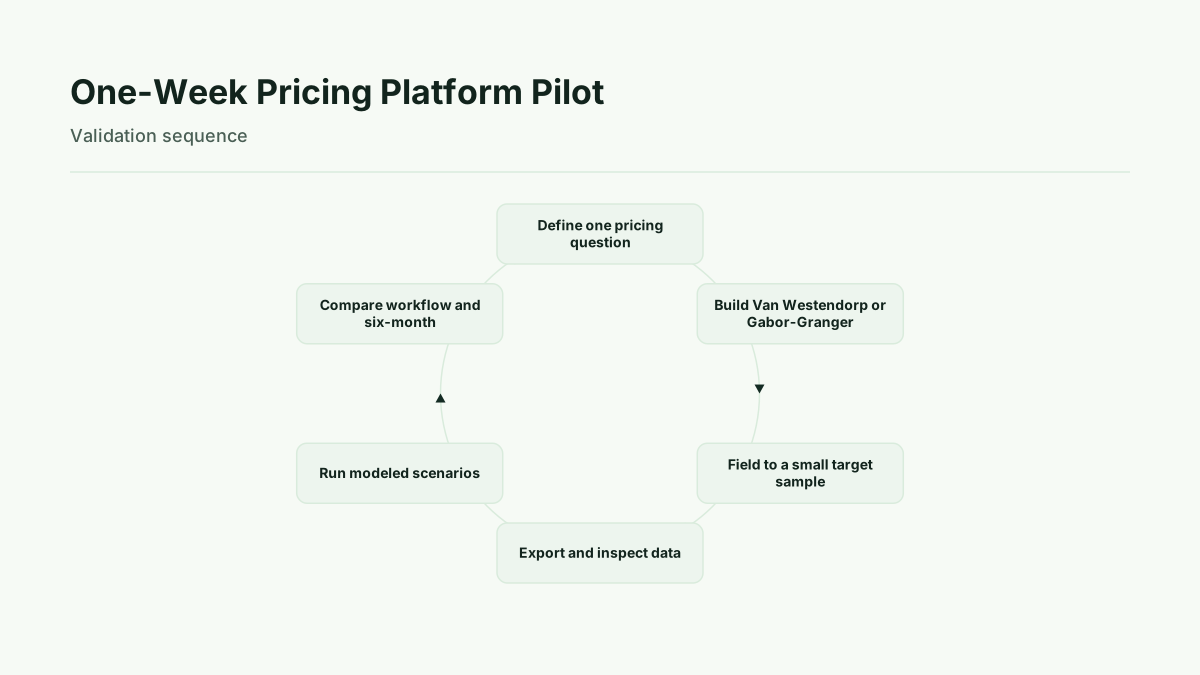
A one-week pilot can test whether the workflow answers the pricing question and expose setup, export, ownership, and TCO risks before a longer commitment. Use the same study brief for each serious candidate so the comparison does not reward a tool simply because it received an easier task.
During the pilot, record who builds the study, what documentation is needed, and whether another team member can take ownership. Inspect the exported data rather than assuming it will fit the analysis process. Check whether the output is understandable to the decision-maker, not only to the person who configured the study.
The pilot should also test onboarding and integration risk. Note the steps required to field the study, preserve the data, move it into the existing stack, and explain the result to stakeholders. The useful question is whether the complete path from research brief to pricing decision is workable, not whether an isolated survey can be launched.
Use [Kinetic Pricing's free research resources] to clarify the planned method before the pilot. A [willingness-to-pay study] may be useful context when the team is deciding what the pricing question should measure, but the pilot should still use one defined production-like task.
Match the Tool to Scale, Governance, and Respondent Experience
The right alternative changes with the constraint. Choose a pricing-specific platform when the team repeatedly needs established pricing methods and analysis. Choose a general-purpose survey tool when broad feedback is the primary requirement and specialized pricing workflows are not central. Choose an enterprise XM platform when governance and program complexity determine the purchase. Choose a respondent-recruitment layer when obtaining the right participants is the bottleneck.
Scale should be evaluated as workflow repetition, not only as response volume. Ask whether the team can repeat the study, preserve ownership, compare outputs, and explain assumptions without creating a new manual process each time. Governance should be evaluated separately from method support. A governed enterprise environment may be necessary for one organization, while a founder may instead prioritize speed, method fit, and direct control of the work.
Respondent experience also deserves its own test. A clear questionnaire can reduce friction in the research process, but a polished experience does not substitute for a method that answers the pricing question. Similarly, participant access does not substitute for analysis.
Interpretation
The decision rule is straightforward. Choose Kinetic Pricing for in-house pricing decisions requiring Van Westendorp, Gabor-Granger, MaxDiff, conjoint, or scenario modeling. Choose a general-purpose tool for broad feedback. Choose Qualtrics when enterprise governance is the primary need. Treat Typeform, Tally, onlinesurvey.ai, and Respondent as candidates for their respective workflow roles, then verify the fit through the same pilot rather than assuming that category labels settle the choice.
This is a fit recommendation, not a claim that one platform is best for every research program. The strongest choice is the one that answers the defined pricing question with acceptable ownership, cost, and data portability.
Limits
The available evidence does not establish independent benchmarks for completion rates, support response times, observed conversion, or competitor total cost. Current competitor plans, capabilities, exports, and governance terms require verification before publication or purchase.
Keep the evidence types separate. Stated purchase intent describes what respondents say they may do. Modeled or simulated revenue applies assumptions to those responses. Observed behavior requires actual customer or market behavior. Do not present a scenario output as a forecast of realized sales without evidence that supports that interpretation.
Actual TCO also depends on sample requirements, incentive levels, internal labor, research frequency, seats, and integration needs. The Kinetic Pricing plan terms cited above should be checked on the current [plans page] during the buying process.
Next Step
Run a one-week, production-like pilot. First, define one pricing question and the target sample. Second, build a Van Westendorp or Gabor-Granger study in each serious candidate. Third, field it to a small target sample. Fourth, export and inspect the data. Fifth, calculate scenario outputs from stated responses while labeling them modeled or simulated. Finally, compare workflow quality and six-month TCO at current and doubled usage.
That sequence gives the founder a concrete decision record: the method used, the work required, the output produced, the assumptions applied, and the cost of repeating the process. Review [Kinetic Pricing's free research resources] while preparing the pilot, then use the result rather than the feature list to make the final choice.
Additional context on these methods is available from Team Wellbeing Feedback Methods for HR Leaders and Run the same production-like workflow in every tool on your shortlist.
Run this method with your users
Start 30-day free trial to run every method with your users, or Buy one study when one decision needs evidence now.
Sources
Kinetic Pricing, Kinetic Pricing product overview
Kinetic Pricing, Pricing plans
Kinetic Pricing, Price sensitivity analysis
Kinetic Pricing, Research resources