
For price sensitivity, willingness to pay, price-point testing, or package design, shortlist Kinetic Pricing and validate it with a small pilot. Choose a broader research platform when the job is general surveying or complex workflow management, and choose a specialized research service when the study concerns concept testing, advertising, audience profiling, or in-home product use. The right AYTM alternative depends on the decision, not on a universal vendor ranking.
Start With the Research Job, Not the Vendor List
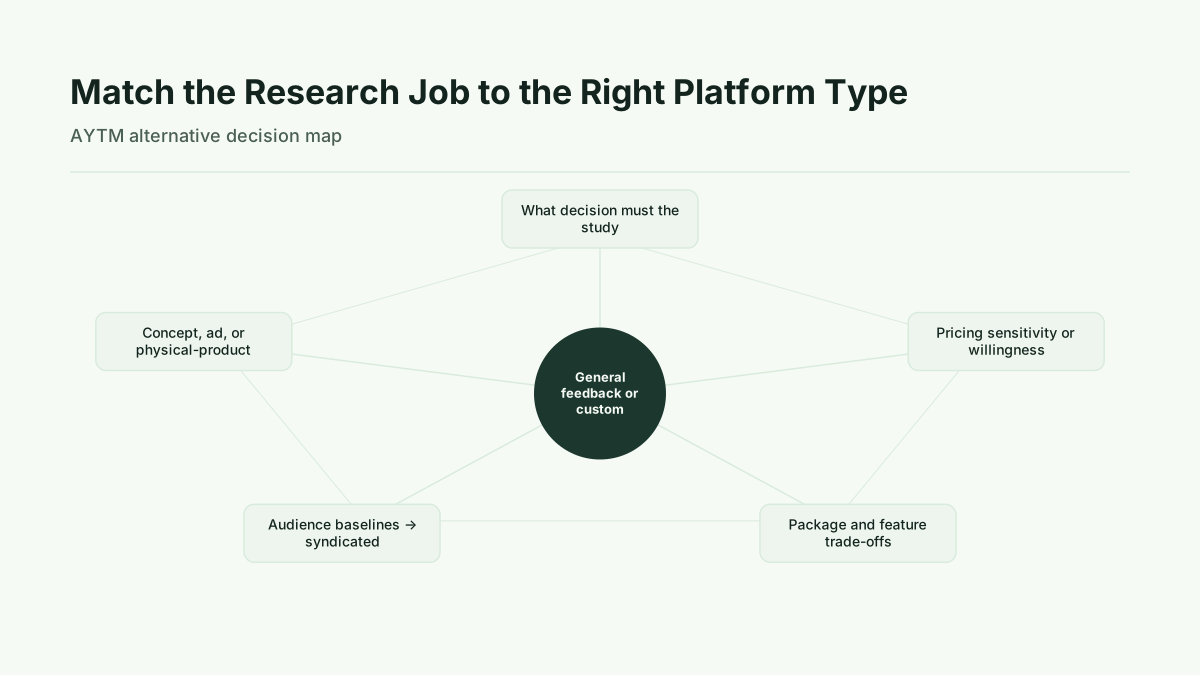
Begin by writing the decision in one sentence. Is the team trying to identify an acceptable price range, compare stated purchase likelihood at several prices, rank feature value, or model trade-offs among packages and prices? Those are pricing questions, and they call for methods built around pricing decisions.
Other research jobs require a different starting point. A general survey may be appropriate for broad feedback. A complex enterprise workflow may require governance, custom logic, or integrations. Audience profiling may depend on an existing syndicated dataset rather than new fieldwork. Concept and advertising tests evaluate ideas or communications, while an in-home usage test concerns physical-product experience.
These categories can overlap, but they should not be treated as interchangeable. A tool that is convenient for a general questionnaire is not automatically the best fit for price research. Conversely, a pricing specialist is not automatically the right choice for every research question.
The practical decision map is simple: match pricing sensitivity and willingness-to-pay questions to a pricing specialist; match package and feature trade-offs to a platform that supports the required method; match general feedback to a survey platform; match audience baselines to a syndicated dataset; and match concept, advertising, or physical-product questions to a relevant specialist service. Then pilot the shortlist before committing a larger budget.
Best AYTM Alternatives by Research Use Case
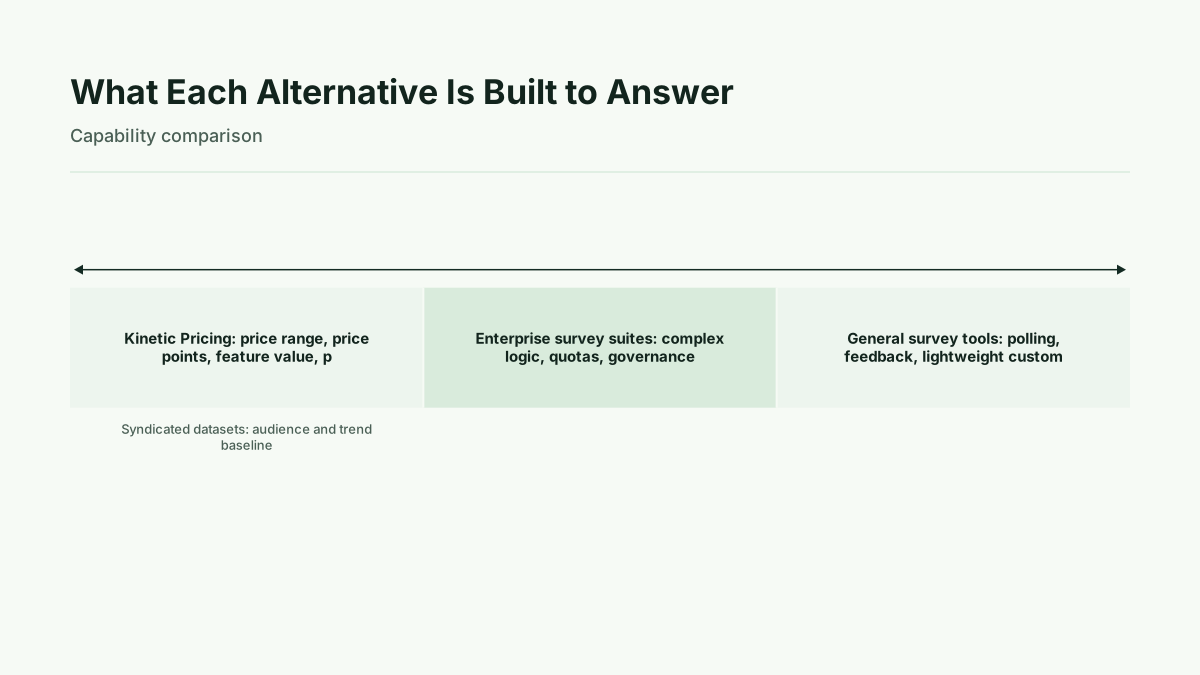
For a pricing study, Kinetic Pricing is designed around four named methods: Price range finder, Price point tester, Feature value ranker, and Package and price builder. These correspond to price-range analysis, testing specified price points, ranking feature value, and evaluating package-and-price trade-offs. See Kinetic Pricing for the product context and method set.
The product-level prices listed in the verified material are $149.00 for Price range finder, $199.00 for Price point tester, $279.00 for Feature value ranker, and $499.00 for Package and price builder. These are useful reference points when the buying decision is a focused pricing study, but current terms should be confirmed before purchase.
For recurring work, the verified Kinetic Pro terms are $99.00 per month, $990.00 per year, and a 30-day trial. The anchor Kinetic Pro at $99 a month can help readers locate the subscription option, while the one-time method prices help frame a study-specific purchase. Do not infer total research cost from software price alone. Recruitment, qualification, analysis, and internal decision time still need review.
A broader survey platform may be the better alternative when the project is dominated by complex workflows rather than a pricing method. A general survey tool may fit polling, feedback, or lightweight custom surveys. A syndicated dataset may fit audience and trend baselines without new fieldwork. A specialist research service may fit concept testing, advertising testing, or in-home product testing. These are fit categories, not a claim that one named provider universally outperforms another.
Method: Compare Methodology, Sample, Outputs, and Total Effort
Use the same due-diligence process for every candidate. First, identify the decision and the evidence needed to support it. Next, check whether the platform supports the required pricing or adjacent research method. A method label alone is not enough if the resulting output cannot be inspected or exported in a usable form.
Then review respondent recruitment and verification, quotas, screening, scripting, and randomization. These are necessary due-diligence topics for a pricing study, alongside raw-data access and exportability. Verified panels with research-specific scripting is a useful reference point for the kinds of panel and scripting questions a buyer should ask.
Finally, compare one-time and subscription economics. Include support, privacy, integrations, turnaround, internal analysis effort, and the cost of repeating the study. A lower software price may not be lower total effort if the team must compensate for missing workflow or data-access capabilities. A more elaborate platform may also be unnecessary when the study is narrow and infrequent.
A small pilot should test the actual workflow. Check a screening question, qualification rate, sample documentation, output format, and export process. A pilot can help compare candidate platforms before a larger budget commitment, but it does not establish platform superiority by itself. The pricing research benchmarks and sample studies provide context for how to think about evidence before publication or procurement.
What Rigorous Pricing Research Can and Cannot Tell You
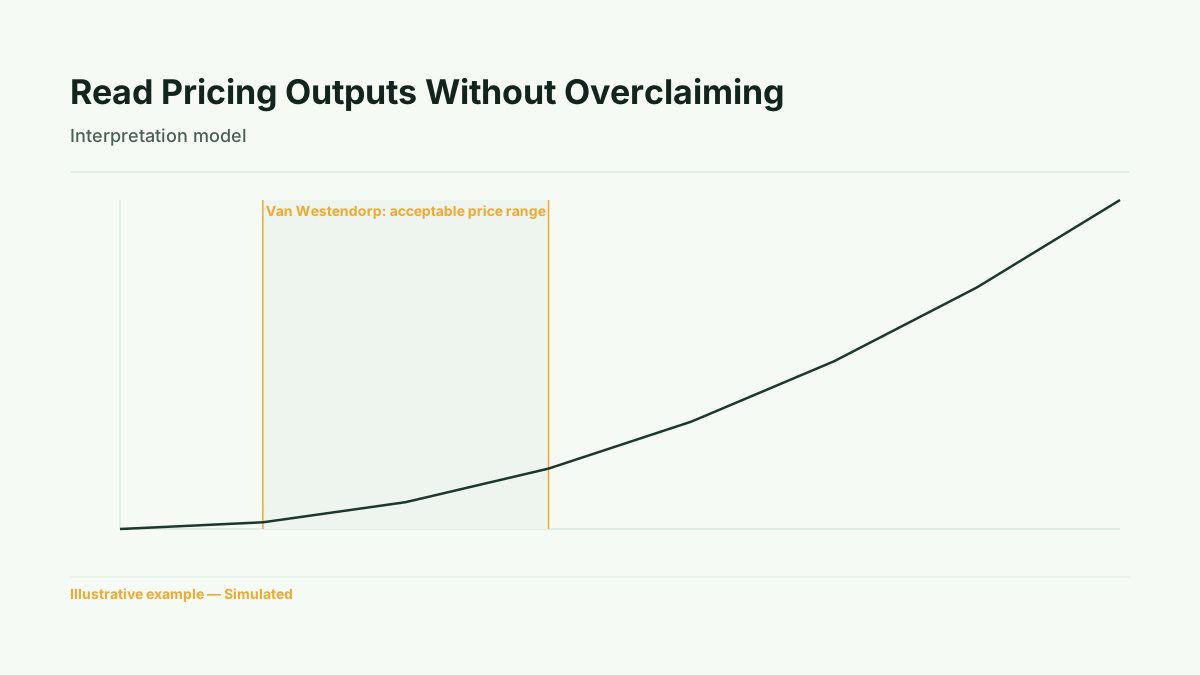
Van Westendorp is a price-range method. It uses four price-perception questions to produce an acceptable price range, rather than a guaranteed single price. Read the output as a range for decision-making, not as proof that one exact price will maximize demand. The Van Westendorp pricing walkthrough explains this interpretation.
Gabor Granger measures stated purchase likelihood at specified price points. Its output can show how stated likelihood changes as the tested price changes. It should not be described as observed purchase behavior. A respondent saying they are likely to buy is evidence of stated intent, not a record of a completed transaction.
MaxDiff is a feature-value ranking method. It can help organize relative preference among features or benefits, while conjoint is a package-and-price builder that examines modeled trade-offs among attributes, packages, and prices. The two methods answer related but different questions, so a buyer should select the one that matches the decision rather than choosing by familiarity.
A revenue scenario derived from research inputs is modeled revenue, not observed revenue. Modeled revenue scenarios are calculations based on study inputs and are distinct from observed revenue outcomes. Observed behavior requires a live-market or other behavioral test. Keeping these evidence categories separate prevents a stated response or model output from being presented as guaranteed demand.
Interpretation: Balance Speed, Rigor, Cost, and Decision Stakes
Interpret the result in proportion to the decision stakes. A fast general-purpose questionnaire may be sufficient for an early directional question. A recurring or high-consequence pricing decision may justify a more deliberate method review, clearer quotas, stronger data access, and a pilot. A syndicated dataset can answer a baseline question without being a substitute for a new pricing study. A specialist service may be appropriate when the subject is a concept, advertisement, or physical product rather than price.
For a pricing specialist, ask whether the output directly supports the decision. A price range can inform a boundary discussion. A stated-likelihood curve can support comparison across tested prices. A feature ranking can focus packaging conversations. A conjoint model can structure package-and-price trade-offs. None of these outputs guarantees demand, and none is the same as observed conversion.
The interpretation should also preserve uncertainty. If a result is modeled, label it modeled. If it comes from respondent answers, label it stated intent. If it comes from transactions or live-market behavior, label it observed behavior. Do not combine these categories into one claim about what customers will certainly do.
Limits: Panel Quality, Hypothetical Bias, and Capability Gaps
The central limitations are practical as well as methodological. Panel quality may be unclear if recruitment or respondent verification is poorly documented. Convenience samples may not match the population relevant to the decision. Weak quotas can leave important segments underrepresented. Poor scripting or missing randomization can affect how respondents encounter the study.
Pricing questions are also hypothetical when they ask what someone might pay or whether they might buy. Anchoring, hypothetical bias, and the absence of observed purchase behavior can make stated responses different from later conduct. Raw-data restrictions can make it harder to inspect the evidence, while limited exportability can increase internal analysis effort.
Capability gaps matter too. Kinetic Pricing is intended for pricing research methods and is not intended for concept testing, advertising testing, or in-home product testing. A buyer should therefore choose a different category when the research question is outside pricing. Competitor capability, security, panel, integration, and pricing claims require first-party verification before publication or purchase.
Next step: Run a Small Pilot Before Committing Budget
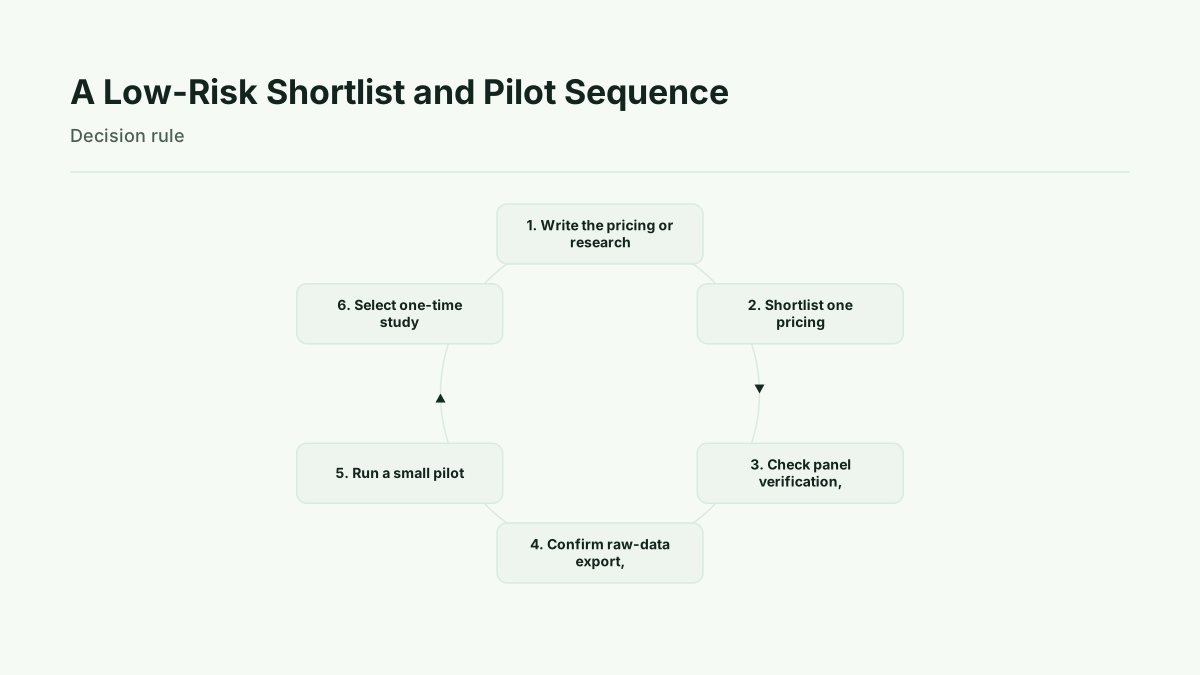
Write the decision first. Then shortlist one pricing specialist and one relevant alternative category. Ask each candidate to confirm the method, respondent recruitment and verification, quotas, screening, scripting, randomization, raw-data access, exportability, support, privacy, integrations, and turnaround.
Run a small pilot that tests the screening question, qualification rate, sample documentation, output, and export. Compare what the team can actually learn and use, not just what the product page describes. Treat the pilot as evidence about fit, not as proof that one platform is universally superior.
Choose a one-time study when the need is occasional and narrowly defined. Consider a recurring plan when pricing research is frequent and the subscription economics, workflow, and support fit the team. Confirm current Kinetic Pricing terms before committing budget.
Run this method with your users
Start 30-day free trial to run every method with your users, or Buy one study when one decision needs evidence now.
Sources
Kinetic Pricing, Product and method information
Kinetic Pricing, Van Westendorp pricing research walkthrough
Kinetic Pricing, Pricing and plan information
Kinetic Pricing, Research benchmarks and sample studies
YouGov, Self-serve surveys and research-specific panel capabilities