
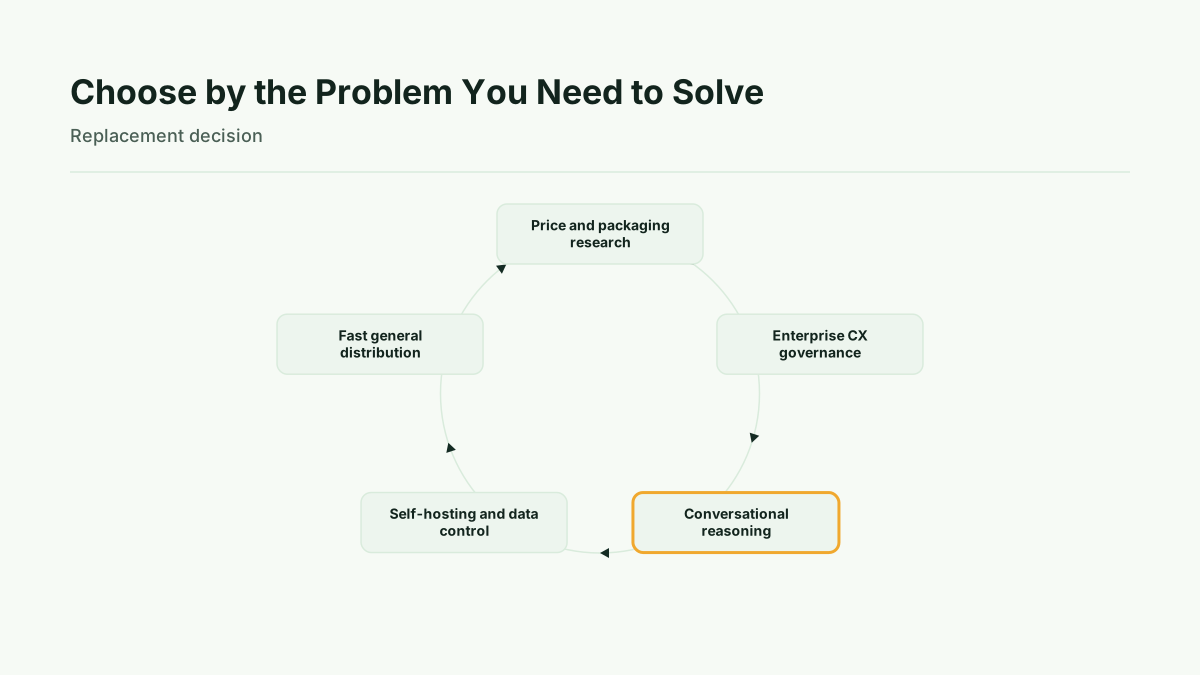
If price is the reason you are leaving Alchemer, evaluate Kinetic Pricing first for a pricing or packaging project. Choose an enterprise CX platform when governance and case management are the real requirement, a self-hosted tool when data control is central, a conversational research tool when probing matters most, or a general survey platform when speed and distribution matter most. The decision is not a universal ranking. It is a category choice based on the switching trigger, followed by a check of total cost and research fit.
Start With the Switching Trigger
Begin by writing one sentence: “We are switching because…” The answer should identify the job that the replacement must do better, not simply list features missing from the current tool.
There are four useful paths:
- Pricing transparency and scale: The team needs to understand packaging, price points, or willingness to pay and wants the cost of that work to remain clear as the project develops.
- Research depth: The team needs a method designed for a specific research question rather than a general form builder.
- Speed and distribution: The priority is launching a survey quickly, reaching respondents, and collecting structured answers.
- Enterprise governance: The work requires centralized controls, formal workflows, or a broader customer-experience operating model.
The distinction matters because a pricing-research project is not automatically a full survey-platform migration. If only one workflow is causing friction, replacing every survey process may create migration work without solving the original problem. Research on alternatives supports a use-case view: grouping platforms by their strongest use case is more useful than forcing every option onto one universal scale.
When comparing options, Buyers frequently prioritize logic branching, integrations, and ease-of-use. Feature count alone therefore leaves important questions unanswered: can the team run the intended study, move the resulting data, govern access, and understand the bill at the expected scale?
Match the Alternative Category to the Job
For pricing and packaging research, Kinetic Pricing is the narrowest fit in this decision framework. Its research resources are intended for teams evaluating pricing and packaging decisions, including work that needs a price-range or price-point question rather than a broad survey-platform replacement. The available method labels are Price range finder, Price point tester, Feature value ranker, and Package and price builder.
For enterprise CX governance, place Qualtrics or Medallia on the shortlist when the buying problem is broader than a single study. These belong in the governance path of the evaluation, not as automatic winners for a pricing question.
For conversational reasoning, consider Perspective AI as a candidate to test when the team needs a conversation-first workflow. For self-hosting and data control, consider Formbricks. For fast general distribution, consider general survey tools such as SurveyMonkey or Google Forms. These categories answer different operational questions, so a shortlist should preserve those differences rather than flatten them into one ranking.
The category-first approach also keeps the evaluation honest. A platform selected for enterprise governance may be a poor fit for a small pricing study. A self-hosted tool may address control requirements while leaving the pricing method to the research team. A fast distribution tool may launch quickly but still require a separate approach to price sensitivity.
Compare Total Cost, Not the Promotional Tier
A replacement quote should cover more than the visible subscription tier. Ask for the cost at the expected seat count, the expected respondent or panel volume, and the workflows that will actually run. Include add-ons, implementation, migration, integrations, governance configuration, and the internal effort required to recreate logic and reporting.
Compare month-one cost with month-twelve cost. A low entry price may not describe the operating cost after additional seats, responses, studies, or services are included. Custom enterprise pricing also should not be treated as directly comparable to a self-serve study fee. They represent different purchasing and operating models.
An Illustrative example, Simulated comparison might model a small research team with a defined seat count and a separate respondent budget, then repeat the calculation after the planned expansion in seats and studies. The purpose is not to predict a vendor bill. It is to expose which assumptions change the decision. Replace every simulated input with a current vendor quote before signing.
For Kinetic Pricing, the relevant destination for evaluating available plans and study options is Kinetic Pricing plans. The pricing page should be checked directly because plan availability and commercial terms require current verification.
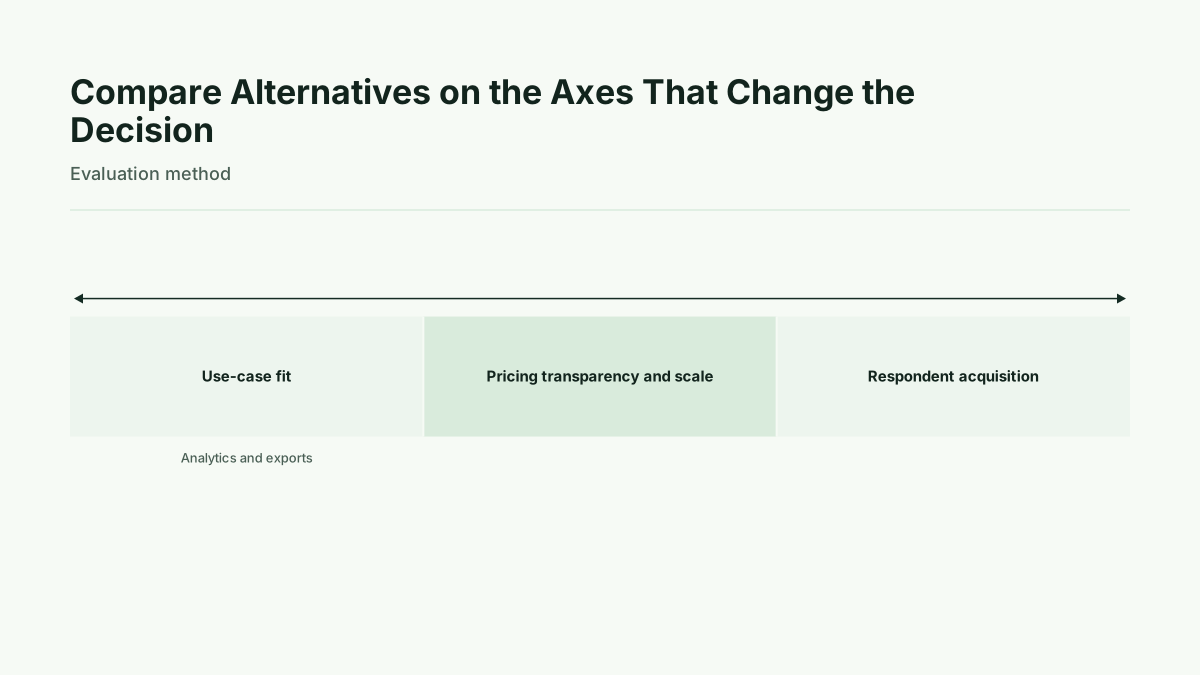
Use a Six-Axis Evaluation Method
Method: Score every shortlisted option against six axes, using the team’s actual project rather than a generic checklist.
- Use-case fit: Can the tool answer the switching-trigger question, such as price range, price point, feature value, package design, governance, or distribution?
- Respondent acquisition: How will the team obtain the respondents required for the study, and which costs are separate from the software?
- Analytics and exports: Can the team inspect results and export them in the format needed for analysis and decision-making?
- Governance: Can the team apply the access, review, and compliance controls required by its operating model?
- Integrations and migration: What must be recreated, connected, or moved from the current workflow?
- Realistic pricing: What is the expected cost at month one and month twelve, using the real seat count and study pattern?
Ask each vendor to demonstrate the highest-risk workflow. Request a quote that states seats, response or panel costs, add-ons, implementation, and renewal assumptions. Ask what happens when the project exceeds an included limit. Red flags include opaque pricing, hidden caps, and compliance details that are not specified for the intended use.
Separate Conversation-First From Form-First Research
Interpretation: Conversation-first and form-first research solve different problems. A conversation-first workflow is relevant when the reasoning behind an answer is central and probing can change what the team needs to learn. A form-first workflow is relevant when consistent questions, structured collection, and fast distribution are the priority.
Neither approach is universally superior. The decision depends on whether the research team needs comparable responses at scale, deeper explanation, or a combination of both. Treat the workflow as a hypothesis to test. Ask the vendor to show how a real research prompt is created, how responses are reviewed, and how outputs reach the team’s existing process.
This is also where migration risk becomes visible. A full platform change may involve logic recreation, integrations, historical data, governance setup, and team adjustment. A project-specific pricing tool may avoid a full migration when the underlying need is limited to pricing and packaging research. That does not make it a replacement for every survey workflow. It makes it a candidate for a narrower job.
Test the Pricing Question With the Right Method
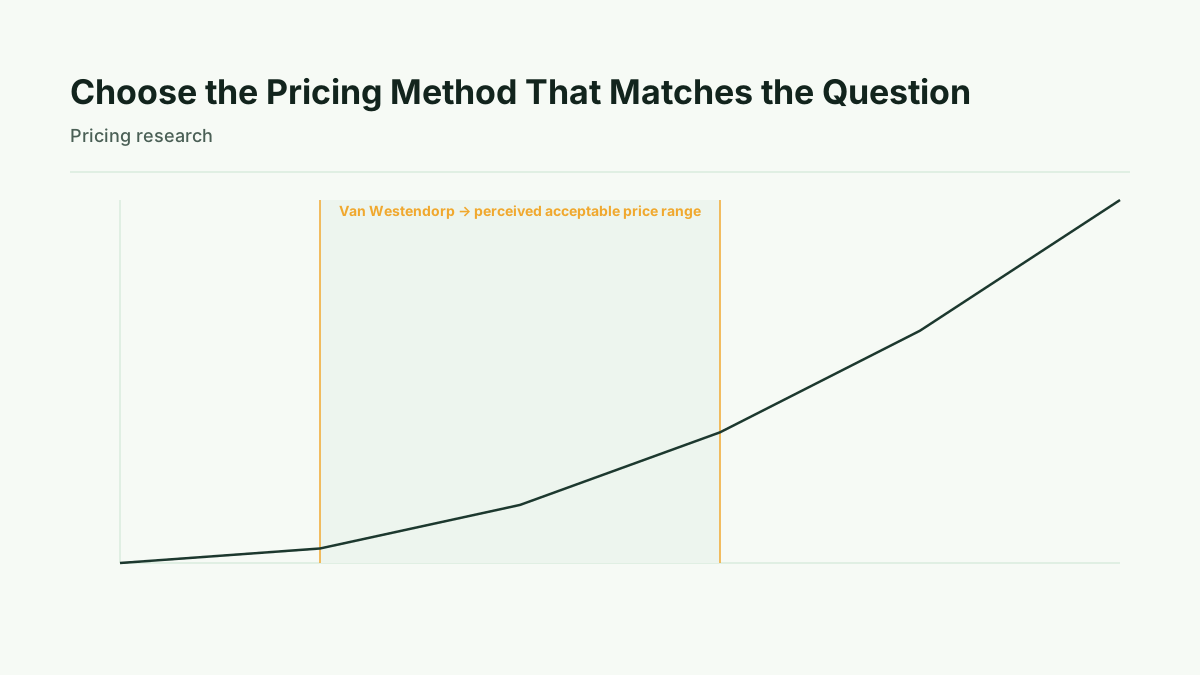
A pricing decision should name the question before it names the tool. A Van Westendorp study is appropriate for exploring a perceived acceptable price range. Gabor Granger tests stated purchase likelihood at specified price points. The distinction is practical: use range research when shaping a plan or exploring acceptable boundaries, and use point testing when evaluating a defined price decision.
Kinetic Pricing describes Van Westendorp as a Price range finder and Gabor Granger as a Price point tester. Those labels help keep the method aligned with the decision. A feature value ranker or package and price builder addresses a different research job and should not be substituted casually for a price question.
Keep the evidence types separate. Stated purchase intent is what respondents say they may do. Modeled or simulated revenue is a directional scenario based on assumptions. Observed behavior is what happens after a market action. A pricing study can inform a decision, but it does not turn stated intent or simulated revenue into observed purchasing behavior.
Estimate Switching Effort and Operating Risk
License cost is only one part of the replacement decision. Inventory the logic that must be recreated, integrations that must be reconnected, historical data that must remain accessible, governance settings that must be approved, and training or adjustment required from the team.
Then identify the largest unresolved risk. It may be the respondent source, an export format, a compliance requirement, a pricing cap, or whether the team can complete the intended study without a broader migration. A short trial using the team’s own data is more informative than a generic demonstration, provided the trial tests that specific risk.
Limits and Decision Rule
Limits: Third-party comparison material and vendor-published capabilities may change, so current pricing and functionality must be verified before publication or purchase. Custom enterprise pricing is not directly comparable to self-serve study fees. Category fit does not replace a trial with the team’s own data. Stated purchase intent, modeled or simulated revenue, and observed behavior are not equivalent evidence.
Decision rule: Shortlist two options from the category that matches the switching trigger. Test the highest-risk assumption, obtain a quote for the real seat count at month one and month twelve, and choose the shortest commitment that resolves the main uncertainty. If price is the trigger, run a pricing-sensitivity check before signing a longer contract.
Next Step: Validate Before You Commit
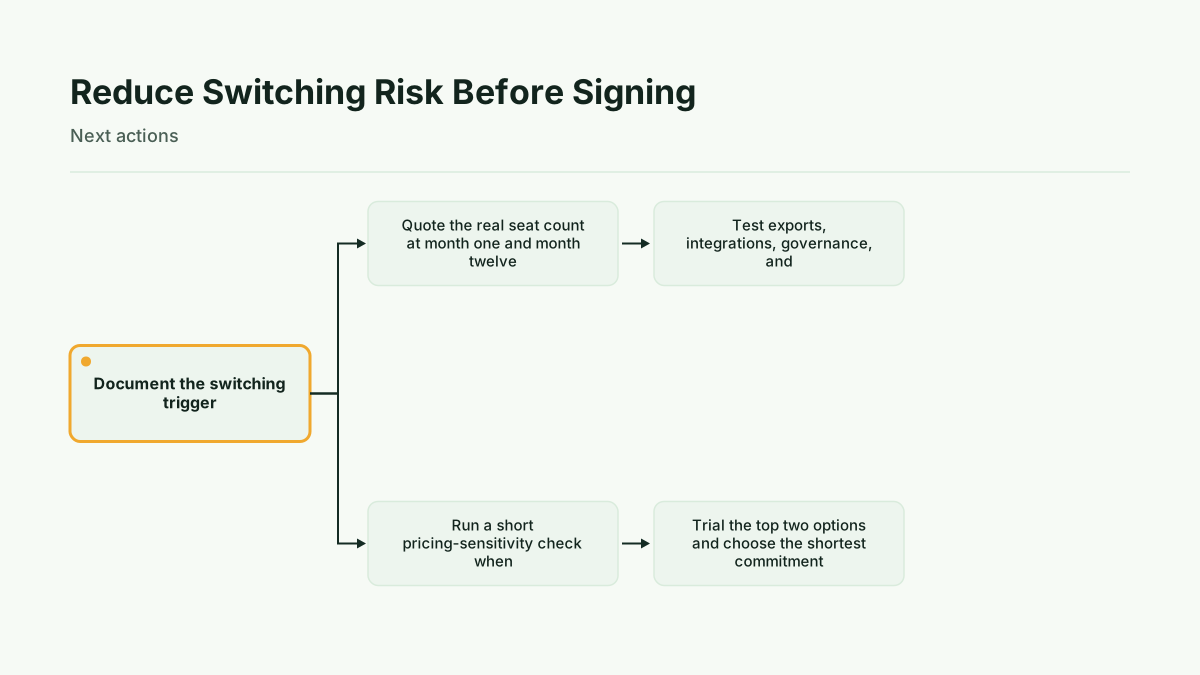
Next step: Document the switching trigger in one sentence. Obtain month-one and month-twelve quotes. Run a short pricing-sensitivity study when price is central. Test exports, integrations, governance, and respondent acquisition. Trial the top two options with the team’s own workflow, then commit only when the evidence answers the highest-risk question.
A pricing-led search can begin with Kinetic Pricing, while governance, conversational reasoning, self-hosting, and fast distribution may point to different categories. The right Alchemer alternative is the one that solves the reason for switching without creating a larger operating problem.
Additional context on these methods is available from turn post purchase surveys into revenue, free pricing research and benchmarks, Top Alchemer Alternatives and Best survey apps (Zapier).
Run this method with your users
Start 30-day free trial to run every method with your users, or Buy one study when one decision needs evidence now.
Sources
PeerSpot, Alchemer Alternatives and Competitors
Zapier, Best Survey Apps
Kinetic Pricing, Van Westendorp Pricing Research for SaaS
Kinetic Pricing, Research
Kinetic Pricing, Pricing