
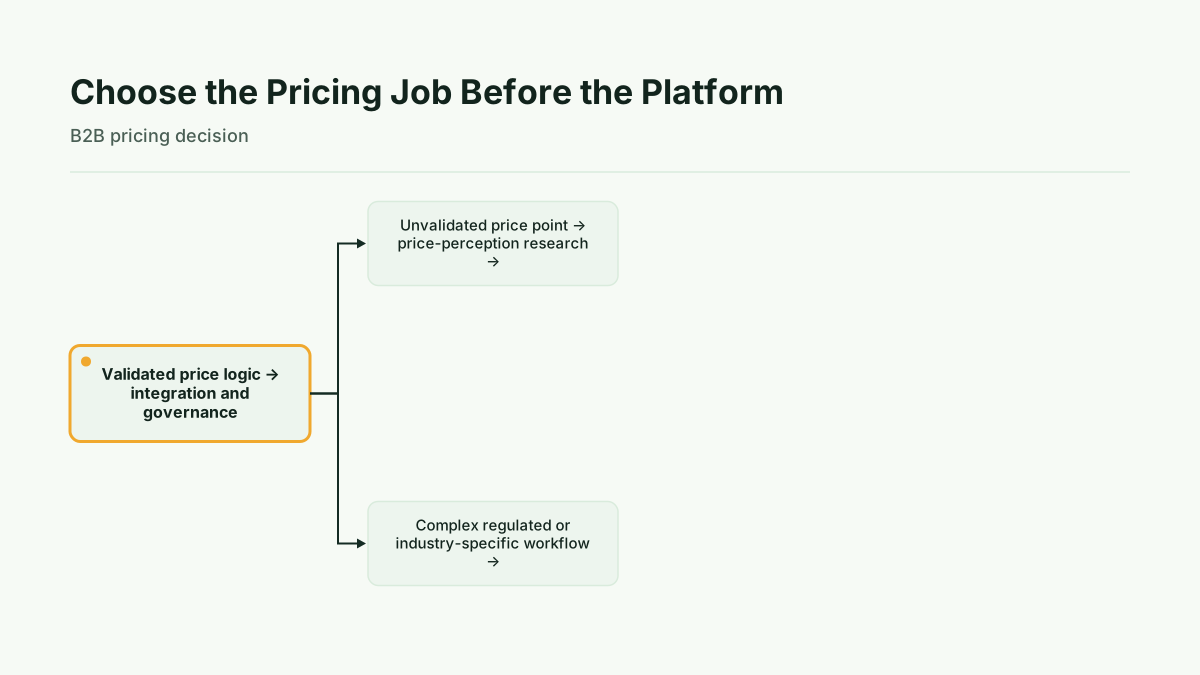
If your immediate question is what customers may pay, run a focused Kinetic Pricing study first. If the harder problem is putting established price logic into ERP, CPQ, CRM, rebate, catalog, or governance workflows, shortlist an enterprise platform such as Pricefx, Vendavo, or Conga POM. The decision is not simply which vendor has the longest feature list. It is whether you need customer-facing price evidence or enterprise-scale price optimization and governance.
Start With the Pricing Problem, Not the Vendor Shortlist
A price validation project asks a research question: which price range seems acceptable, which price point changes stated purchase intent, or which package and feature combination appears most valuable to a defined segment? That evidence can inform a pricing decision before the organization takes on a broader implementation.
An enterprise pricing project asks an operating question: how should price logic be connected to business systems, governed across teams, applied to a complex catalog, or used in quoting and related revenue operations? Those needs point toward a different evaluation. Conga POM, Pricefx, and Vendavo are relevant enterprise alternatives to evaluate for governance, optimization, CPQ, or related revenue operations needs. Their relevance still depends on the specific workflow the team must support.
This distinction prevents a common category error. A research tool and an enterprise pricing platform can both appear in a Zilliant alternatives search, while solving different parts of the decision. The first can help establish whether a pricing assumption deserves more investment. The second may be appropriate when the organization already has price logic to operationalize and needs enterprise execution or governance.
Zilliant Alternatives Compared by Job to Be Done
Organize the shortlist around the primary job rather than asking every vendor the same generic feature questions.
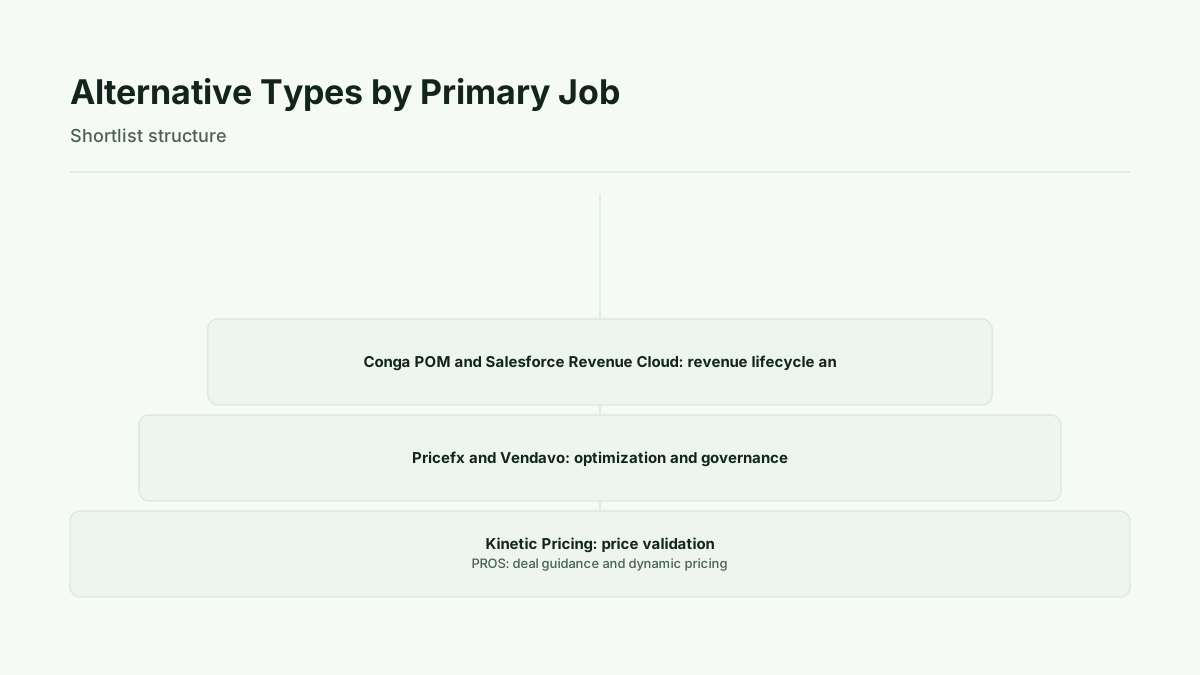
- Price validation: Kinetic Pricing is the research-first option when the unresolved issue is price perception, a price point, feature value, or package design. Its available options include a Price range finder, Price point tester, Feature value ranker, and Package and price builder.
- Optimization and governance: Pricefx and Vendavo belong in the enterprise evaluation when the need centers on pricing optimization, governed decision logic, or related operational workflows.
- CPQ and revenue operations adjacency: Conga POM is relevant when the pricing question is connected to CPQ or broader revenue operations requirements.
These categories are not a verified ranking. They are a way to reduce the shortlist to the job that must be completed. A team without customer-validated price evidence should not assume that an enterprise deployment will answer the research question automatically. A team with validated price logic should not assume that a research study will replace integration, governance, or operational execution.
The right comparison therefore asks what evidence each option produces, what systems it must connect to, how recommendations are explained, and how much deployment weight the organization is prepared to carry. Current vendor capabilities, integration scope, support, and commercial terms require direct diligence.
Method: Build a Shortlist and Run a Price-Validation Pilot
Start by writing one sentence that names the decision. For example, the decision might concern an acceptable price range, a price point, a feature’s relative value, or a package and price combination. Keep the scope narrow enough that the team can identify the relevant customer segment and define what evidence would change the decision.
Next, select the research method that matches the question. Kinetic Pricing uses Van Westendorp and Gabor-Granger methods for price perception and price-point testing. Van Westendorp can organize perceptions of acceptable and unacceptable pricing. Gabor-Granger can test responses to specified price points. The method should follow the decision, not the other way around.
Document the segment, the offer description, the price assumptions, the question wording, and the interpretation rule before collecting responses. This makes the study easier to review and keeps assumptions visible. The proposed first validation step is a bounded 4–8 week price-perception pilot. That is a proposed scope, not a verified vendor outcome or a promise of a particular result.
During the pilot, separate three evidence types. Stated purchase intent is what respondents say in a research setting. Modeled or simulated revenue is an analytical scenario built from assumptions. Observed behavior is what customers actually do in a purchasing context. They can inform one another, but they are not interchangeable. Do not describe a stated response as realized conversion or a modeled revenue scenario as realized revenue.
Interpretation: Match Evidence, Scale, and Deployment Weight
Interpret the pilot by asking whether it resolves the original price question. If the team still lacks a defensible view of willingness to pay or price perception, a focused study is the smaller next commitment. Kinetic Pricing offers a one-time study fee or a Pro subscription, giving the team a research-oriented path to compare with the cost and effort of an enterprise evaluation.
If the research question is sufficiently clear, shift attention to operational requirements. Review integration effort, support quality, model explainability, governance, latency, guardrails, and time-to-first-value alongside headline AI capabilities. Integration effort and support quality should be evaluated alongside those headline features when comparing enterprise pricing platforms. These are diligence criteria, not claims that one vendor universally performs better.
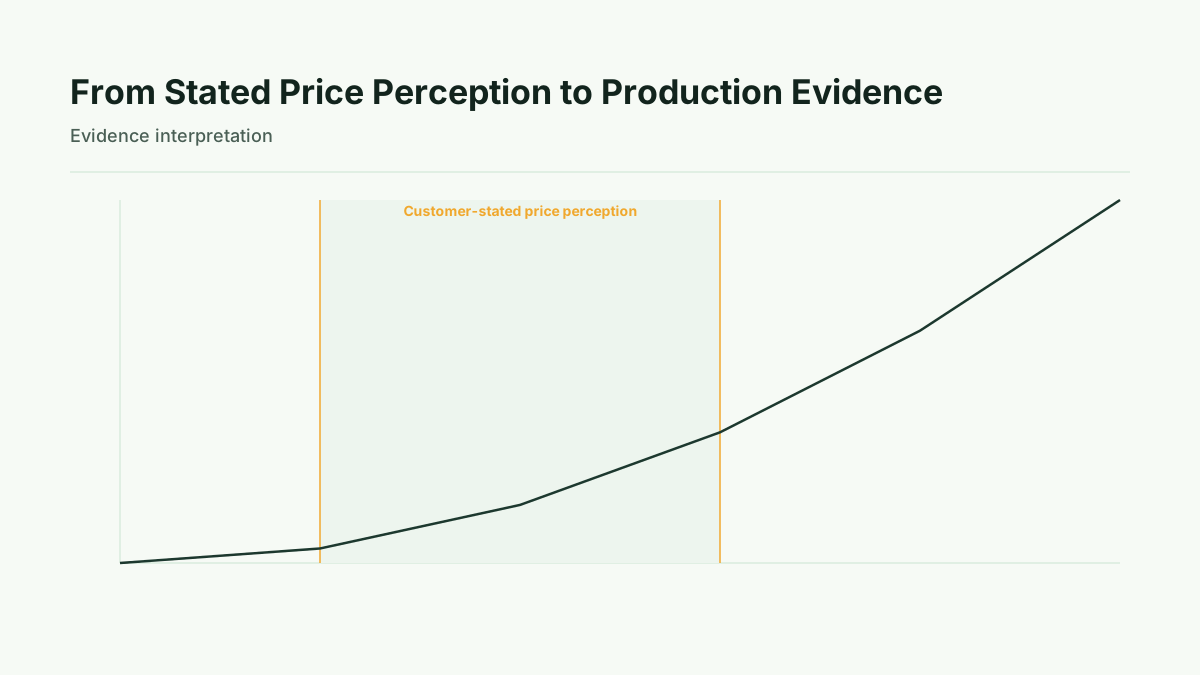
The evidence ladder also matters. Customer-stated price perception can help prioritize a decision. A modeled or simulated response scenario can show what might happen under stated assumptions. Neither establishes observed conversion, realized margin, or production performance. Observed purchasing behavior adds a different kind of evidence, while production governance and operational feedback test whether a pricing approach can work inside the organization’s actual processes.
This is why the choice should be staged. A research-first path is more appropriate when the uncertainty is customer willingness to pay. An enterprise shortlist becomes more relevant when the uncertainty is scaled execution, integration, governance, rebates, CPQ, or catalog-scale operation. The decision is about the unresolved risk, not about declaring a universal winner.
Demo Checklist: Questions, Red Flags, and Contract Terms
Ask every enterprise finalist to demonstrate the same workflow and answer the same questions:
- Which ERP, CRM, CPQ, catalog, or rebate workflows are in scope, and what integration effort is expected from the buyer?
- Can a pricing recommendation be explained to the pricing owner, sales user, approver, and auditor?
- Which data does the platform require, who owns it, and how can the team export or review it?
- How are guardrails, approvals, governance rules, and exceptions configured?
- What latency is acceptable for the intended workflow, and how does the system behave when data is incomplete?
- How does the platform address SKU or catalog scaling, and what support is included?
- What would count as success for the pilot, and which measures would justify moving toward production?
- Can the vendor provide relevant references and describe support responsibilities, migration support, service levels, exit rights, and pilot-to-production terms?
A red flag is a demonstration that avoids the team’s actual workflow. Another is a recommendation that cannot be explained, tested, or connected to the governance process the buyer must operate. Headline AI claims should not substitute for answers about integration and support.
Limits: What a Short Price Study Cannot Prove
A short price study can provide customer-stated evidence, but it does not by itself validate realized conversion, margin, adoption, implementation performance, competitive response, or production pricing governance. Stated customer intent is not observed buying behavior. Modeled or simulated revenue is not realized revenue.
The supplied evidence supports a directional shortlist and evaluation framework, not a verified ranking, total-cost-of-ownership comparison, observed conversion result, realized margin lift, or universal implementation timeline. Enterprise fit depends on the organization’s data, systems, catalog complexity, and compliance context. Vendor capabilities, reviews, pricing, and integration scope require current diligence before publication or purchase.
Next step: Choose the Smallest Test That Answers the Decision
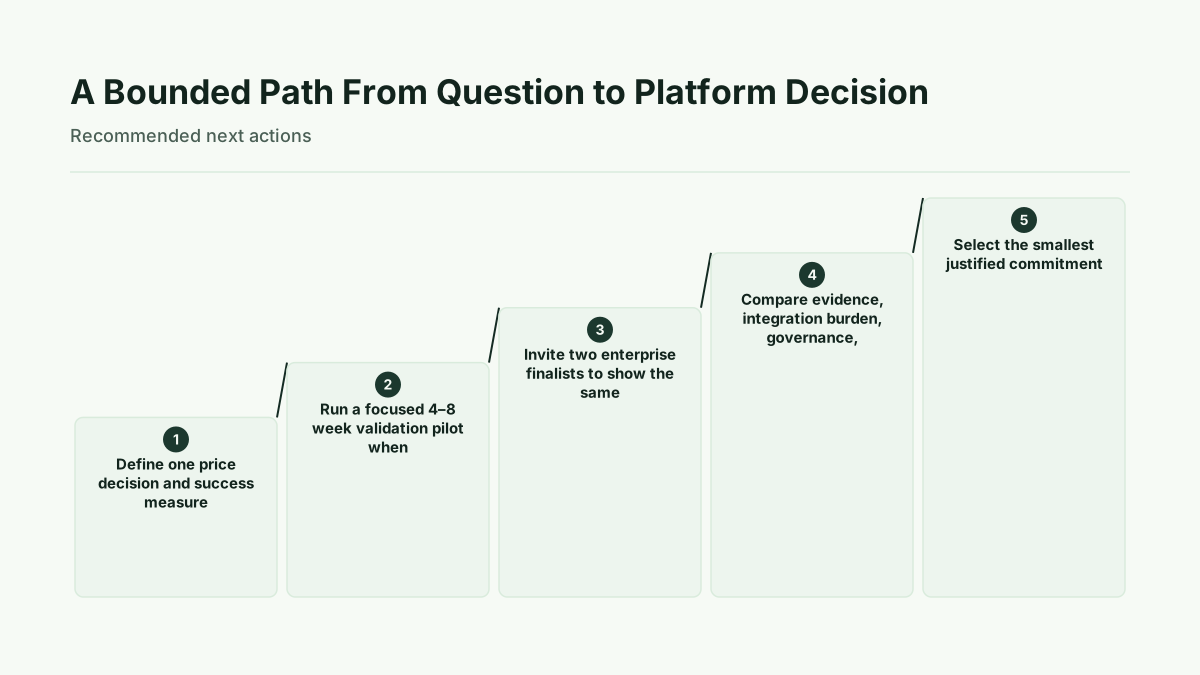
Have the pricing owner define one price decision and its success measure. If the unresolved question is an acceptable price range or price point, run a focused Kinetic Pricing study. If the unresolved question is scaled execution, invite two enterprise finalists to demonstrate the same workflow against the team’s integration and governance requirements.
Then compare the evidence with the implementation requirements. If the pilot does not resolve the price question, improve the research decision before expanding scope. If it does resolve the question but exposes a need for governed execution, use that evidence to test whether an enterprise implementation is justified. The goal is the smallest commitment that answers the current decision, not a premature platform purchase.
Review Kinetic Pricing options
Additional context on these methods is available from G2 reviewers consistently rank integration ease and support responsiveness above headline AI claims, Top 10 Zilliant Alternatives & Competitors in 2026 — G2 and Top Zilliant Competitors & Alternatives 2026 — Gartner Peer Insights.
Run this method with your users
Start 30-day free trial to run every method with your users, or Buy one study when one decision needs evidence now.
Sources
- G2, “Zilliant Competitors and Alternatives”
- Gartner Peer Insights, “Zilliant Alternatives”
- Kinetic Pricing, “Research”
- Kinetic Pricing, “Pricing”