
The best Pricefx alternative depends on the pricing decision you need to make, not on the longest vendor feature list. For a fast, repeatable pricing sprint, start with Van Westendorp to find a plausible price range, use Gabor-Granger to test predefined price points, and add conjoint only when feature or package trade-offs are central. Choose enterprise software or a consultant when the study requires complex conjoint design, larger samples, integrations, multi-market execution, or specialist interpretation.
This is a method-first decision framework. It does not rank vendors or claim that one platform is universally superior.
Start With the Pricing Question, Not the Vendor List
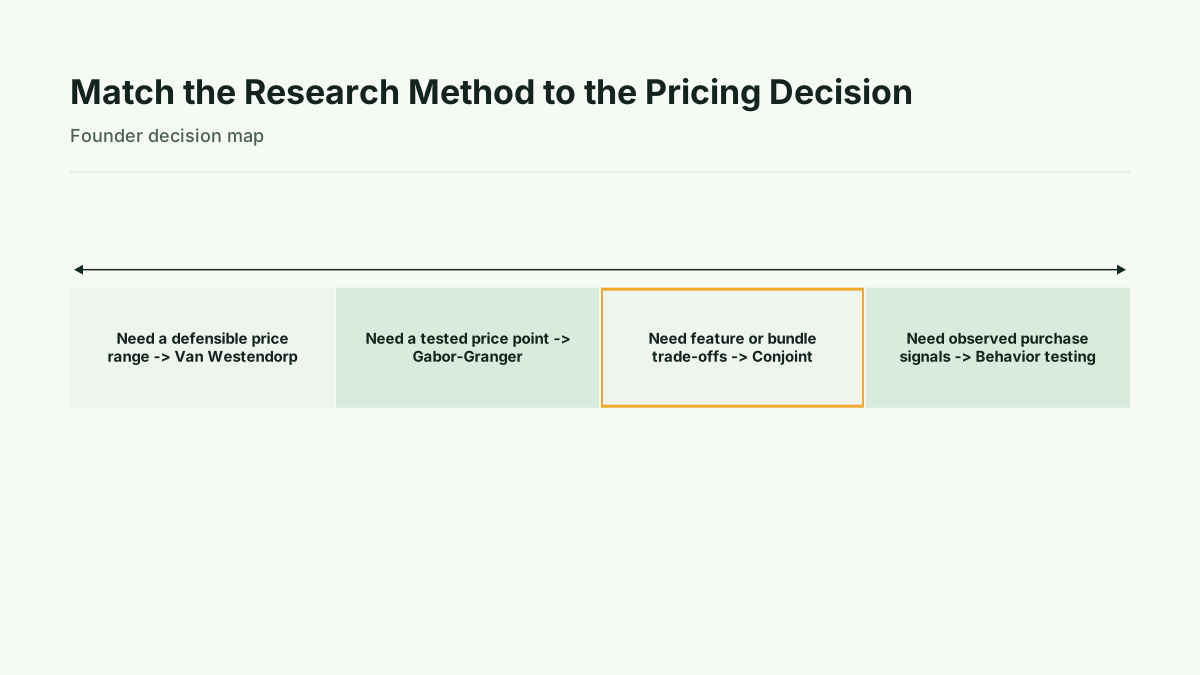
A founder can usually make the initial choice by classifying the decision into one of three jobs:
- Range discovery: You need to understand the lower and upper boundaries of an acceptable price range. Van Westendorp is the appropriate starting method.
- Price-point testing: You have predefined prices and need to compare stated responses across those points. Gabor-Granger is the focused method for this job.
- Feature or package trade-offs: You need to understand how buyers weigh combinations of features, packaging, and price. Conjoint is the method to reserve for that more complex decision.
The primary method choice should follow the pricing decision: range discovery, price-point testing, or feature and package trade-offs ([Talkful's research guide]). Choosing the tool first can encourage a study that produces an impressive-looking output without answering the question that matters.
The practical decision is therefore narrow. If you need a fast price sprint that can be repeated as the product changes, use the lightest method that answers the question. If the research must combine many attributes, markets, systems, or specialist judgments, the operating requirements may point toward enterprise software or consulting support.
Compare the Main Pricefx Alternative Paths
The alternatives are easier to compare as research paths rather than as brands. The relevant question is what evidence each path is designed to produce and how much operating complexity the study requires.
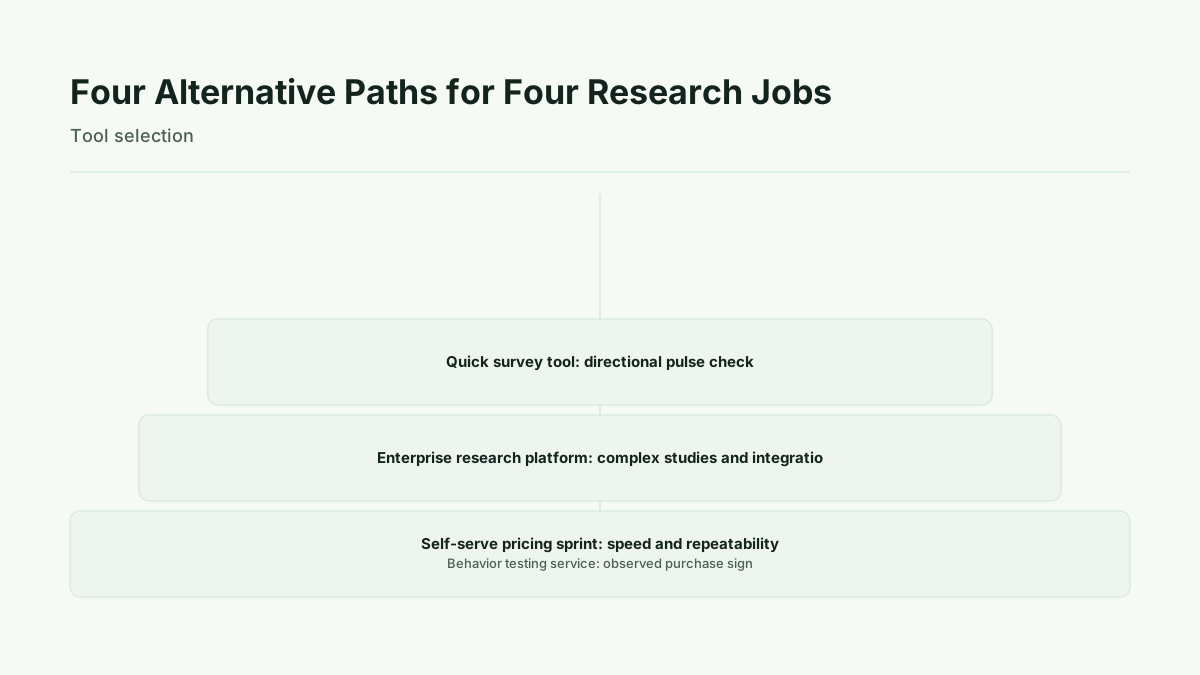
Kinetic Pricing or another self-serve pricing-research workflow fits a founder who can define the buyer cohort, choose a documented method, run the study, and review the underlying responses or a usable export. Its role in this framework is a repeatable pricing sprint: identify a range, test selected price points, or progress to package trade-offs when the decision warrants it.
Qualtrics or another enterprise research platform belongs in the comparison when the study needs complex conjoint design, larger samples, integrations, multi-market execution, or specialized support. The issue is not a universal quality ranking. It is whether the research operation requires capabilities and coordination beyond a small, focused sprint.
SurveyMonkey or another quick survey tool can represent a directional pulse-check path. It should not automatically be treated as equivalent to a documented pricing workflow. The founder still needs a relevant cohort, a suitable question sequence, and access to the response data needed to inspect the result.
Glimpse or a behavior-testing service represents a path focused on observed purchase signals rather than only stated answers. That distinction matters when interpreting results. Observed behavior, stated purchase intent, and modeled or simulated revenue are different evidence types and cannot be presented as interchangeable.
This comparison avoids unsupported ratings, current competitor prices, and customer-satisfaction claims. A vendor name is not evidence that its method fits a particular pricing question. The fit comes from the design of the study, the respondents recruited, the output required, and the level of support available.
Build a Defensible Self-Serve Research Workflow
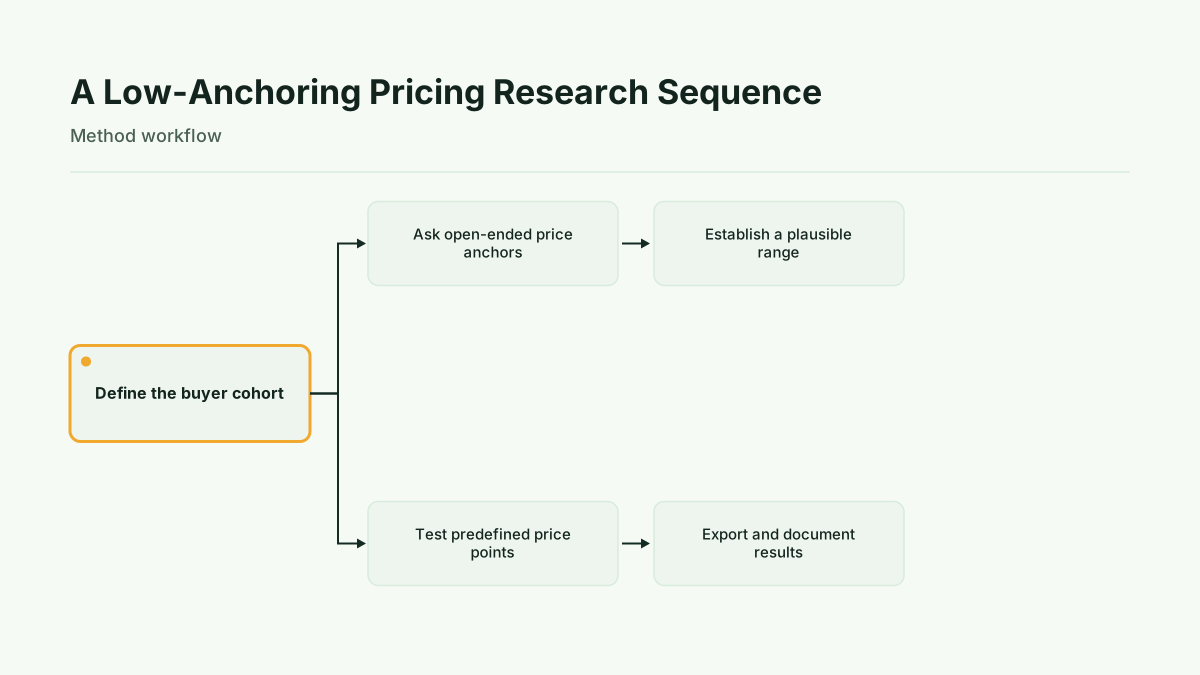
Method: Begin by defining the buyer cohort and the decision the study must support. Then use the smallest suitable method in a documented sequence:
- Define the cohort. Recruit people who resemble likely buyers for the product and decision. Recruiting the wrong cohort, including non-payers or only existing loyal customers, can bias willingness-to-pay results ([Talkful's research guide]).
- Ask open-ended questions first. Establish respondents' own price anchors before displaying specific price points. Open-ended price questions should precede displayed prices to reduce anchoring risk ([Talkful's research guide]).
- Find the range. Use Van Westendorp to organize the open-ended price responses into a plausible range for further consideration.
- Test price points. Use Gabor-Granger for predefined price-point questions after the open-ended stage. Keep the tested points tied to the decision rather than expanding the study without purpose.
- Add trade-off analysis only when needed. Use conjoint when the question concerns feature or package combinations, not merely because the method appears more advanced.
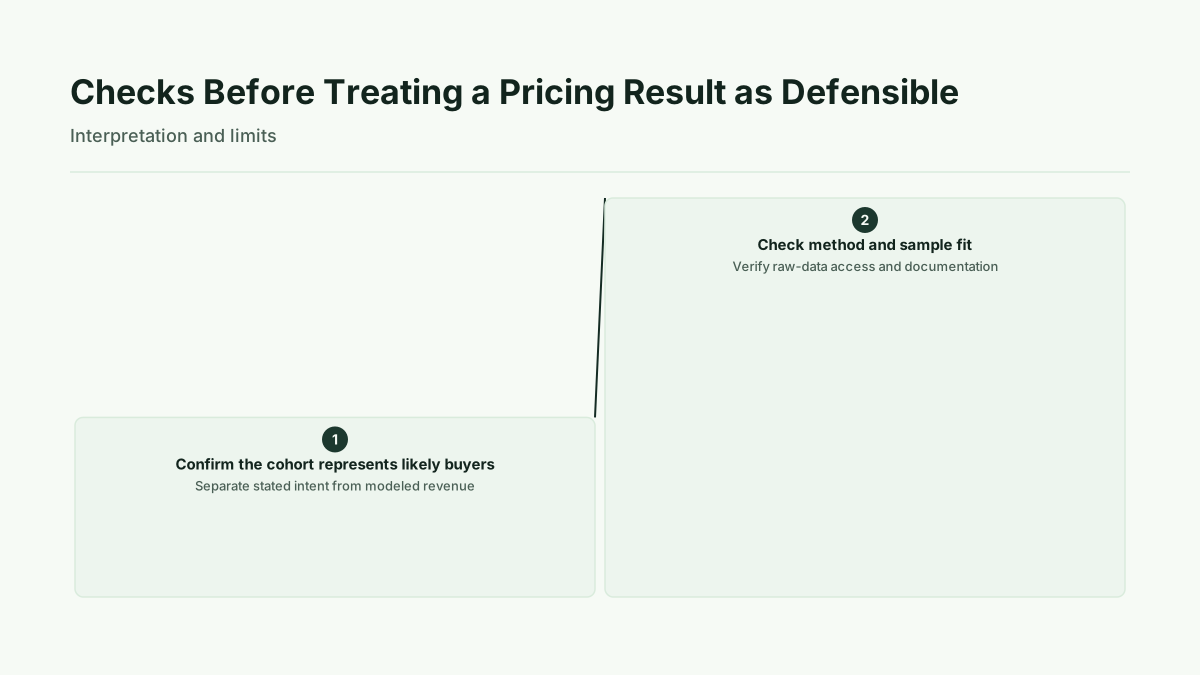
- Export and document. Preserve the question wording, cohort definition, method sequence, price points, exclusions, and underlying responses or a usable export. A defensible workflow requires documented methodology and access to the underlying response data or a usable export ([Talkful's research guide]).
Randomization should be documented wherever the study uses it, along with the rules used to handle incomplete or unusable responses. Repeatability means another person can understand what was asked, who was included, and how the output was produced. It does not mean that every future study will produce the same result.
Decide Between Self-Serve Research and a Consultant
Self-serve research is the better fit when the founder can define the cohort, select a suitable method, follow the sequence, and interpret the output without pretending it proves more than it does. Speed and repeatability favor this path when the decision is a focused price sprint.
Enterprise software or a consultant becomes more suitable when the decision requires complex conjoint design, larger samples, multi-market execution, integrations, or specialized interpretation. Consulting support can also be justified when the internal team cannot confidently define the cohort, design the study, or assess whether the data supports the decision.
The choice is not self-serve versus expert help in the abstract. It is a question of study complexity and decision risk. Start with the smallest study that can answer the question. Escalate when the question itself becomes more complex, not simply because a more elaborate tool is available.
Interpret Stated Intent Without Overclaiming Demand
Interpretation: A pricing result must be labelled by the evidence it contains. Stated willingness to pay is a response to a research question. A modeled or simulated revenue scenario is an analytical output based on assumptions and responses. Observed purchase behavior is evidence from what people actually did. These are separate evidence types and must not be presented as interchangeable ([Talkful's research guide]).
That distinction is especially important in a founder-facing comparison. A price-point response can inform a decision about which prices to test next. It does not, by itself, establish observed demand. A modeled revenue scenario can help compare assumptions, but it is not an observed outcome. A behavior-testing result can provide a different signal, but it still needs to be interpreted in the context of the cohort and the test design.
Sample quality affects interpretation. If respondents are non-payers, unusually loyal existing customers, or otherwise unlike likely buyers, their willingness-to-pay responses may not transfer to the target decision. The study should therefore report who was recruited and why that cohort represents the intended buyer.
Limits of Pricefx Alternative Comparisons
Limits: The available evidence does not support an independently verified comparison of current Pricefx features, competitor pricing, customer satisfaction, or market rankings. It also does not support presenting a vendor comparison as a universal ordering of tools. The framework here compares research paths by decision fit and operating requirements.
Method fit remains a constraint. Van Westendorp, Gabor-Granger, and conjoint answer different questions. A method cannot compensate for a poorly defined cohort or an unclear decision. Recruitment bias can affect willingness-to-pay results, while insufficient documentation makes a result difficult to audit or repeat. Integration and support requirements may also move a study from a focused self-serve workflow toward enterprise software or consulting.
Finally, no stated-intent study should be described as observed purchase behavior. No modeled or simulated revenue output should be described as realized revenue. Keeping those boundaries visible is part of making the decision defensible.
Next Step: Select the Smallest Study That Answers the Question
Next step: Use this sequence:
- Name the decision: range, price point, or feature and package trade-off.
- Define the likely buyer cohort and exclude audiences that do not represent the decision.
- Ask open-ended price questions before displaying price points.
- Use Van Westendorp for range discovery or Gabor-Granger for predefined price-point testing.
- Add conjoint only when feature or package trade-offs require it.
- Export the responses and document the methodology, sequence, and interpretation.
- Escalate to enterprise software or a consultant when the study requires complex conjoint, larger samples, integrations, multi-market execution, or specialist support.
For founders who want to begin with a focused, repeatable workflow, [Kinetic Pricing] can be evaluated as a self-serve path. [See Kinetic Pricing plans].
Additional context on these methods is available from scenario revenue modeling, Pro plan and compare the Pro plan against hiring a consultant.
Run this method with your users
Start 30-day free trial to run every method with your users, or Buy one study when one decision needs evidence now.
Sources
Talkful, “How to Run Pricing Research”