
Use Van Westendorp to find an acceptable price range, Gabor-Granger to test specific price points, conjoint analysis to evaluate packages and features, and behavioral or live testing when observed purchase data is available. Treat survey outputs as hypotheses, then validate high-stakes decisions with behavior where a safe test is possible.
Start With the Pricing Decision, Not the Survey
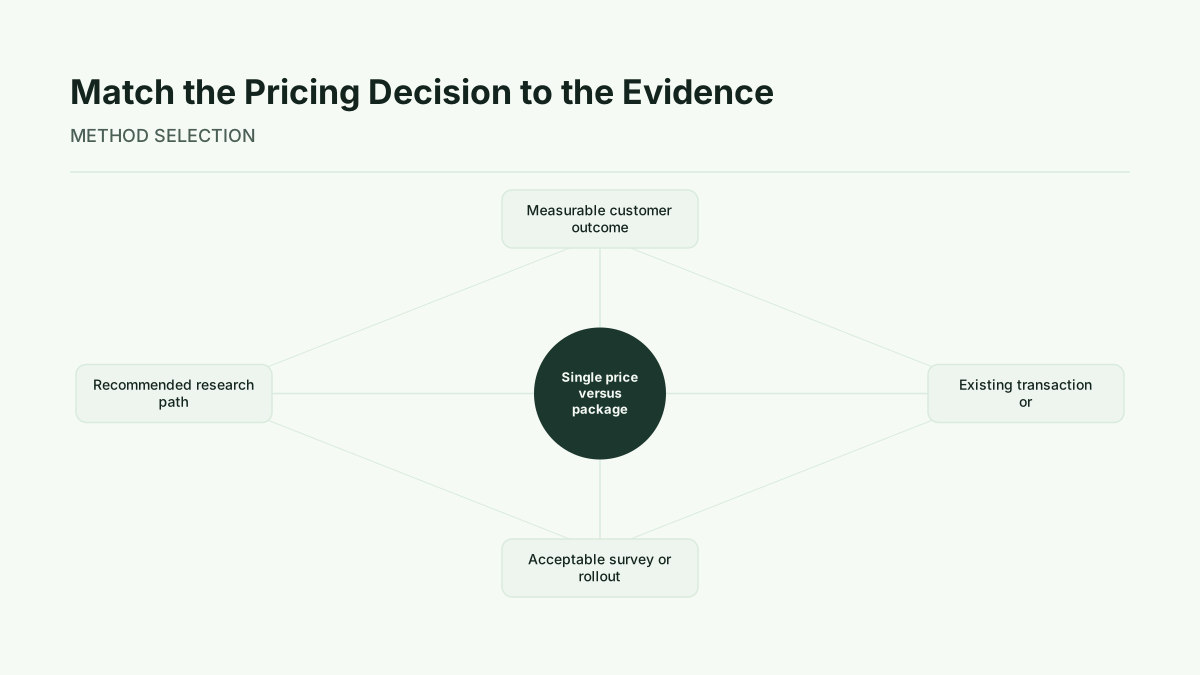
Value-based pricing research is most useful when it begins with a commercial decision rather than a preferred questionnaire. Write down the decision in one sentence: are you setting a first price, repricing an existing offer, comparing packages, prioritizing features, or deciding whether a change is safe to launch?
Then define the measurable customer outcome connected to the offer. The outcome might be a result buyers recognize, a problem they need to solve, or an economic effect that helps a decision-maker justify purchase. The research should connect the price question to that outcome without assuming that stated interest is the same as a completed purchase.
Identify the relevant buyer or economic decision-maker and the segments that may evaluate value differently. Record what is known about each segment, what evidence is available, and what could happen if the decision is wrong. A high-risk repricing decision with existing traffic and transaction history calls for a different path from an early package decision with little behavioral data.
Method: use a decision tree. First identify the outcome and buyer context. Next determine whether you need a range, a price-point response, a package trade-off, or observed behavior. Finally choose the least complex method that can answer that question and support validation.
Match the Method to the Question
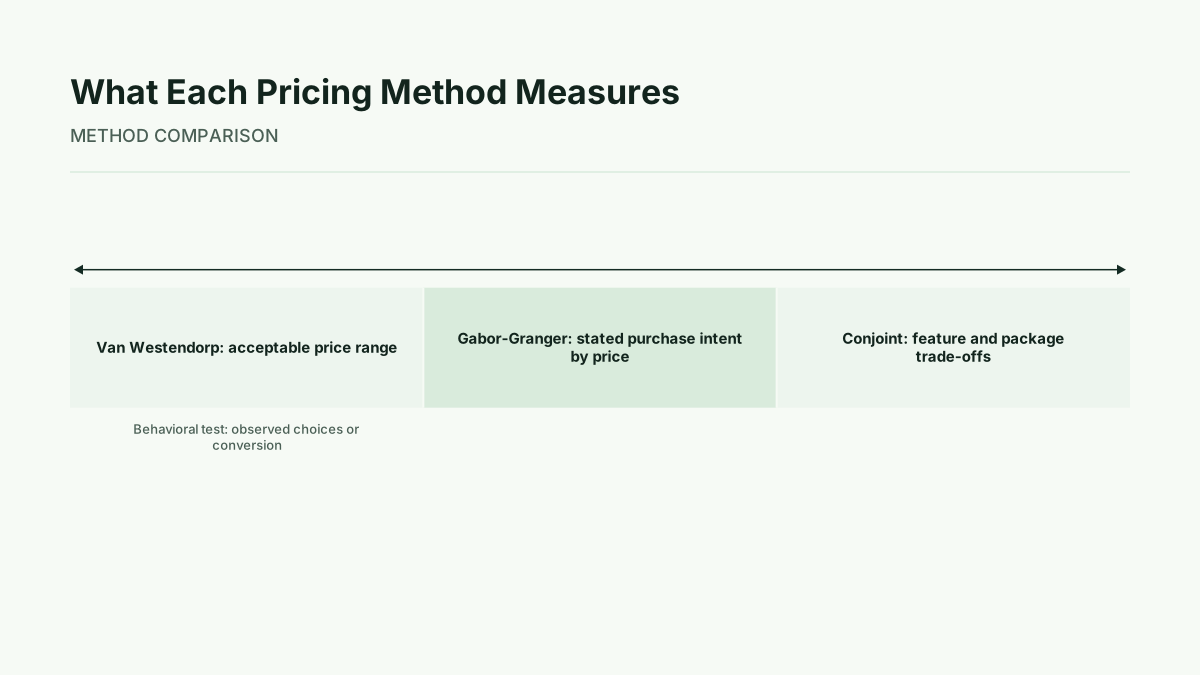
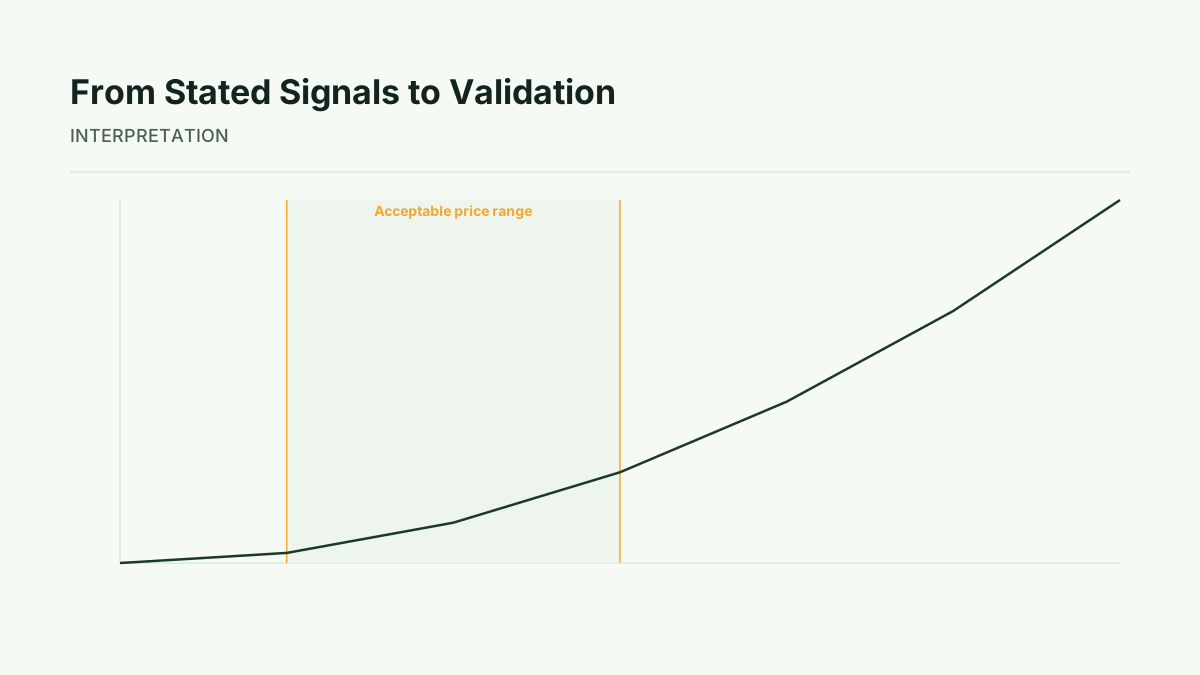
Van Westendorp is a range-finding input. It helps structure questions about price perception and produce an acceptable price range. Use it when the team needs an initial view of where a price may feel too low, acceptable, expensive, or too high. It does not by itself establish a final price or guarantee purchase.
Gabor-Granger is a price-point input. It asks about purchase intent at specified prices and can be used to form a demand-curve view across those points. It fits a decision that already has candidate prices to test, especially when the central question is how stated intent changes as price changes.
Conjoint analysis is a package-and-feature trade-off input. Respondents evaluate alternatives that combine attributes, features, and prices. This fits a decision about package design or the relative value of feature combinations, rather than a simple question about one price in isolation.
Behavioral validation uses observed choices, conversion, or related purchase behavior when the organization can run a suitable test. It is the strongest available validation when it can be conducted safely, but it can be constrained by traffic, time, ethics, and operational risk.
These methods answer different questions. No single method measures complete willingness to pay. A range finder can guide candidate prices, a price-point test can describe stated response, conjoint can expose trade-offs, and observed behavior can test what buyers actually do.
Design a Study That Connects Price to Customer Value
Screen for the respondent context required by the decision. If the study concerns a business purchase, the respondent should have a relevant relationship to the buying or economic decision. Document the screening logic and any segment quotas so the team knows whose answers are represented.
Use price anchors that match the buying context. The task should make the offer, package, feature differences, and price unit understandable. Randomize presentation where the design calls for it, and pilot the questions and logic before collecting the full set of responses. A pilot can reveal confusing wording, unrealistic combinations, or a task that asks respondents to make distinctions they cannot reasonably make.
Qualitative discovery can help the team learn how buyers describe outcomes, alternatives, constraints, and value before committing to a quantitative design. Keep discovery separate from the final interpretation. It can improve the task without turning a small set of conversations into a market estimate.
Document assumptions before reviewing results. Include the target buyer, segment definitions, price units, package descriptions, exclusions, and the intended commercial decision. Also record whether each output represents stated purchase intent, a modeled or simulated revenue scenario, or observed behavior.
A pricing survey question library can support question planning, but the method still has to match the decision. A well-written survey cannot correct a mismatch between respondent, offer, and business question.
Turn Research Outputs Into a Defensible Price
Interpret each output according to what it actually measures. An acceptable range is a directional boundary for price perception. It is not an observed conversion result. A Gabor-Granger output is stated purchase intent by tested price point. It is not a record of completed transactions.
Conjoint results should be read as trade-off information about the attributes and prices included in the study. They can help compare packages and feature configurations, but the result depends on the respondent context, task design, and assumptions used in analysis. If the package choices do not resemble the buying decision, the output may not support the decision you need to make.
Modeled revenue is a separate category. Any revenue scenario derived from stated intent, a demand curve, or assumptions about volume should be labelled Illustrative example and Simulated. It should not be presented as observed revenue. Observed conversion, take rate, churn, and expansion are behavioral measures and should remain distinct from survey outputs.
Interpretation: select the price or package that fits the decision, value narrative, and evidence quality, then state what remains uncertain. The most defensible conclusion may be a candidate range, a short list of price points, a package recommendation, or a request for behavioral validation rather than a single “correct” price.
Know When Research Is Worth the Cost
Choose research when the organization needs structured evidence before a decision, lacks suitable transaction data, or is comparing alternatives that cannot be tested directly yet. Choose a live or behavioral test when relevant traffic or historical transaction data exists and the team can change the experience safely enough to learn from observed behavior.
Existing traffic does not automatically make a test appropriate. Consider whether the traffic represents the target buyer, whether the offer can be exposed consistently, and whether the team can monitor the consequences. Historical data can support causal analysis only when it is suitable for the question and the relevant assumptions are documented.
Survey research also has limits. Stated-preference research does not guarantee purchases. Small or mismatched samples can mislead. Conjoint complexity can exceed the decision need. A live test may be constrained by traffic, ethics, operational risk, or time. Do not treat any universal sample-size threshold or value-capture rate as a substitute for fit, quality, and decision context.
The cost of being wrong matters. A reversible test with clear guardrails may be preferable to an elaborate study when the decision can be learned safely in market. A high-risk change may justify more preparation, but only if the organization can act on the findings.
Build Validation and Monitoring Into the Rollout
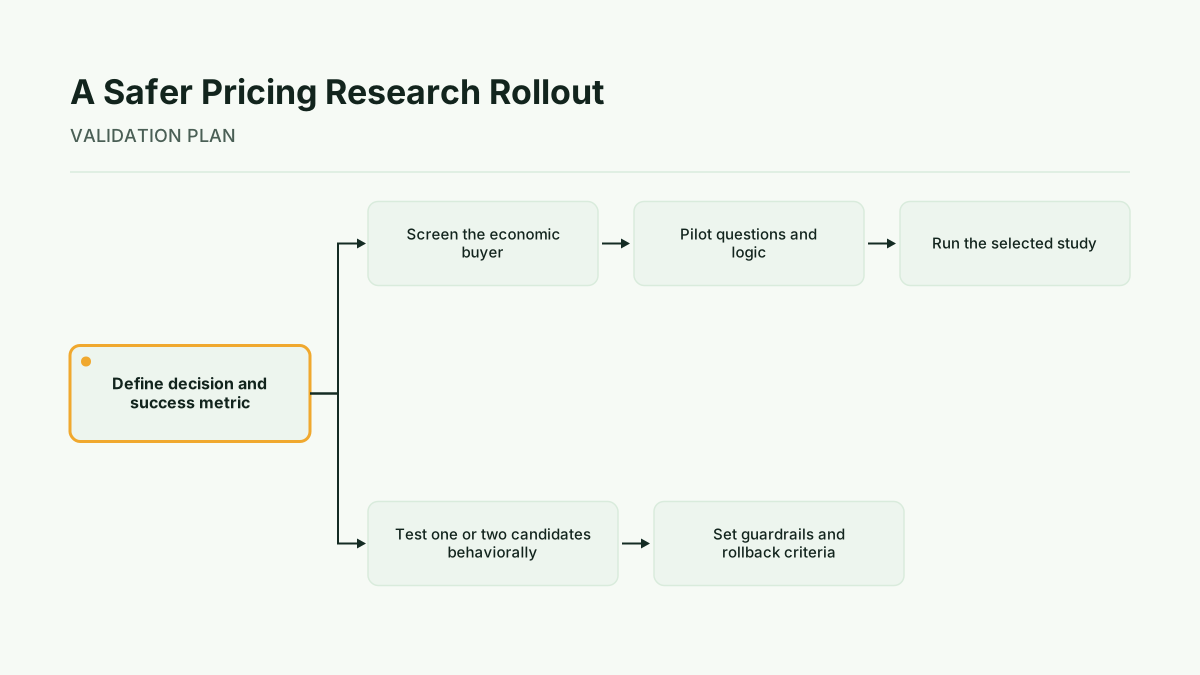
Start by defining the success metric and the risks that would stop or reverse the rollout. Run the selected study, choose one or two candidate changes for behavioral validation where practical, and use a phased rollout rather than treating the research result as the endpoint.
Guardrails should cover the measures most exposed by the change. Monitor conversion and other observed purchase signals alongside churn and expansion after launch. Establish rollback criteria before exposure increases. This keeps the rollout tied to evidence rather than post-launch preference.
Revisit the research when the offer, buyer context, or competitive environment changes. Recurring research can update assumptions, while behavioral monitoring shows whether the price and package continue to fit observed customer decisions. The workflow is therefore a loop: define, study, interpret, validate, monitor, and revise.
How Kinetic Pricing Maps to the Workflow
Kinetic Pricing lists Van Westendorp as “Price range finder” at 14,900 cents on its product site. It lists Gabor-Granger as “Price point tester” at 19,900 cents on the same site. The site lists MaxDiff as “Feature value ranker” at 27,900 cents and conjoint as “Package and price builder” at 49,900 cents in its method offering.
Those labels map to the workflow above: range finding, price-point testing, feature prioritization, and package construction. Kinetic Pricing Pro is listed at 9,900 cents per month, 99,000 cents per year, with a 30-day trial on the Pro page. These are product references, not performance claims.
Limits: the method choice cannot remove uncertainty. Survey answers remain stated signals, modeled revenue remains modeled, and observed behavior can still be affected by rollout conditions. The useful standard is not certainty. It is a documented match between the decision, method, respondent context, evidence, and validation plan.
Next step: choose the Kinetic Pricing study that matches your immediate decision, or compare the available workflow options with Kinetic Pro.
Additional context on these methods is available from investing in value-quantification tools and pricing capability increases the effectiveness of value-based pricing, proxy value metrics, price on outcomes without negotiating a custom contract for every account, Kinetic Pricing's research and benchmark hub, Unlocking value-based pricing: the moderating roles of pricing capabilities and contingency factors in B2B markets: an empirical approach, Value-Based Pricing: Pricing on Customer Outcomes, Not Costs and Productive.
Run this method with your users
Start 30-day free trial to run every method with your users, or Buy one study when one decision needs evidence now.
Sources
Kinetic Pricing, Kinetic Pricing product site
Kinetic Pricing, Kinetic Pro