
Usage pricing charges customers for what they consume instead of charging a flat fee for access. Twilio bills per message. Snowflake bills per credit. AI products bill per token or per run.
The model looks simple from the outside. Two decisions carry almost all the risk: which unit you meter, and what you charge per unit. Teams argue about the rate for weeks and choose the metric in an afternoon. That order is backwards.
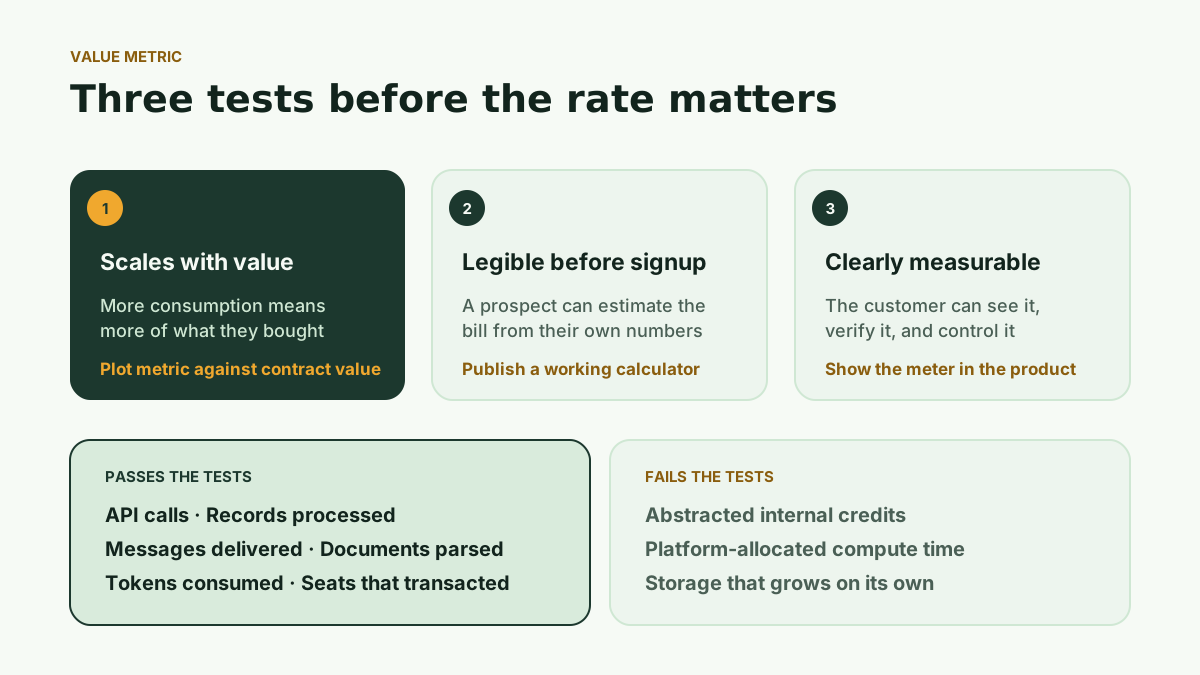
A usage metric has to pass three tests
Stripe describes three properties that separate a workable value metric from a billing dispute waiting to happen.
It scales with value. As the customer consumes more, they should be getting more of what they bought. Messages sent, records processed, and API calls made all move with the outcome. A metric that rises while the customer's benefit stays flat produces resentment on every invoice.
It is legible before signup. A prospect should be able to estimate their bill from information they already have. If a buyer cannot answer "what will this cost me next month" using their own numbers, the pricing page becomes a blocker rather than a path.
It is clearly measurable. The customer should be able to see the count, verify it, and control it. Internal compute units that customers cannot observe or influence are the most common source of churn in usage models.
Strong metrics in practice: API calls, records processed, messages delivered, documents parsed, seats that transacted, tokens consumed. Weak metrics: abstracted credits, internal compute time, storage that grows without customer action.
Test a candidate metric with your own accounts before you commit. Pull twelve months of data, plot the metric against contract value, and check whether the two move together. When they do not, you have found the wrong unit.
Set the rate with customer evidence
Once you have the metric, the rate is a pricing question you can research the same way you would research any other price.
Start with the floor. Calculate the variable cost of serving one unit, including infrastructure, support load, and payment processing. Add your target gross margin. That figure is a floor for screening candidate rates, not a price.
Anchor on the customer's alternative. Buyers compare your unit rate against building it, doing it manually, or the incumbent's rate. Find the cost of their current approach per unit of the same outcome.
Test candidate rates with buyers. A Gabor-Granger study asks purchase intent at specific price points and produces a demand curve and a modeled revenue curve across the range you tested. For a usage model, run it on a realistic monthly bill at a stated volume rather than on the abstract unit rate. Customers judge invoices, not fractions of a cent.
Check the range first if you have no candidates. When you cannot name three plausible rates, run a Van Westendorp study to establish the acceptable range, then take candidates from inside it into a price-point test.
Pure usage pricing is rare for a reason
Almost no mature product runs on pure pay-as-you-go. Revenue becomes unforecastable, customers cannot budget, and a quiet month hits both sides at once.
Most working usage models are hybrids:
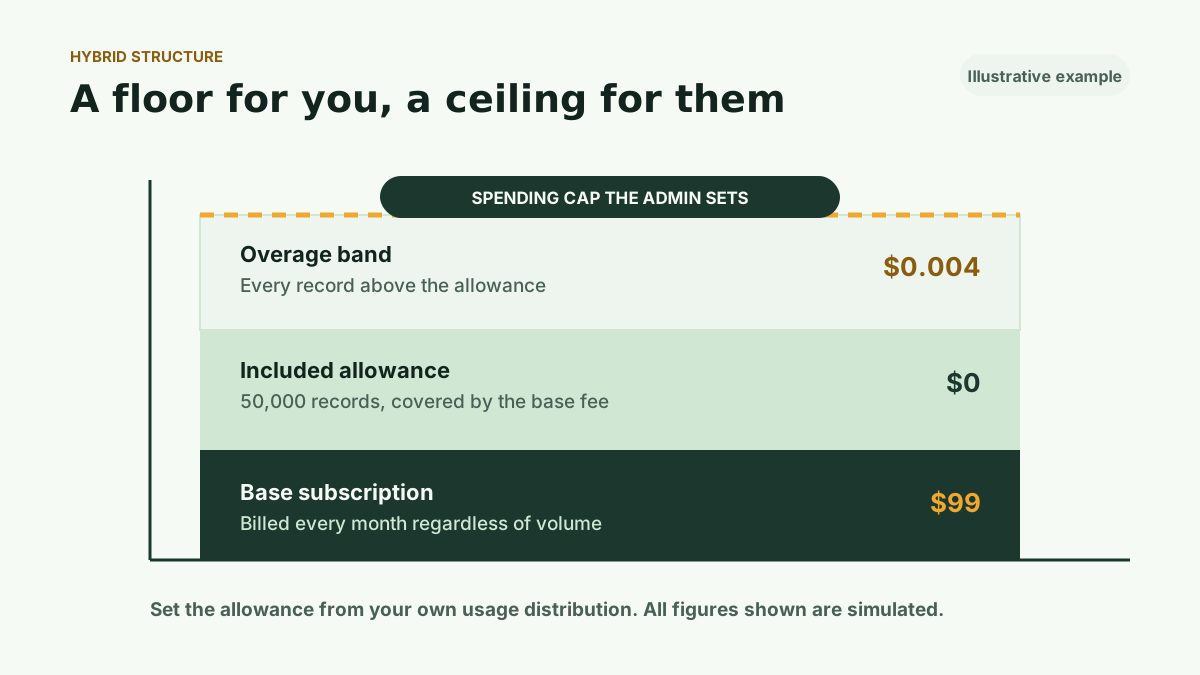
- A base subscription plus overage above an included allowance
- Prepackaged usage bundles the customer buys in advance
- Committed use discounts in exchange for an annual floor
- Free tiers or trial credits that let a buyer test before committing
- Spending caps that put a hard ceiling on a monthly bill
The base plus overage structure gives you a revenue floor and gives the customer a predictable minimum. Set the included allowance from your own usage distribution: pick a level that covers the median account's normal month, so overage signals growth rather than a surprise.
Design against bill shock
Bill shock is a product problem that arrives as a support ticket. Build the defenses into the product before launch:
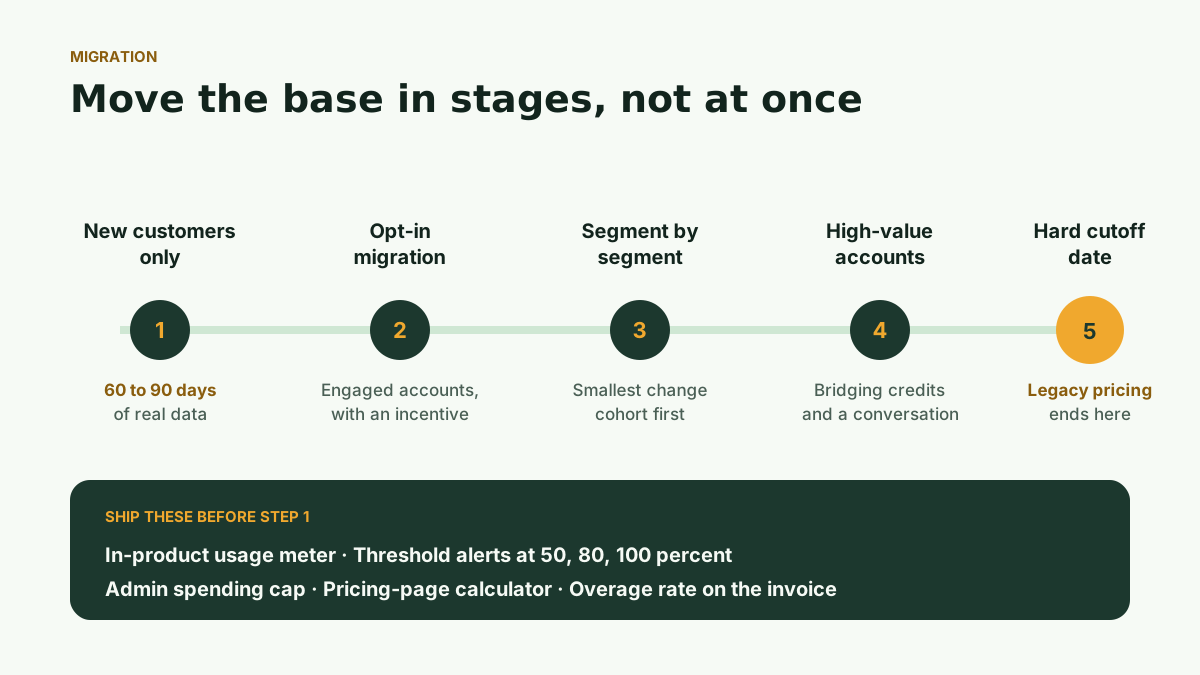
- Show current-period usage inside the app, updated on the same cadence you bill
- Send threshold alerts at 50, 80, and 100 percent of the allowance
- Let an admin set a hard cap and choose what happens when usage reaches it
- Publish a calculator on the pricing page that takes the buyer's own numbers
- Write the overage rate on the invoice next to the count that produced it
A customer who can see the meter rarely disputes the reading.
Migrate existing accounts in stages
Moving a live customer base from flat or per-seat pricing to usage pricing is the part that goes wrong. Sequence it.
- New customers first. Run the new model for 60 to 90 days and collect real distribution data before touching anyone who already pays you.
- Opt-in migration. Offer the new model to engaged accounts with an incentive. Their behavior tells you where the allowance should sit.
- Segment by segment. Roll forward starting with the cohort that faces the smallest change.
- High-value accounts individually. Bridging credits and a conversation, not an email blast.
- A hard cutoff date. Two pricing systems running forever costs more than the migration did.
Grandfathering is a decision, not a kindness. Decide how long legacy pricing lasts, write it down, and tell customers the date.
Five ways usage pricing goes wrong
The metric the customer cannot control. Storage that grows on its own, compute the platform allocates, retries the system generates. Every one of these produces an invoice the buyer did not authorize.
Launching without caps. The first six-figure surprise invoice costs more in trust than the revenue was worth.
Migrating everyone at once. You lose the ability to diagnose which part of the change caused the churn.
A pricing page that hides the math. If a buyer has to contact sales to learn what a normal month costs, usage pricing has removed the advantage it was supposed to add.
Setting the rate from a spreadsheet alone. Cost plus margin gives you a floor. Only customers tell you what the ceiling looks like.
Test the rate before you publish it
A usage rate is a price, and it deserves the same evidence as any other price.
Kinetic Pricing runs four self-serve study methods on customers you recruit yourself. Gabor-Granger at $199 tests purchase intent across candidate monthly bills and models revenue at each one. Advanced Van Westendorp at $149 establishes the acceptable range when you have no candidates yet. CBC Conjoint at $499 compares full packages when the allowance, the overage rate, and the base fee move together.
Every number comes from deterministic math. The written narrative gets code-checked against those numbers, so the analysis cannot invent a figure.
Choose a study method before you commit to a rate your customers have never seen.