
The argument usually runs on vibes. Someone points at a company that switched to usage pricing and grew, someone else points at the forecasting mess it created, and the meeting ends without a decision.
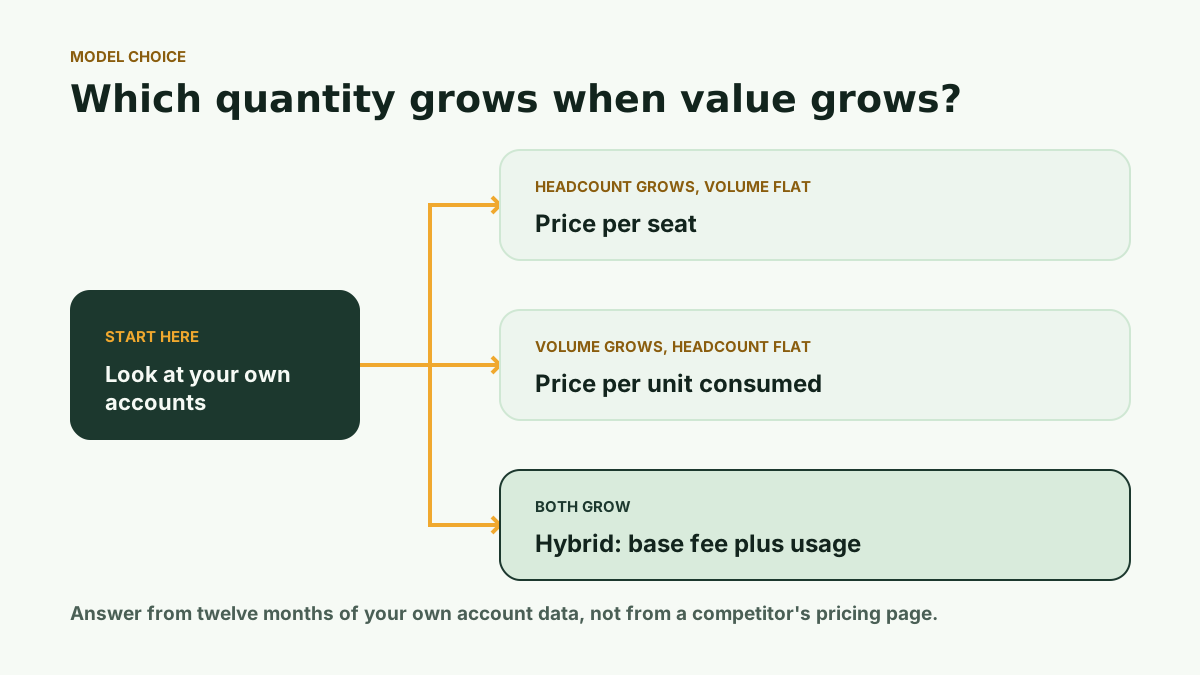
There is a test that settles it. Look at your own accounts and ask which number moves when the customer gets more value: the headcount, or the volume the product processes. Price the one that moves.
What each model does well
Per-seat pricing charges a fixed amount per person with access. Buyers understand the bill instantly, finance teams forecast it without effort, and your revenue grows as the customer's team grows. It suits products where each individual works inside the tool and gets value from doing so.
Usage-based pricing charges for consumption: API calls, records processed, messages delivered, tokens spent. Small customers start cheap, heavy customers pay proportionally, and the price stays connected to delivered value even when headcount stays flat. It suits products that do work in volume.
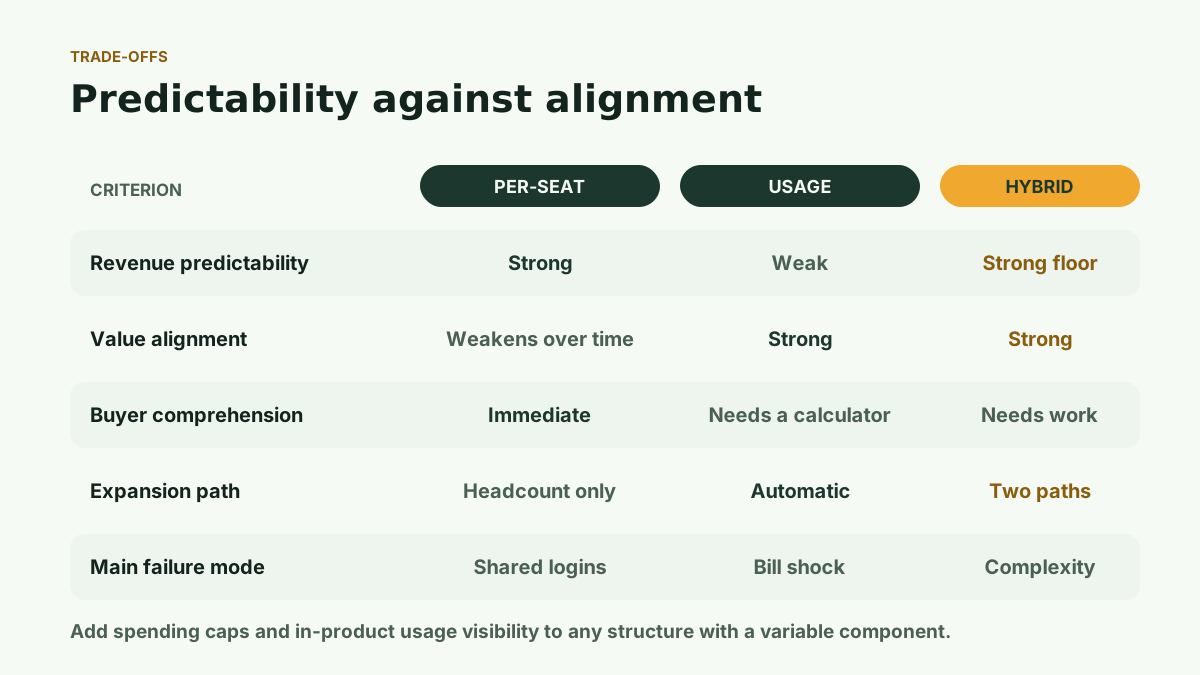
The trade-off is predictability against alignment. Seats are predictable and can lose their link to value. Usage tracks value and makes both sides' revenue harder to forecast.
Six questions that decide it
1. Does one person operate the product for the whole company? If yes, seats cap your revenue at one seat and invite credential sharing.
2. Do customers ration access to control cost? Admins removing seats to save money means the model is suppressing the adoption you need for renewal.
3. Does volume grow while headcount stays flat? An account that processes three times the documents with the same five people is telling you where the value is.
4. Can the customer predict their own bill? A usage metric a buyer cannot estimate before signup turns your pricing page into a blocker.
5. Can the customer control the metric? Storage that grows on its own, retries the system generates, and compute the platform allocates all produce invoices the buyer did not authorize.
6. Do you need forecastable revenue this year? Pure usage pricing removes your revenue floor. If you are raising or planning against a number, that matters.
Answer these against your own data rather than against a competitor's pricing page.
Most answers are hybrid
Very few mature products run pure seat pricing or pure pay-as-you-go. The working structures combine them:
- Seats plus included volume. A per-seat price carries an allowance, and overage bills above it.
- Base platform fee plus usage. A fixed subscription covers access, and consumption bills on top.
- Tiers with usage fences. Plan tiers gate capability, and each tier includes a different volume.
- Committed usage with a discount. The customer commits to an annual floor and pays a lower rate.
- Free viewer seats plus paid editor seats. Adoption spreads without a charge for every person.
Hybrids give you a revenue floor and keep the price connected to value. They cost you simplicity, so write the pricing page for a buyer who has thirty seconds and a calculator.
Add spending caps and in-product usage visibility to any structure with a variable component. Bill shock is a product problem that arrives as a support ticket.
Test the switch before you make it
A model change is bigger than a price change. It moves who pays more, who pays less, and how every account forecasts its own spend. Test it before it goes live.
Model the change on your own book first. Apply the candidate structure to the last twelve months of accounts. Find who pays more, who pays less, and what your revenue would have been. If a quarter of your base sees a 40 percent increase, the migration plan matters more than the model.
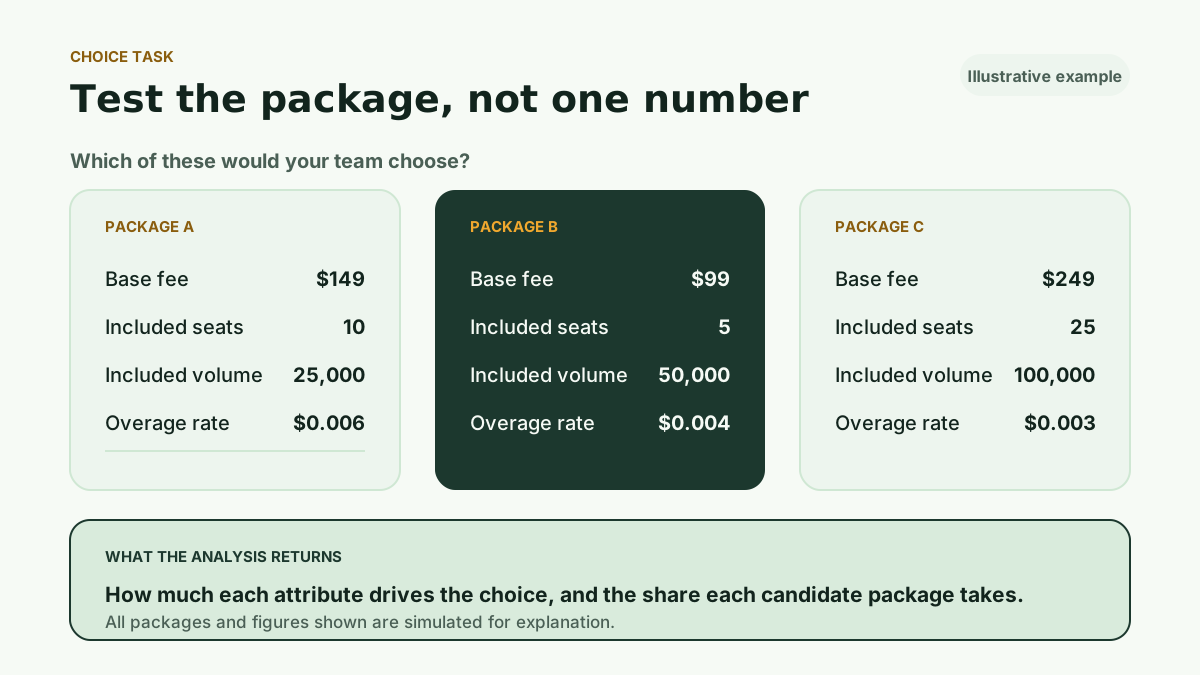
Run a conjoint study on the packages. CBC Conjoint presents realistic packages so customers trade the base fee against seat count, included volume, and overage rate. It estimates how each attribute drives choice, then simulates the share each candidate package would take. This is the method built for a decision where several dimensions move at once.
Test candidate price points. Once the structure is settled, Gabor-Granger tests purchase intent at specific bills and models revenue across them.
Find the range if you have no candidates. Van Westendorp establishes the acceptable range for a stated offer, and candidates come from inside it.
Stated intent runs ahead of observed purchase behavior. Read a study as a ranking of options and a directional estimate, then confirm with a live cohort.
Migrate in stages
If the evidence says switch, sequence the rollout.
- New customers only for 60 to 90 days, so you collect real distribution data before touching anyone who already pays.
- Opt-in migration with an incentive for engaged accounts.
- Segment by segment, starting with the cohort facing the smallest change.
- High-value accounts individually, with bridging credits and a conversation.
- A hard cutoff date for legacy pricing, written down and communicated.
Grandfathering without an end date leaves you running two pricing systems forever. Decide the date at the start.
Four mistakes to avoid
Switching because a competitor did. Their value metric describes their product, not yours.
Choosing usage pricing with an unpredictable metric. If the buyer cannot estimate or control the count, the model creates disputes rather than alignment.
Launching a variable bill with no cap. The first surprise invoice costs more trust than the revenue was worth.
Testing one number when four are moving. A model change is a package change, and package changes need a method that handles multiple attributes.
Test the model with your own customers
Kinetic Pricing runs four self-serve study methods on customers you recruit yourself. CBC Conjoint at $499 compares candidate packages when the base fee, seat count, included volume, and overage rate move together. Gabor-Granger at $199 tests candidate bills and models revenue. Advanced Van Westendorp at $149 establishes the acceptable range. MaxDiff at $279 ranks what belongs in each tier.
Every figure comes from deterministic math. The written narrative gets code-checked against those figures, so the report cannot invent a number.
Kinetic Pro includes unlimited customer-recruited studies across all four methods, three seats, and Kinetic Workspace for $99 per month or $990 per year.
Choose a study method before you change the model your revenue runs on.