
Per-user pricing charges a fixed amount for each person with access. Ten seats at $20 a month bills $200. Buyers understand it on sight, finance teams can forecast it, and your revenue grows as the customer's team grows.
It works when every added seat brings added value. The model breaks when it does not, and the break shows up as shared logins, seat audits, and renewal conversations about headcount rather than outcomes.
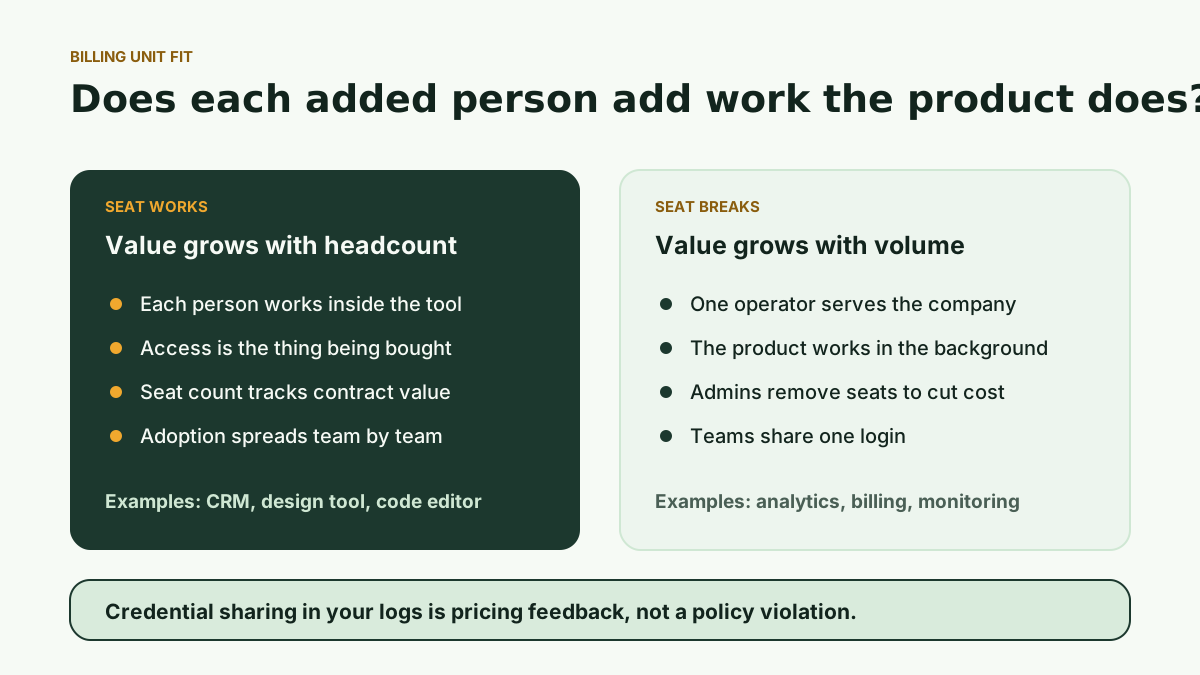
When the seat is the right unit
Per-user pricing suits B2B products where value scales with team adoption. Stripe describes it as well suited to services whose overall value grows naturally as more team members use them.
Three signals say the seat is your unit:
Each person gets individual value. A CRM, a design tool, and a code editor all produce value inside one person's workflow. Adding a colleague adds a second workflow.
Access is the thing being bought. The product does its work when a human is in it. Value tracks logged-in time rather than events processed in the background.
Seats correlate with contract value in your own data. Pull twelve months of accounts, plot seat count against revenue and against retention, and check whether the line holds.
Three signals say the seat is the wrong unit:
One person operates it for the whole company. An analytics tool, a billing platform, or a monitoring service can deliver its full value through a single operator. Charging per seat here caps your revenue at one seat and pushes customers to share credentials.
Value comes from volume the product processes. Messages, transactions, documents, and API calls all scale independently of headcount.
Customers ration access to control cost. When admins remove seats to save money, the pricing model is fighting your adoption strategy. Every seat you price out is a user who never becomes a champion.
Set the per-seat price
Start with the arithmetic, then bring in customers.
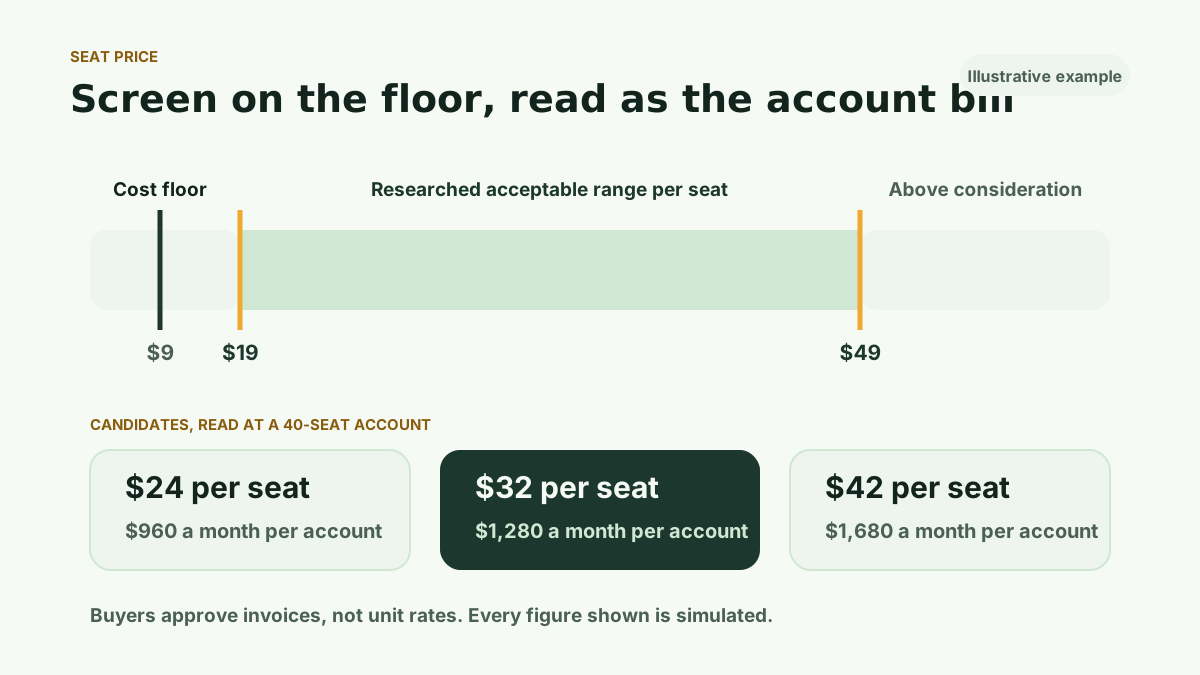
Calculate the floor. Sum the variable cost of serving one active seat: infrastructure, third-party licences you pass through, payment processing, and the support load a typical user creates. Add your target gross margin. Anything below that figure fails before customers see it.
Find the value per seat. Estimate the hours the product saves a single user each month and the fully loaded cost of those hours. A tool that saves four hours a month for a person costing $50 an hour has produced $200 of monthly value for that seat. Your price is a share of that number.
Check the account-level bill. Buyers approve invoices, not unit rates. A $30 seat looks reasonable and a 200-seat rollout at $6,000 a month goes to a different approver. Model the bill at your typical, largest, and smallest account sizes before you publish the rate.
Test candidates with buyers. Take three or four candidate seat prices into a Gabor-Granger study, framed as the monthly bill at a realistic seat count. The study returns a demand curve and a modeled revenue curve across the tested points. When you cannot name three candidates, run Van Westendorp first to establish the acceptable range and take candidates from inside it.
Volume discounts and seat tiers
Large accounts expect a lower rate per seat. Two structures handle this.
Volume pricing applies one rate to every seat based on the total count. At 60 seats, all 60 bill at the 51-to-100 rate. Simple to explain, and it creates a cliff where adding one seat lowers the whole bill.
Graduated pricing bills each band at its own rate. The first 10 seats bill at the first rate, seats 11 through 50 at the second, and so on. No cliff, harder to put on a pricing page.
Set the discount curve from the cost curve where one exists, and from what large buyers will actually sign where it does not. Discounts you cannot justify become the opening offer in every renewal.
Handle inactive seats before customers do
Every per-seat product accumulates seats nobody uses. Customers discover them at renewal and ask for a refund, or they never discover them and you carry silent churn risk you cannot see.
Three practices reduce the damage:
- Show seat activity in the admin console, so the customer sees the same data you do
- Let admins reassign a seat rather than only add and remove
- Prorate additions mid-cycle and credit removals at the next renewal, with the rule written on the invoice
An account paying for 40 seats and using 22 will not renew at 40. Better to find that out in month three than in month eleven.
Seat hoarding and shared logins
When the seat price outruns the seat value, customers respond. They share one login among a team, they route requests through a single power user, or they cap adoption at the smallest number that works.
Every one of those behaviors shrinks your footprint inside the account. Adoption drives renewal, and pricing that suppresses adoption is expensive in a way the revenue line does not show for a year.
If you see credential sharing in your logs, treat it as pricing feedback rather than a policy violation. The customer is telling you the seat price sits above the seat value.
Add a second dimension when seats stop scaling
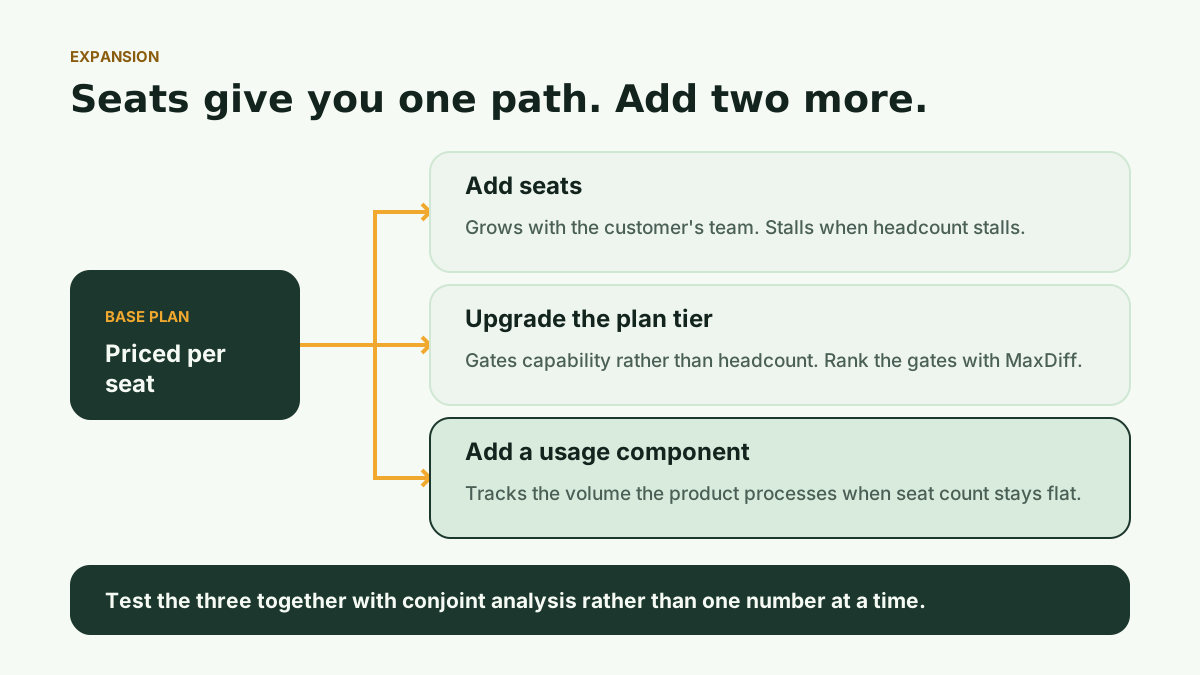
Many products outgrow pure seat pricing. The usual fix keeps the seat as the base and adds a dimension that tracks value the seat count misses:
- A free or reduced viewer seat so adoption spreads without a full charge
- Plan tiers that gate capability rather than headcount
- A usage component for the volume the product processes
- Role-based seats priced by what each role does
A hybrid keeps the forecastability of seats and restores the link between price and value. Test it as a package rather than as one number: conjoint analysis shows how customers trade seat price against tier contents and included volume when all three move together.
Research the seat price with your own customers
Kinetic Pricing runs four self-serve study methods on customers you recruit yourself. Advanced Van Westendorp at $149 establishes the acceptable range for a seat price. Gabor-Granger at $199 tests candidate seat prices and models revenue across them. MaxDiff at $279 ranks the capabilities you might gate by tier. CBC Conjoint at $499 compares full packages when seat price, tier contents, and limits move together.
The numbers come from deterministic math. The written narrative gets code-checked against those numbers.
Kinetic Pro includes unlimited customer-recruited studies across all four methods, three seats, and Kinetic Workspace for $99 per month or $990 per year.
Choose a study method before your next seat price goes on the pricing page.