
Match the replacement to the job. Use a lightweight tool for basic collection, an enterprise platform for broad research programs, and Kinetic Pricing when the decision is what to charge and requires evidence about price, packaging, or willingness to pay. The right QuestionPro alternative is therefore the one that fits the decision, workflow, and analysis required, not necessarily the platform with the longest feature list.
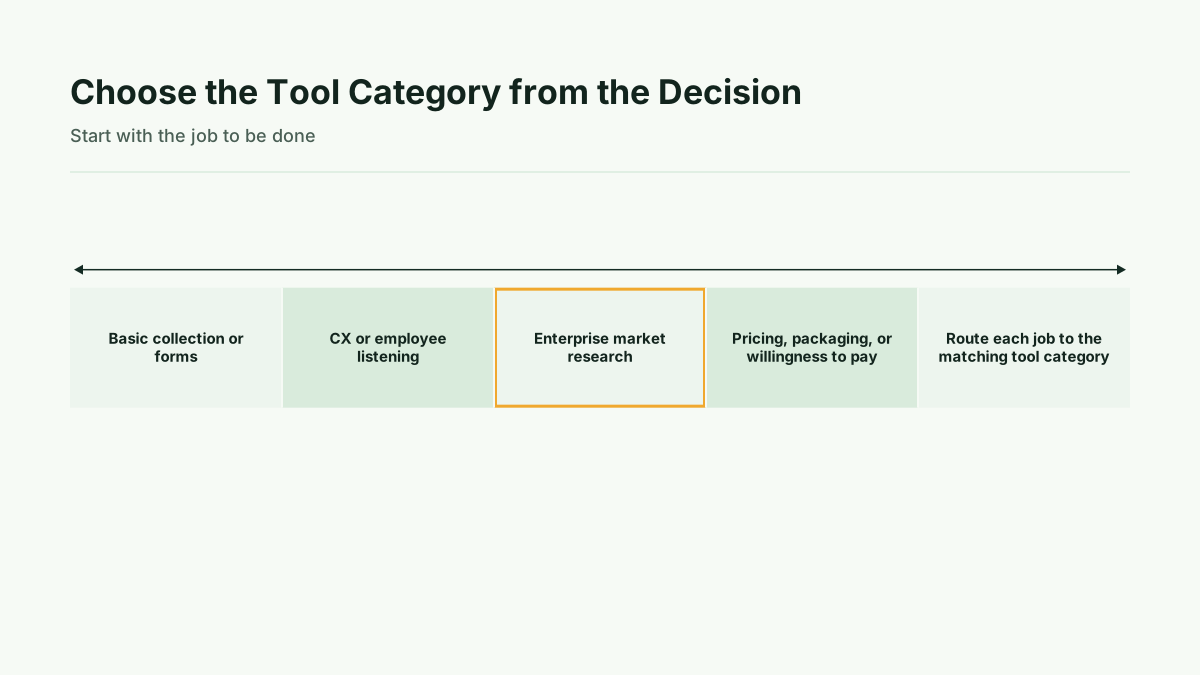
The Shortlist by Team Need
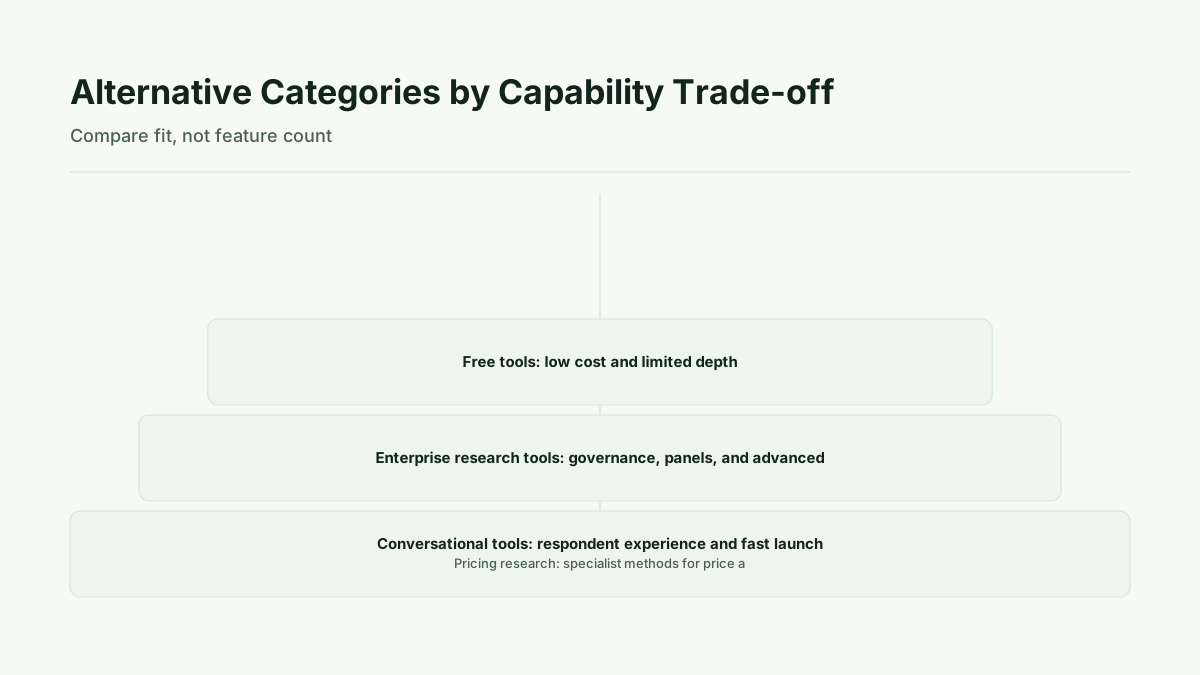
QuestionPro alternatives can be organized into practical categories: enterprise research, customer or employee listening, conversational forms, operational forms, and free or basic collection. This use-case framework is more useful than comparing every feature in a single table. The relevant comparison depends on why the team is collecting responses in the first place. The category structure is also reflected in the [QuestionPro pricing — G2] reference.
For basic collection, forms, or a short feedback workflow, the central question is whether the team can create and distribute the instrument without unnecessary process. Conversational forms put more emphasis on the respondent experience and speed of launch. Operational forms are judged by how well the output fits an existing process.
Customer or employee listening has a different shape. The team may need a repeatable way to gather feedback rather than a one-off questionnaire. Enterprise research has a broader evaluation problem, where governance, research operations, analysis, and support expectations matter together. A free or basic collection tool may be appropriate when the project does not require deeper analysis or a complex operating model.
Pricing research is a separate category choice. If the decision concerns price, packaging, feature value, or willingness to pay, a general survey builder may collect answers without providing the specialist structure needed to interpret the decision.
What Each Alternative Is Built to Do
A conversational tool is a fit when respondent experience and fast launch are central. Its trade-off is that speed and design do not generally provide the same specialist conjoint or MaxDiff depth as research-oriented platforms. That distinction matters when the output must support a pricing or package decision, rather than simply collect opinions. The [built-in Van Westendorp or Gabor-Granger analysis] reference helps clarify why method choice matters.
An enterprise research platform is a fit when the team is evaluating a broad research program. The decision should include governance, analytical requirements, panel access, integrations, and support expectations. A platform can be a reasonable general-purpose choice while still being the wrong category for a focused pricing study.
A customer or employee listening tool should be assessed against the recurring workflow around feedback. Ask how the team will launch, review, export, and route responses. An operational forms tool should be judged similarly, but with more attention to the handoff into the existing process. A free or basic tool can reduce the initial subscription burden, but the team should still test whether the resulting data can be reported and connected without avoidable manual work.
Kinetic Pricing is designed for the pricing-research boundary. Its product methods include a Price range finder, Price point tester, Feature value ranker, and Package and price builder. These methods map to questions about acceptable price ranges, tested price points, feature value, and package construction. If the actual decision is what to charge, selecting a tool because it is good at general collection may leave the central analytical job unresolved.
A Three-Task Trial for Comparing Fit
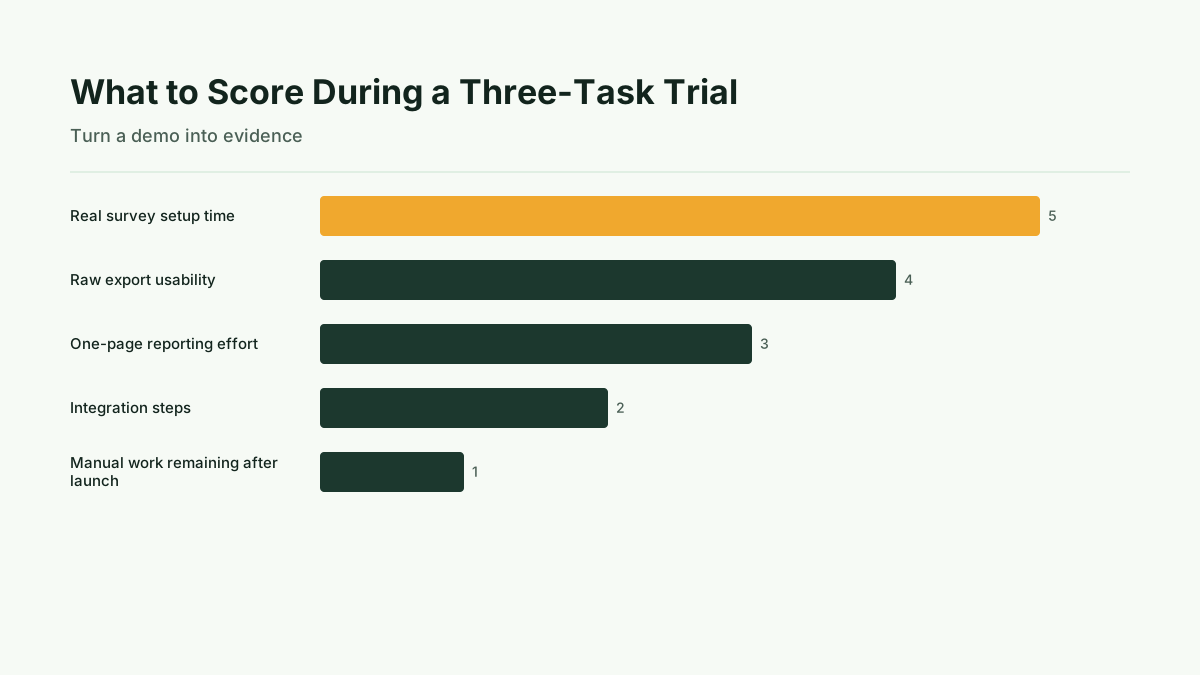
A demo can make tools appear interchangeable. A real workflow is more revealing. The [team's use-case fit] approach should be tested with three tasks.
First, build and send one real survey. Use the question types, branching, respondent experience, and distribution process the team expects to use. Record where the workflow is direct and where it requires workarounds. The point is not to reward a polished demo. It is to see whether the shortlisted tool supports the actual instrument.
Second, export the raw responses and produce a one-page report. Check whether the export is usable in the team’s analysis process and whether the report can answer the decision that motivated the survey. Separate collection convenience from analytical usefulness. A response file is not automatically a decision-ready analysis.
Third, connect the output to the existing CRM, spreadsheet, or warehouse workflow. The [hidden integration and operational costs] of a tool may not appear until the data leaves the survey interface. Record the steps, manual transformations, reconciliation work, and remaining review burden.
Use the same three tasks for each general-purpose candidate. Compare elapsed effort, not just the presence of a feature. If a tool cannot complete the workflow cleanly, its apparent subscription advantage may not survive implementation.
Subscription Price Is Not Total Switching Cost
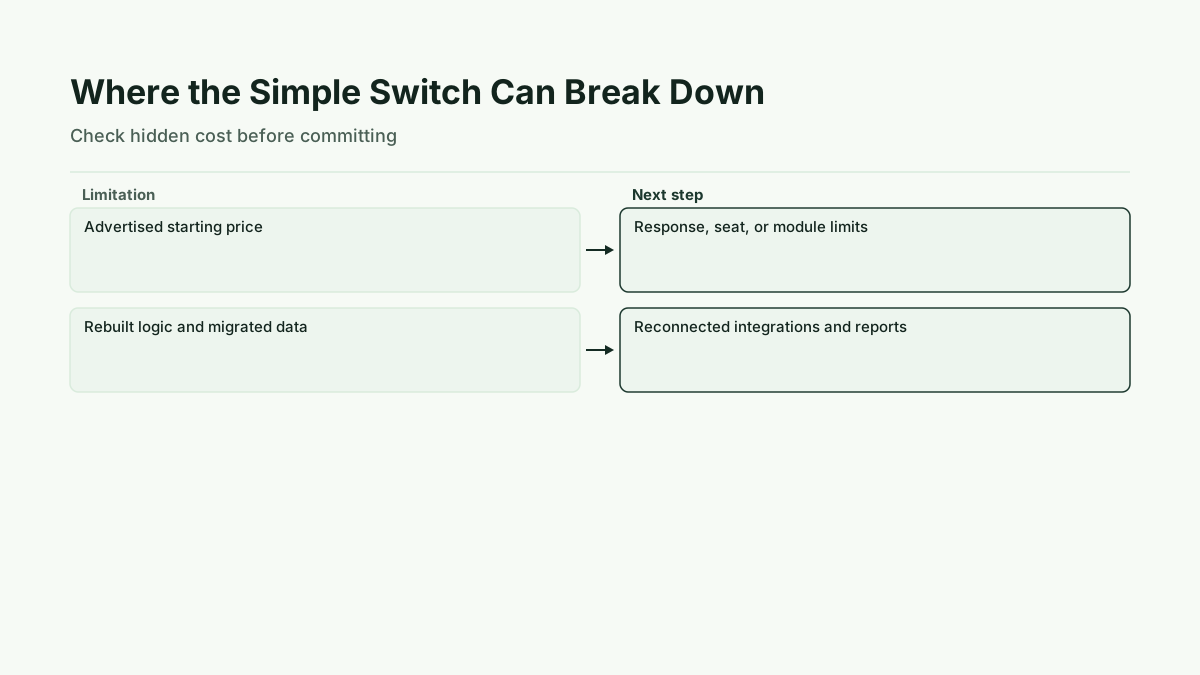
A listed subscription price is only one part of the economic comparison. Total switching cost can include migration, manual export and reconciliation work, response or seat overages, add-on analytics, support tiers, and integrations. The [tiered structure includes notable jumps between plans] is a reminder to inspect the plan boundary that matches the team’s real usage, rather than relying on an entry-level figure.
Migration deserves its own check. Existing surveys, logic, response data, reports, and integrations may need to be rebuilt or reconnected. If the replacement changes the format of exported data, someone may have to reconcile records manually. If analysis is available only through an add-on, that cost belongs in the comparison. If support expectations require a higher tier, that belongs there too.
A useful comparison has two views. The first is the visible subscription commitment. The second is the operational effort required to launch, analyze, integrate, and maintain the workflow. This is why [Alchemer pricing and reviews — TrustRadius] is useful as a reference for examining plan and operational considerations. Do not treat a lower subscription price as proof of a lower total cost.
When Kinetic Pricing Is the Better Category Choice
The boundary is simple: general survey collection answers whether a team can ask and receive responses; pricing research asks how evidence should inform a commercial decision.
Van Westendorp and Gabor-Granger are specialist pricing-research methods relevant when the underlying question is what to charge. Van Westendorp helps examine a price range through price-perception questions. Gabor-Granger tests purchase intent at specified price points. These are not interchangeable evidence types, and neither should be described as observed purchasing behavior merely because respondents state what they might do.
A pricing study may also involve feature value or package construction. Kinetic Pricing’s Feature value ranker and Package and price builder address those research jobs, while its Price range finder and Price point tester address range and price-point questions. Choose this category when the output must support a decision about price, packaging, or willingness to pay, not merely when the questionnaire happens to contain a price question.
Keep the evidence labels separate. Stated purchase intent is what respondents say they may do. Modeled or simulated revenue is a scenario calculated from assumptions. Observed behavior is what customers actually do in transactional or behavioral data. A survey can inform a pricing decision, but it does not turn stated intent into observed behavior by itself.
Method
This article uses a use-case-first comparison. It segments the decision into general survey collection, conversational forms, customer or employee listening, enterprise research, operational forms, free or basic collection, and pricing research. It then compares the categories across setup, respondent experience, analysis methods, panel access, integrations, governance, support, price transparency, and switching effort.
For general-purpose tools, the process requires a three-task trial: build and send a real survey, export responses into a one-page report, and connect the output to the team’s existing CRM, spreadsheet, or warehouse workflow. For pricing decisions, the process asks whether specialist methods are required rather than assuming a general survey builder is sufficient. The economic lens includes subscription cost and the work created by limits, migration, add-ons, support, and integration.
Interpretation
Select by the decision the team needs to make. A general-purpose alternative may be the better fit for forms, continuous listening, or an operational workflow. An enterprise research platform may fit a broad research program. A specialist pricing-research product is the relevant category when the decision is price, packaging, feature value, or willingness to pay.
The strongest comparison weighs completion experience, analytical rigor, integrations, governance, support, and pricing-decision fit together. A feature list can describe what a tool contains, but the three-task trial shows what the team must do to turn responses into a usable result.
Limits
Vendor starting prices, plan limits, support levels, integrations, and migration timelines can change. They may depend on seats, responses, modules, geography, or contract terms. The cost framework here is not an observed savings result from a named customer. It is a way to identify costs that a subscription-only comparison can miss.
Survey responses express stated intent. They should not be presented as observed purchasing behavior. Modeled revenue scenarios also depend on assumptions and should be validated against behavioral or transactional data where available. Treat a pricing study as decision evidence, not as a guarantee of commercial outcome.
Next step
Shortlist one tool for the primary job and run the three-task trial with a real workflow. If the decision is what to charge, validate the price or package with a focused pricing study before changing the offer. Teams that want a guided starting point can use the [30-day free trial of the Pro tier].
Additional context on these methods is available from one-time pricing study, what a price change could be worth and Market research pricing surveys — Tulane course material.
Run this method with your users
Start 30-day free trial to run every method with your users, or Buy one study when one decision needs evidence now.
Sources
G2, QuestionPro Pricing
Guideflow, Survey Software Tools
TrustRadius, Alchemer Pricing and Reviews
Tulane course material, Market Research Pricing Surveys: Van Westendorp and Gabor-Granger Techniques
Kinetic Pricing, Kinetic Pricing