
Price your SaaS through seven decisions: choose the customer, define the paid outcome, select a value metric, calculate an economic floor, establish a credible range, test candidate prices, and measure buyer behavior after launch.
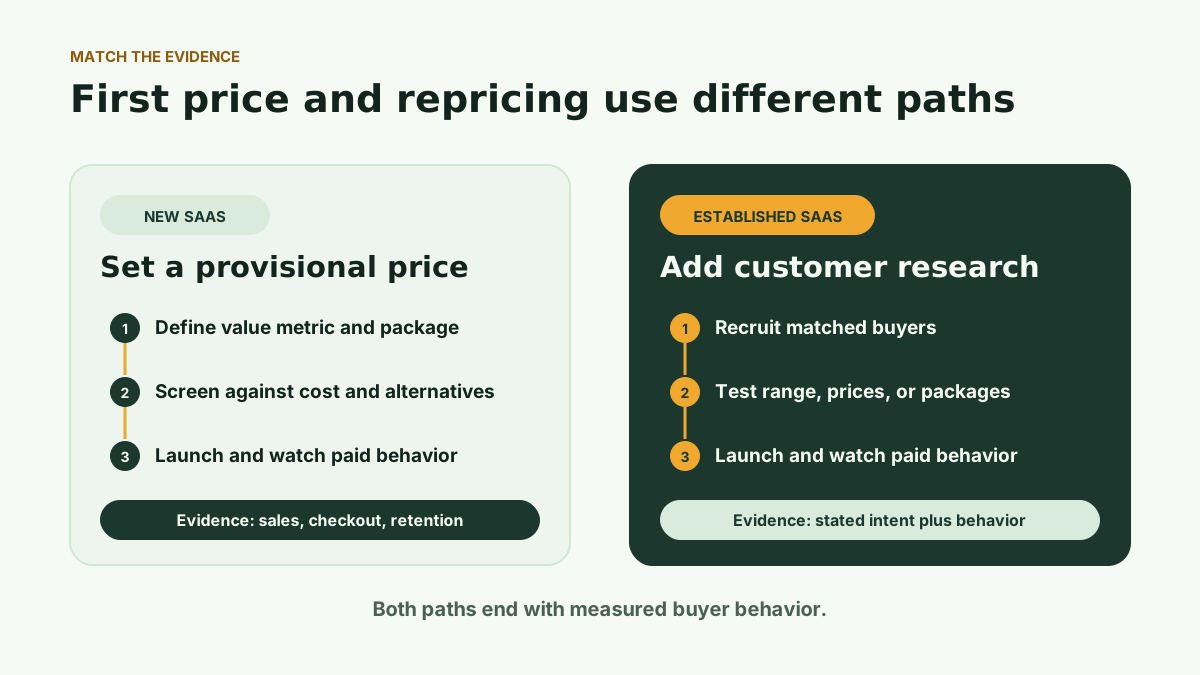
A new SaaS with no customers needs a provisional price that supports learning. An established SaaS can use customers or qualified prospects to test the range, price points, and packages. Both paths require one clear offer, because a price has no meaning without the billing unit and what the buyer receives.
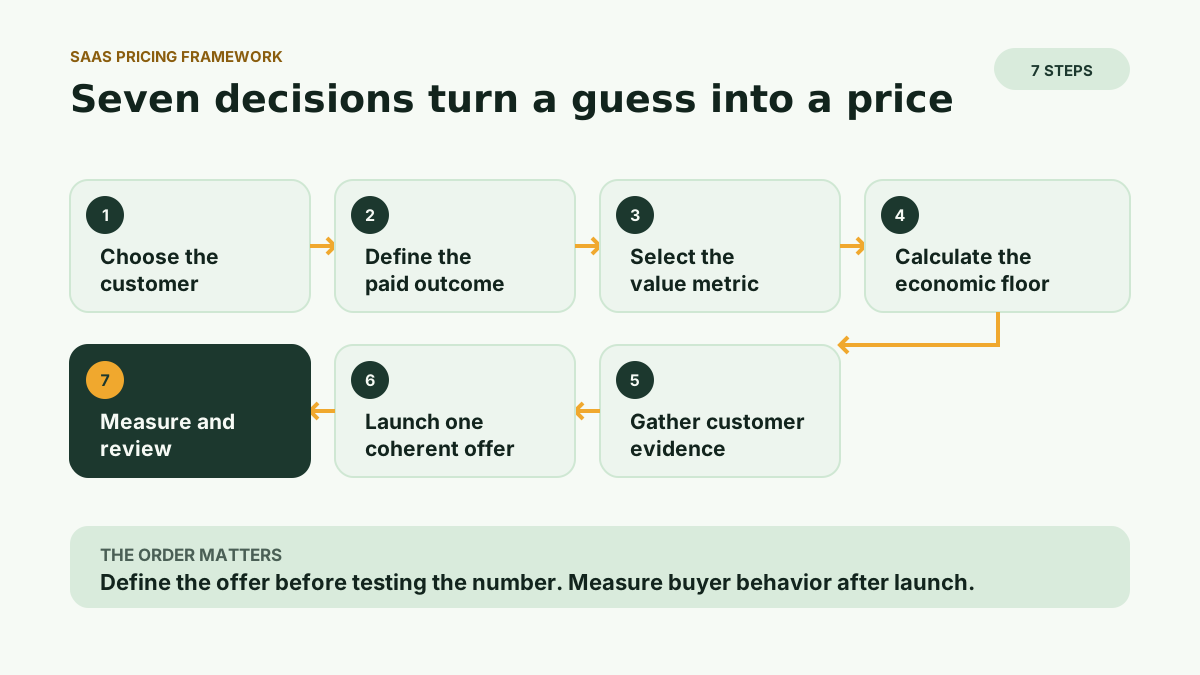
1. Choose the customer and the decision
Start with one customer segment and one decision. A solo founder, a ten-person operations team, and an enterprise buyer can value the same product through different budgets, risks, and approval processes. One blended price often hides those differences.
Write the decision in a sentence:
We will use this work to decide ______.
“Choose the launch price for the team plan” gives you a usable finish line. “Improve pricing” leaves the package, audience, and action open.
Decide whether you need to set a first price, change an existing price, choose a billing metric, or redesign tiers. Each question calls for different evidence. A settled package with three candidate prices needs a price-point test. A package with open features, limits, and prices needs a trade-off study.
2. Define the paid outcome and value metric
The paid outcome explains why the customer has a budget. Name the result in the customer’s terms: hours removed from a workflow, transactions processed, seats coordinated, incidents resolved, or revenue collected.
The value metric determines what the customer pays for as use grows. Stripe’s guide to SaaS pricing and packaging recommends a metric that tracks customer value, remains easy to understand, resists gaming, and fits the way buyers budget.
Common value metrics include:
- Per seat when more active users create more value.
- Per unit of usage when consumption tracks the work performed.
- Tiered flat rate when distinct segments need different capabilities.
- Base plus usage when every account receives platform value and heavier use creates additional value.
State the billing period, currency, included usage, support, and overage behavior beside the metric. “$99” could mean per month, per year, per user, or per account. Customers can judge the price after they understand that unit.
3. Calculate the economic floor
Your costs reject prices that cannot support the service. Include the variable costs that rise as you add or serve an account: infrastructure, third-party usage, payment costs, onboarding labor, and support time.
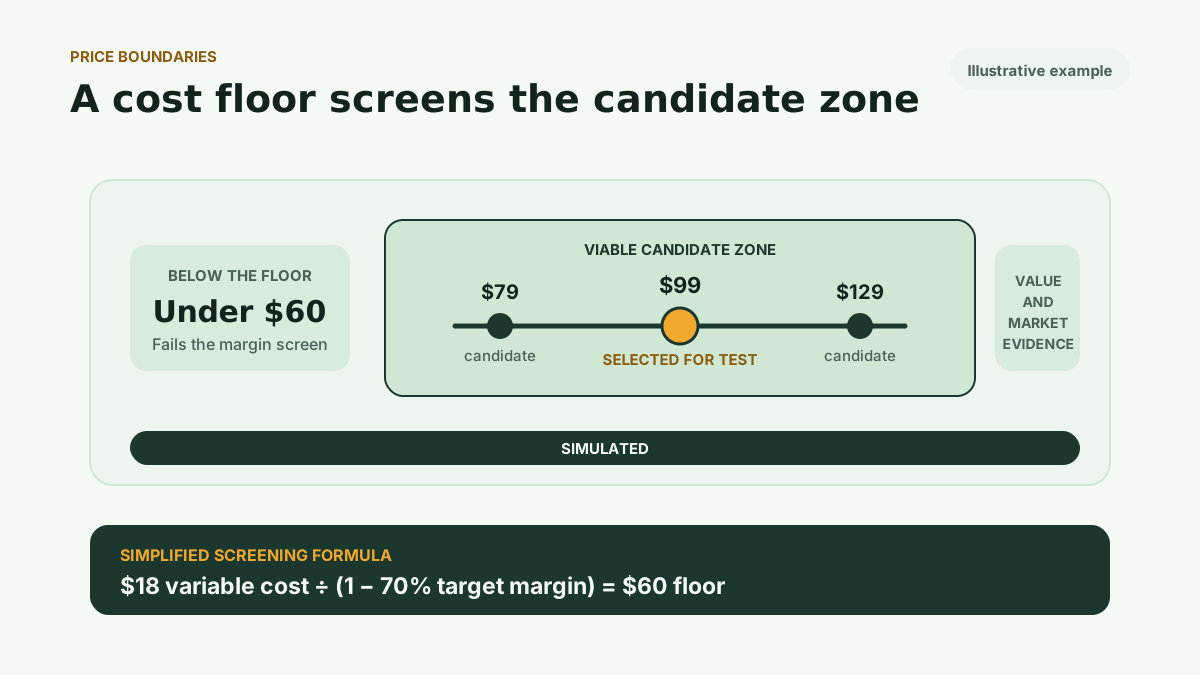
A simplified screening formula is:
Price floor = variable cost per account ÷ (1 − target gross margin)
In an illustrative example, a SaaS product with $18 in monthly variable delivery cost and a 70% target gross margin has a pre-fee screening floor of $60:
$18 ÷ (1 − 0.70) = $60
That calculation does not set the recommended price. It flags options that fail the stated margin target before fixed operating costs, customer acquisition, taxes, and other business constraints. Stripe’s overview of SaaS pricing models also separates cost analysis from customer value, market research, pricing structure, and later adjustment.
4. Set a provisional price or research a customer range
A pre-revenue SaaS may lack enough informed buyers for a formal customer study. Use customer interviews, the price and cost of current alternatives, your economic floor, and real checkout conversations to set a provisional launch price. Record the assumptions so paid conversion and objections can change them.
An established SaaS can ask people who understand the product and buying decision. Van Westendorp pricing research uses four price-perception questions to estimate an acceptable range. The result gives you boundaries for the next test. Its “optimal price point” balances two perception curves; it does not calculate the price that maximizes revenue or profit.
Recruit current customers or qualified prospects who match the segment from step one. General startup audiences can produce numbers while lacking the context to judge your offer.
5. Test the decision you will make
Choose the pricing method from the open decision:
- Price range: Van Westendorp estimates the lower and upper boundaries customers consider acceptable.
- Specific prices: Gabor-Granger measures stated purchase intent at tested prices and produces demand and modeled-revenue curves.
- Feature priority: MaxDiff ranks the relative priority of features, benefits, or messages.
- Packages and tiers: Choice-based conjoint estimates how customers trade off price, limits, and features across complete offers.
Show every respondent the same customer context, package, billing period, and currency. Change the variable that carries the decision. A price-point study becomes difficult to interpret when each respondent imagines a different package.
Survey answers measure stated intent inside a research exercise. Use them to narrow uncertainty and select a launch decision. Purchases, renewals, upgrades, and cancellations provide observed behavior after the price reaches the market.
6. Launch one coherent offer
Record the launch as a complete pricing decision:
- Customer segment and buyer
- Package and value metric
- Price, billing period, and currency
- Included usage, limits, and support
- Start date and affected customer cohort
- Outcome measures and review date
For an existing customer base, decide how the change applies to current accounts. Options include keeping existing terms for a defined period, offering an opt-in migration, or applying the new model to new customers first. Stripe’s usage-based pricing migration guide recommends sequencing migrations and giving customers spend visibility when usage can change the bill.
Keep the pricing page consistent with checkout and the product. A plan card that says “from $99” while checkout adds an unexplained unit or limit creates a different offer from the one you tested.
7. Measure buyer behavior and review the decision
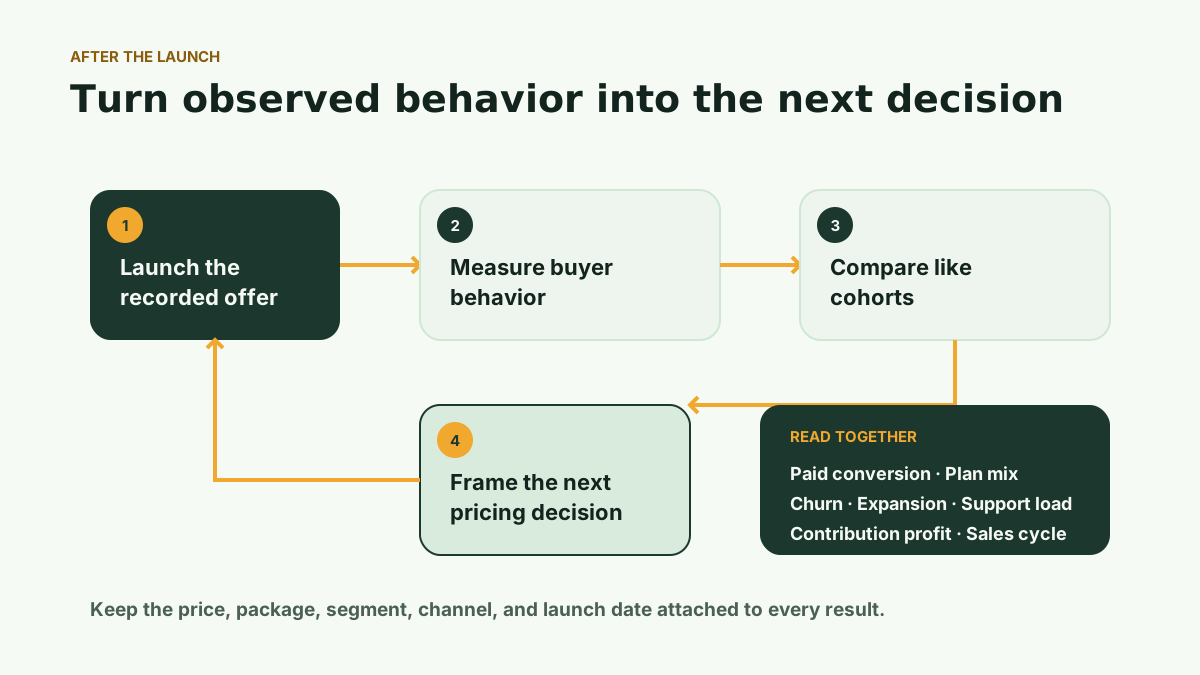
Choose a small set of measures before launch. Paid conversion, plan mix, expansion, churn, support load, and sales-cycle length can reveal different pricing effects. Compare cohorts that saw the same offer and came through comparable channels.
A lower conversion rate can still support more contribution profit when the higher price offsets lost volume. A higher entry conversion rate can create weak economics when support costs or churn rise. Read price, volume, cost, and retention together.
Set a review date and keep the original decision record. The next pricing change should begin with the gap between the expected and observed outcome, rather than a fresh guess.
A defensible answer to “how much should I charge?”
Use the narrowest answer your current evidence supports:
- No customers yet: Set a provisional price above the economic floor, grounded in the paid outcome and current alternatives. Test it through real sales or checkout behavior.
- Customers, one open price: Find the acceptable range, then compare a small set of candidate prices.
- Several customer segments: Run a distinct study for each segment or package when their needs and budgets differ.
- Open tiers and features: Test complete packages with conjoint rather than pricing each feature in isolation.
The first useful price is one your business can support, your target buyer can understand, and your team can test. The next price should incorporate customer evidence and observed behavior.
Avoid five SaaS pricing mistakes
Copying the cheapest competitor
Competitor prices describe another company’s product, segment, cost structure, and positioning. Use them as market context for a provisional price.
Choosing tiers before choosing buyers
Each tier needs a customer and a reason to exist. Feature piles with no segment logic make comparison harder and weaken the upgrade path.
Asking one preferred-price question
“What would you pay?” produces numbers with no shared role. Use a method that defines how each answer enters the range, curve, ranking, or simulation.
Treating modeled revenue as observed revenue
Gabor-Granger multiplies tested prices by stated purchase intent. Call the result modeled revenue until real buyers produce transactions.
Changing the price without recording the package
A price test covers the offer the buyer saw. Record the package, limits, metric, segment, and channel so you can interpret the outcome later.
Use Kinetic Pricing for customer-backed pricing decisions
Kinetic Pricing supports established businesses that have customers or qualified prospects they can survey. Advanced Van Westendorp finds an acceptable range, Gabor-Granger compares candidate prices, MaxDiff ranks feature priorities, and CBC Conjoint tests packages. Kinetic calculates the results with deterministic engines and code-checks the written narrative against those results.
Choose the pricing research method that matches your decision.