
Adaptive conjoint is strongest when the decision involves a complex, multi-attribute choice and you need individual-level insight, must-have detection, or unacceptable-feature flags. Standard CBC, or a focused pricing method, is usually better when precise price sensitivity, shorter interviews, large-sample efficiency, or cleaner revenue modeling is the primary need. The choice is not about which method is universally superior. It is about matching the design to the decision.
What ACA and ACBC Actually Adapt
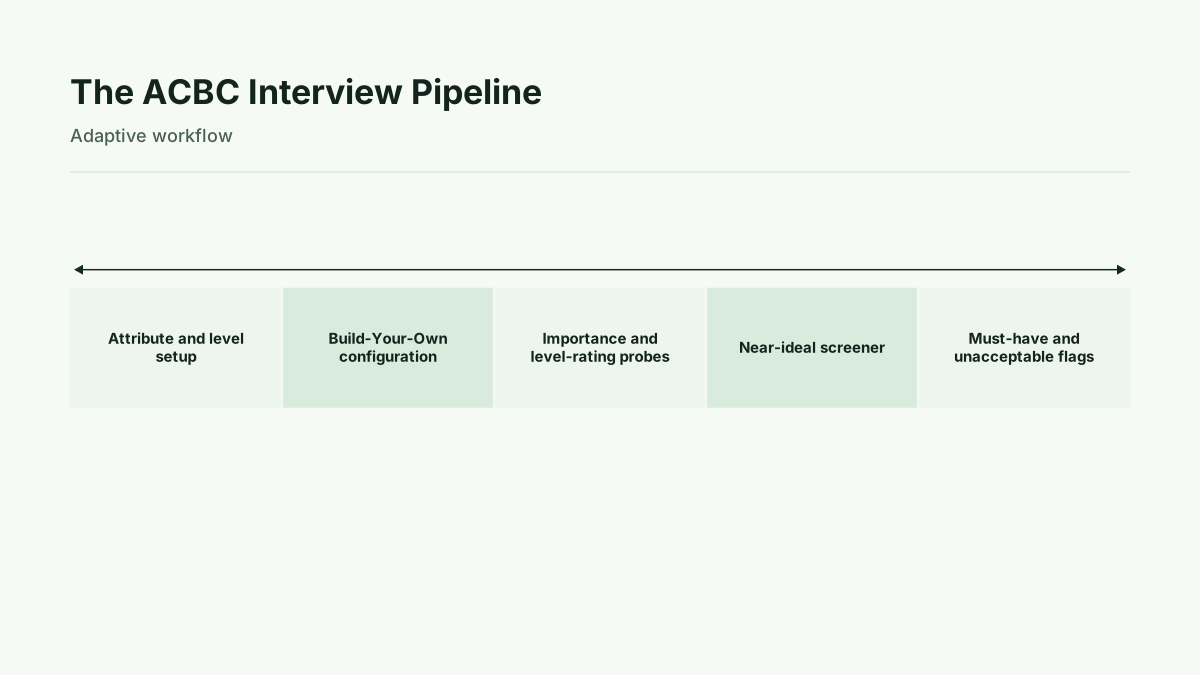
Adaptive Choice-Based Conjoint, commonly called ACBC, personalizes the sequence of tasks for each respondent. A typical flow begins with a Build-Your-Own, or BYO, configuration. The respondent assembles or identifies a preferred concept, then evaluates possible alternatives. A screener looks for concepts that may be acceptable, must-have features, or unacceptable combinations. The study then uses those responses to create an adaptive choice tournament, where later tasks reflect the respondent’s earlier answers. This structure is described in the [PMC review of ACBC's patient-centered design].
That adaptation matters when the attribute space is difficult to represent with a fixed set of choice tasks. A respondent may care about one combination of features but reject another combination even when the alternatives appear attractive on average. ACBC is designed to expose more of that respondent-specific structure than a flat, identical sequence for everyone.
The tradeoff is burden. ACBC interviews commonly require approximately 15 to 25 minutes per respondent in the supplied field reports and source material, including [field reports on survey engagement]. That range is context-dependent, not a universal duration rule. The more complex the adaptive sequence, the more carefully the researcher must test comprehension, timing, and drop-off.
How an ACBC Study Works From Setup to Output
Method: Begin by defining the decision rather than selecting the software or questionnaire format. Specify whether the study must identify package deal-breakers, estimate price trade-offs, rank feature value, or model preference across competing concepts. Then define attributes and levels, build the BYO task, configure the screener, set the tournament logic, and reserve holdout tasks for validation.
A practical ACBC instrument may include approximately 6 to 10 attributes, 8 to 12 screener concepts, and 4 to 6 tournament rounds, subject to pretesting and study context. Those are design ranges, not mandatory quotas. Attribute wording, level clarity, and the number of plausible combinations should determine the final instrument.
The operational sequence is:
- Define attributes and levels that describe realistic alternatives.
- Ask respondents to build or identify a preferred configuration.
- Use importance and level-rating probes to understand initial reactions.
- Screen concepts for possible, unacceptable, or must-have elements.
- Generate an adaptive choice tournament from the earlier responses.
- Include holdout tasks that were not used to construct the adaptive path.
- Estimate utilities and review model diagnostics before making a decision.
The holdout stage is important because an adaptive design can appear persuasive simply because it follows the respondent’s earlier answers closely. Holdout performance provides a separate check on how well the resulting model predicts choices within the study.
ACA, ACBC, and CBC Compared by Research Goal
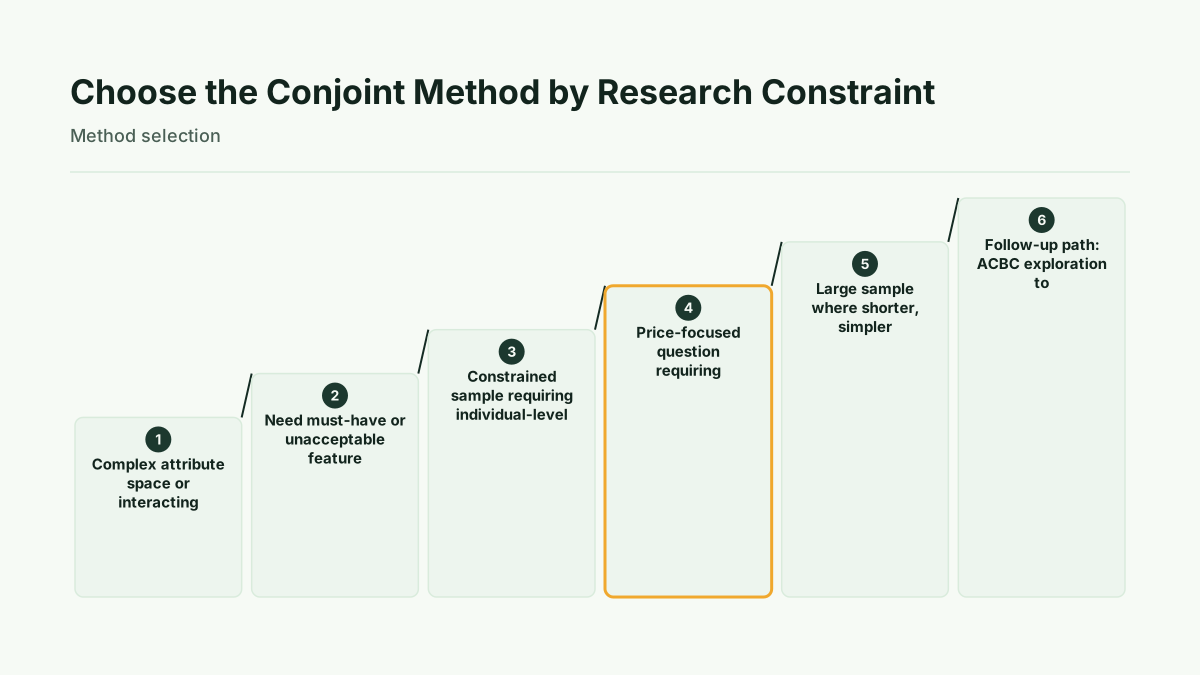
ACBC is generally more suitable than standard CBC when the attribute space is complex, the sample is constrained, or the research must identify must-have and unacceptable features. These conditions make respondent-specific information especially valuable. The conclusion is supported by the [comparative guidance from Quali-Fi] and the PMC review.
Standard CBC is generally better suited to price-focused estimation and large-sample studies because it offers a simpler, shorter design and cleaner price trade-offs. A fixed CBC structure can make price comparisons easier to interpret when the central question is how preference changes across price levels rather than which features are non-negotiable.
The methods therefore answer different versions of the same commercial question:
- Choose ACBC when the product has many interacting attributes, package rules, or likely deal-breakers.
- Choose CBC when the primary output is a comparable estimate of price trade-offs across a broader sample.
- Choose a focused pricing method when the main uncertainty is a price range or a set of price points rather than a full product configuration.
- Consider a staged design when exploratory package learning and cleaner price estimation are both required.
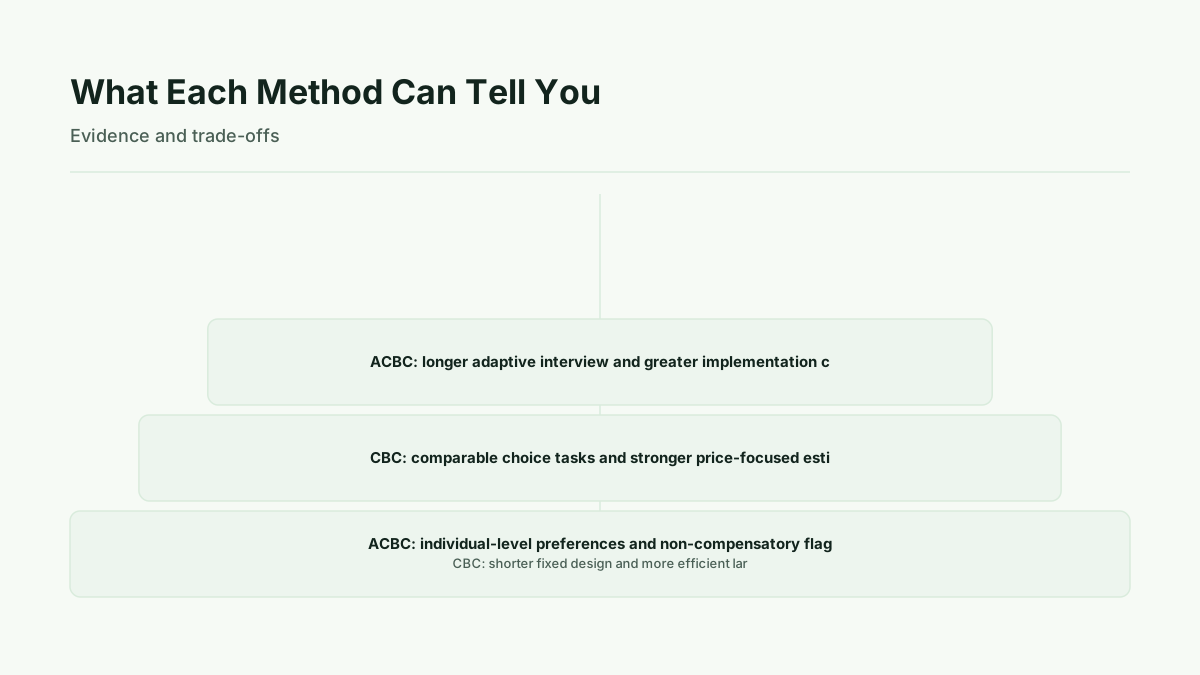
Interpretation: ACBC can improve individual-level information and expose non-compensatory rules. It does not automatically create better price sensitivity, shorter fieldwork, or evidence of observed purchase behavior.
When Adaptive Conjoint Fits SaaS Packaging and Other Complex Choices
Adaptive conjoint is a reasonable candidate for complex SaaS packaging when a product combines several dimensions, such as capability bundles, service levels, limits, support, and price. The research question should be whether customers prefer coherent package configurations and which elements make an offer unacceptable. This is different from asking only whether a monthly price feels high or low.
The same reasoning applies to niche B2B products, healthcare trade-offs, and other choices with many interacting attributes. If the sample is difficult to recruit, individual-level information may be more useful than a design optimized only for aggregate estimates. If the product decision depends on identifying a feature that customers will not give up, must-have and unacceptable flags may be more actionable than a single overall preference score.
For teams making a [SaaS package comparison work] decision, the key test is whether the package architecture is itself uncertain. If the package structure is already clear and price is the main open question, a focused [price sensitivity analysis] may be more direct.
Designing the Study Without Overloading Respondents
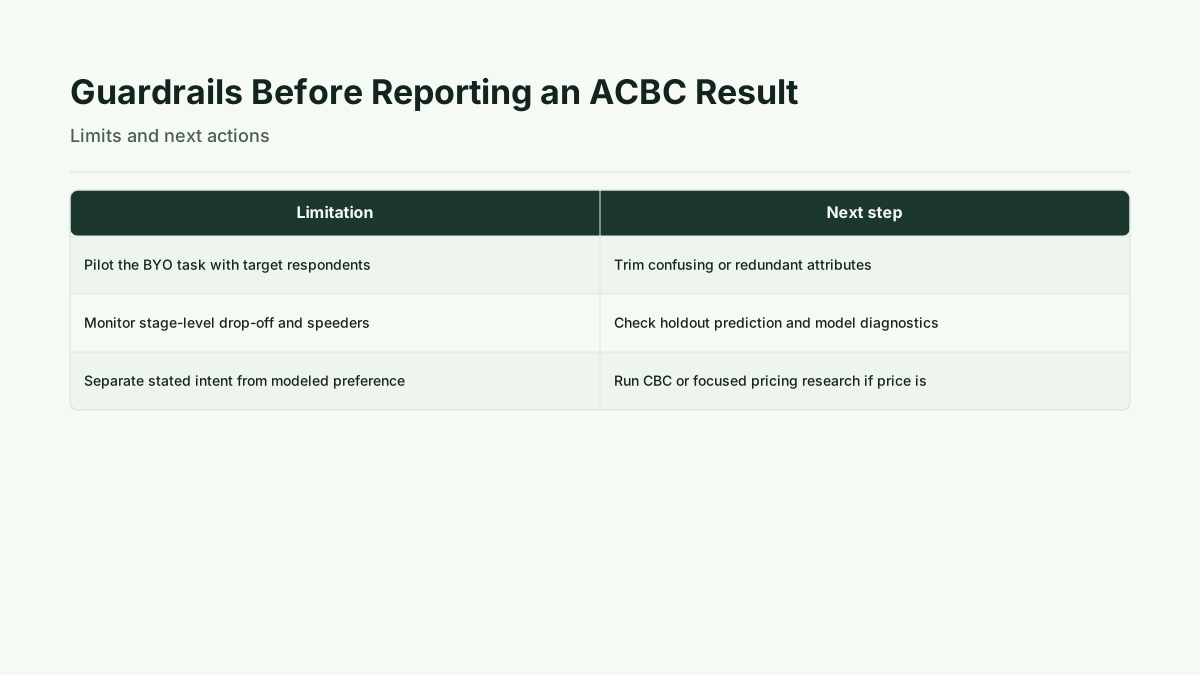
Design quality starts with attributes and levels that respondents can understand and evaluate. Redundant attributes create unnecessary cognitive work, while vague levels make an adaptive result difficult to interpret. Pretesting should examine whether target respondents understand the BYO task, distinguish the levels, and can complete the sequence without rushing.
Plan sample recruitment around the intended output. A constrained sample may support the case for ACBC when individual-level insight is central, but the evidence does not establish a universal sample-size rule. Likewise, the supplied evidence does not establish a universal interview-duration threshold. Use pilot results, comprehension checks, stage-level completion, and response speed to decide whether the instrument is feasible.
Implementation testing matters as much as questionnaire wording. ACBC has costs that include adaptive concept generation, concurrency and timeout testing, more complex exports, and higher fielding burden than a flat CBC design. These issues can affect data quality if they are discovered only after launch. A pilot should stress the complete adaptive path, not just the first screen.
How to Interpret ACBC Results Without Overclaiming
ACBC can produce individual-level partworths, importance scores, must-have or unacceptable flags, and modeled share-of-preference estimates. Each output answers a different question. Partworths describe modeled utility for attribute levels. Importance scores summarize the role of attributes within the model. Flags identify stated or modeled constraints in the adaptive design. Share of preference estimates what the model assigns across specified alternatives.
Do not treat these outputs as interchangeable with behavior. A stated BYO preference is a response to a configuration task. Modeled share of preference is a calculation based on the estimated model and selected assumptions. Downstream revenue calculations add further assumptions about volume, mix, conversion, or other commercial inputs. Observed purchase behavior is a different type of evidence. The [PMC review of ACBC's patient-centered design] and [comparative guidance from Quali-Fi] support keeping these evidence types separate.
A responsible readout should show the task that generated each result, the assumptions used for modeling, and the holdout diagnostics. It should avoid presenting modeled revenue as observed revenue or describing stated intent as a purchase outcome.
Where ACBC Falls Short
Limits: ACBC takes longer to field than a flat CBC design in the supplied comparison context, and its adaptive logic increases implementation complexity. Its richer structure can also be a disadvantage when the research requires clean price-tail estimation or a short instrument for a large sample. The central risk is not only respondent fatigue. Poor screener design can remove the benefit of adaptation by steering respondents toward concepts that do not represent the real decision.
The evidence supports directional guidance, not a guaranteed accuracy advantage. It does not show that ACBC always outperforms CBC, that every respondent will complete an adaptive interview reliably, or that modeled preference will translate into observed purchases. These boundaries should remain visible in the final recommendation.
A Practical Method-Selection and Follow-Up Plan
Use this decision sequence:
- Define the primary decision: package architecture, deal-breakers, price sensitivity, or modeled commercial scenarios.
- Choose ACBC when complex attributes, constrained recruitment, or must-have detection dominate.
- Choose CBC when price-focused estimation, shorter interviews, or large-sample efficiency dominates.
- Pilot the selected instrument and inspect comprehension, timing, speeders, and stage-level drop-off.
- Validate ACBC with holdout diagnostics before interpreting modeled preference.
- If price remains the key commercial uncertainty, follow ACBC with CBC or focused pricing research.
Next step: Write the decision rule into the research brief before drafting tasks. If the brief requires both package discovery and cleaner price estimates, use ACBC to explore attributes and deal-breakers, then use CBC or focused pricing research for the price question. Teams that want to review available research workflows can visit the [pricing page].
Additional context on these methods is available from MaxDiff, Pro plan, research library, Adaptive Choice-Based Conjoint Analysis: A New Patient-Centered Approach to the Assessment of Health Service Preferences - PMC and CBC vs ACBC Conjoint: When to Use Each | Quali-Fi.
Run this method with your users
Start 30-day free trial to run every method with your users, or Buy one study when one decision needs evidence now.
Sources
PMC, “Adaptive Choice-Based Conjoint Analysis: A New Patient-Centered Approach to the Assessment of Health Service Preferences.”
Quali-Fi, “CBC vs ACBC Conjoint: When to Use Each.”
Harvard Kennedy School, “Price Sensitivity in Health Care.”