
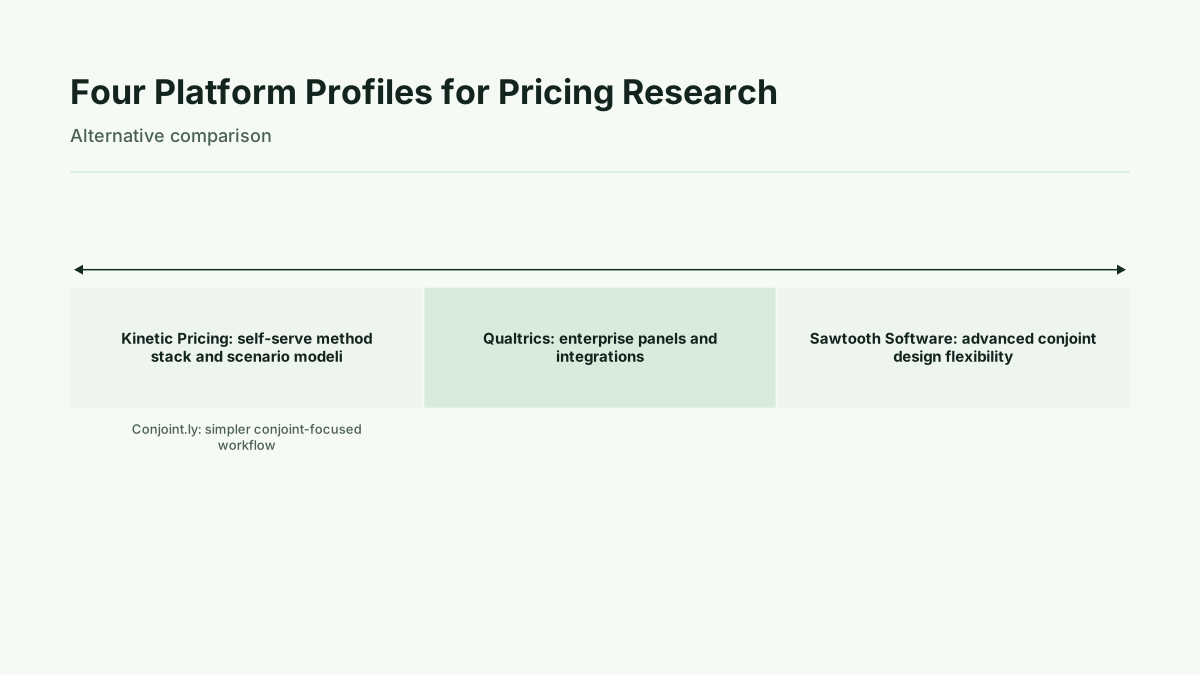
Choose Kinetic Pricing for self-serve pricing studies, Qualtrics when enterprise panel and integration requirements lead the decision, Sawtooth Software when advanced conjoint design control is essential, or Conjoint.ly when a simpler conjoint-focused workflow is the better fit. The right choice depends on the pricing decision you need to make, not simply on which survey interface resembles Survicate.
Start With the Pricing Decision, Not the Survey Tool
General feedback collection and pricing research answer different questions. A feedback survey may identify preferences or problems. A pricing study must connect the research design to a decision about a price range, a tested price point, feature value, package trade-offs, respondent access, or analysis complexity.
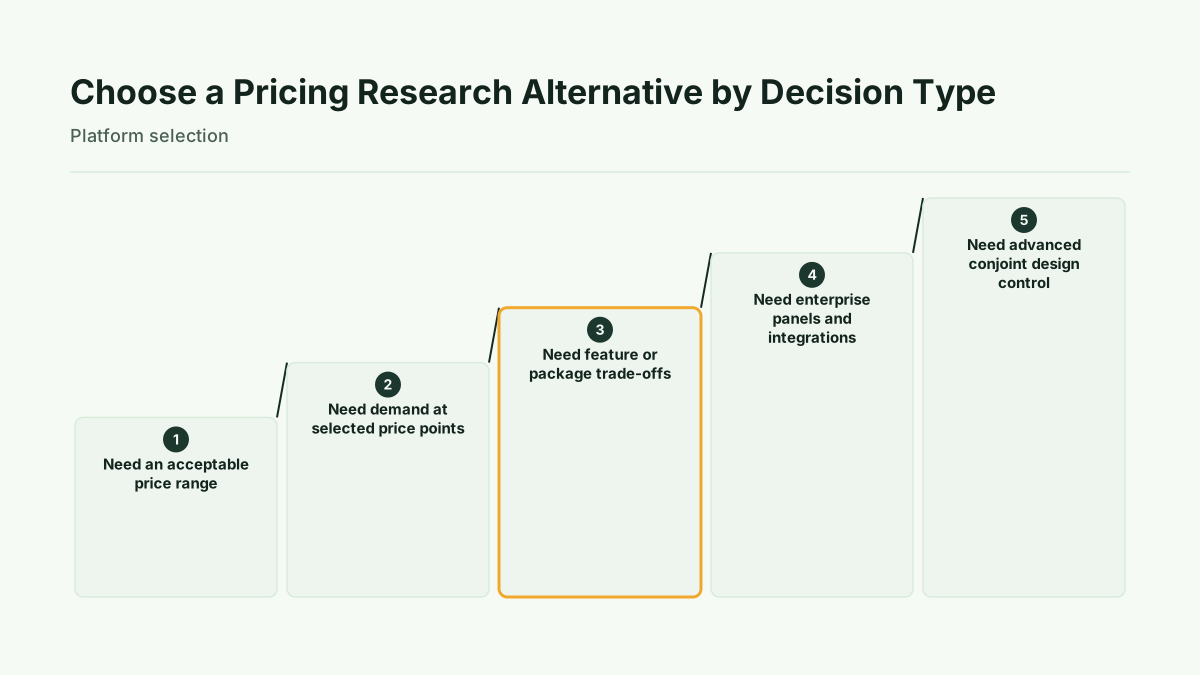
Start by naming the immediate decision:
- Price range: You need to understand which prices may be perceived as too low, acceptable, expensive, or too expensive.
- Price point: You need to test demand at selected prices after establishing an approximate range.
- Feature value: You need to rank features or understand their relative contribution to choice.
- Package design: You need to evaluate trade-offs among attributes, bundles, or prices.
- Enterprise research operation: You need panel access, integrations, exports, segmentation, or governance that may require a more involved workflow.
This framing prevents a common category error: choosing a general-purpose survey tool before defining the evidence the pricing decision requires. It also makes the alternatives easier to compare. A self-serve study, an enterprise program, and an advanced experimental design should not be judged by the same standard.
Compare the Four Pricing Research Alternatives
Kinetic Pricing is the self-serve option for teams that want a method stack centered on pricing decisions. Its listed methods include Price range finder, Price point tester, Feature value ranker, and Package and price builder. The corresponding product prices are $149.00, $199.00, $279.00, and $499.00 respectively. These are product facts, not evidence of a research outcome. The best fit is a team that wants to run pricing studies without making panel scale, integration breadth, or specialist design control the primary requirement.
Qualtrics is the enterprise-oriented choice in this comparison when panel and integration requirements dominate. It is a better candidate for organizations that need to evaluate respondent access, exports, integrations, segmentation, and operational governance as part of the platform decision. The trade-off is that enterprise requirements can introduce more operational complexity than a focused self-serve study.
Sawtooth Software is the advanced-design choice when conjoint flexibility and experimental-design control matter most. It suits teams prepared to take on greater design and analytical complexity in exchange for more control over how conjoint studies are structured.
Conjoint.ly is the simpler conjoint-focused option. It fits a team whose central need is conjoint work and whose workflow does not require the broader platform decision associated with enterprise panels, integrations, or extensive self-serve method coverage.
The comparison is therefore about fit, not a universal ranking. Ask which requirement is non-negotiable: self-serve pricing methods, enterprise operations, advanced conjoint control, or a simpler conjoint workflow.
Match Each Platform to the Research Method
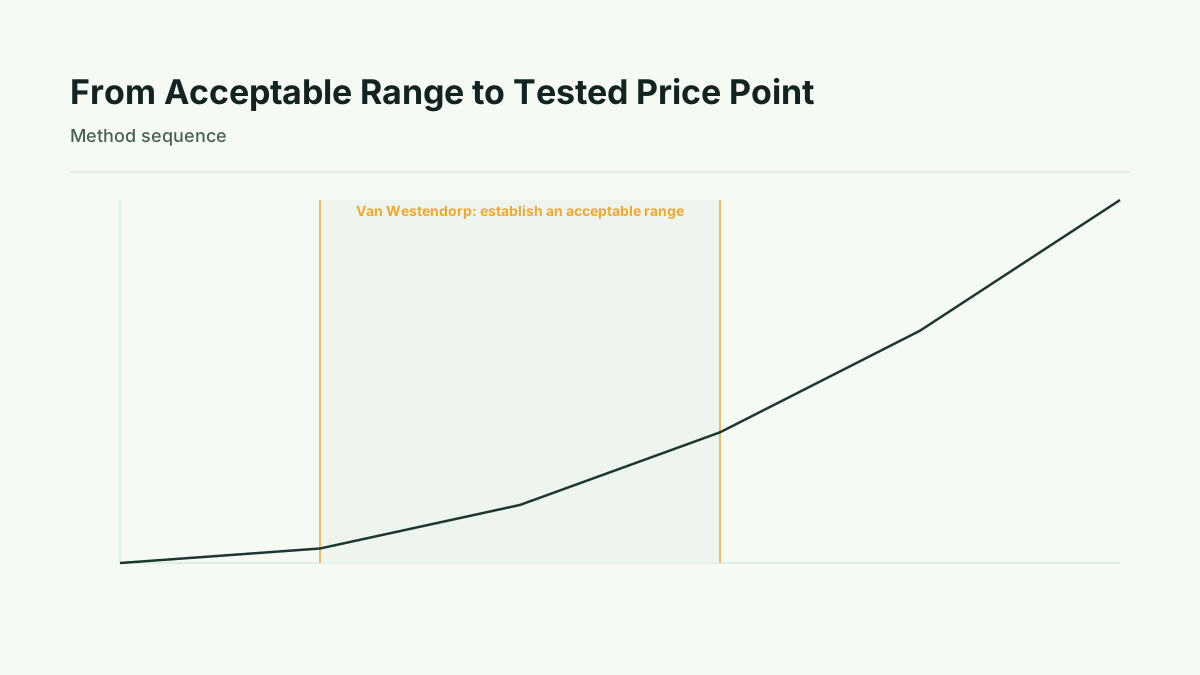
A method should follow the decision. Van Westendorp is suited to establishing an acceptable price range rather than selecting one definitive price point. RGM Academy and the Van Westendorp method describe the method in that range-finding context.
Gabor-Granger is useful for testing demand at specified price points after an approximate range is known. The Gabor-Granger method therefore fits the next question: how does stated demand change across the selected prices?
MaxDiff addresses feature valuation through ranking. In Kinetic Pricing, the Feature value ranker is listed at $279.00. That price is a product fact, while any resulting feature ranking would be study output and should not be treated as an observed market outcome without behavioral validation.
Conjoint measures trade-offs among attributes or packages and can produce part-worth utilities for pricing analysis. HBS Online provides the relevant attribute and trade-off context. Conjoint becomes more useful when the decision is not simply “Which price is acceptable?” but “Which combination of package elements and price is most attractive?”
A defensible sequence is often sequential rather than one-size-fits-all: establish a range with Van Westendorp, narrow the decision with Gabor-Granger, and add MaxDiff or conjoint when feature or package trade-offs materially affect willingness to pay. Triangulating these methods can support a more defensible pricing decision than relying on one method alone. The RGM Academy overview supports that triangulation principle.
Method: Define the decision first, choose the narrowest method that can answer it, and only add complexity when the product or package trade-offs require it. A range study, a point test, a feature ranking, and a conjoint experiment produce different kinds of evidence.
Evaluate Industry, Integration, and Panel Requirements
For a SaaS founder, the priority may be a focused study that moves from price-range discovery to price-point testing without requiring a large research operation. Kinetic Pricing is the direct fit in this comparison when self-serve execution is the priority.
For a consumer product team, respondent access and segmentation may matter as much as the method. The team should evaluate where respondents come from, how segments are defined, what exports are available, and whether the workflow supports the intended analysis. A method choice cannot compensate for a respondent source that does not represent the decision population.
For an enterprise B2B organization, panel requirements, integrations, data processing, exports, and operational ownership may outweigh interface simplicity. Qualtrics is the candidate to examine first when those enterprise requirements lead. If the central need is advanced conjoint design rather than enterprise operations, Sawtooth Software may be the more suitable direction. If the need is a simpler conjoint-focused workflow, Conjoint.ly may be the more proportionate choice.
These are fit judgments, not claims that one platform produces better results in every context. The research team should document its respondent ownership, recruitment approach, integration requirements, segmentation plan, and analyst expertise before selecting a platform.
Understand Privacy and Modeling Boundaries
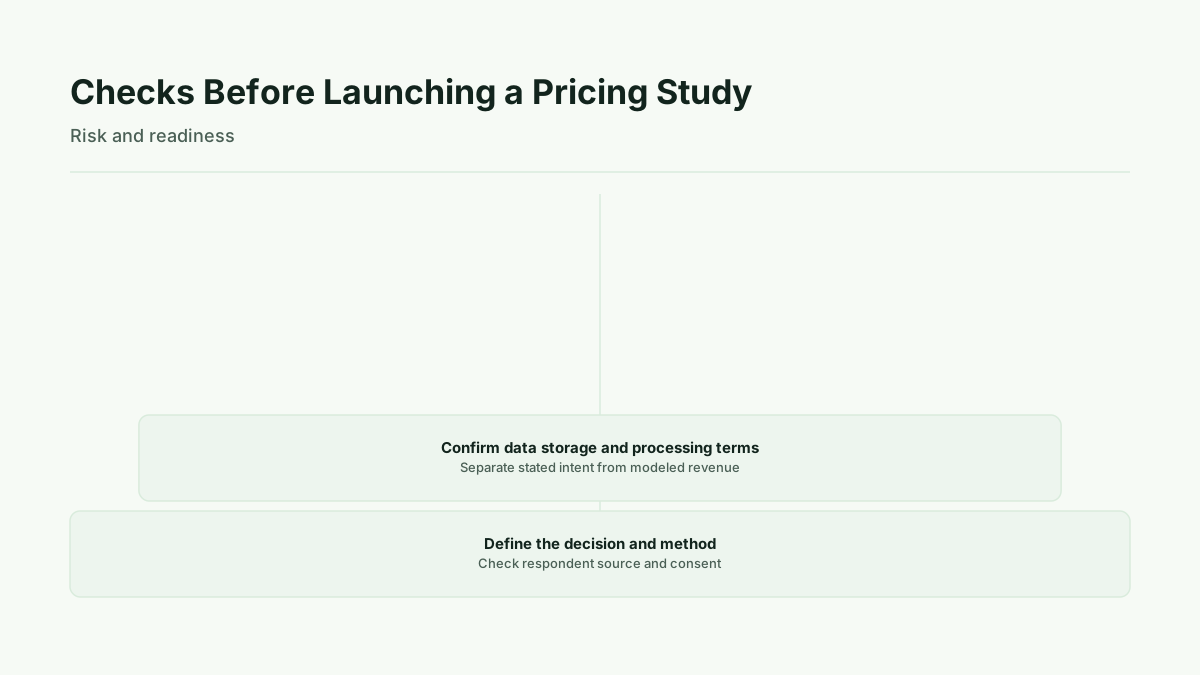
Privacy is part of study design, not a final checkbox. Before launch, clarify who recruits respondents, who owns the respondent relationship, where data is processed or stored, which parties can access exports, and which obligations apply in the relevant jurisdiction. The appropriate answer depends on the recruitment arrangement and jurisdiction, so the platform decision should include a review of applicable terms and internal requirements.
Keep three kinds of evidence separate. Stated purchase intent is what respondents say they would choose or buy under the question scenario. Modeled revenue is an output calculated from assumptions, responses, and selected scenarios. Observed behavior is what customers actually do in the market. A survey can inform a pricing decision without becoming proof of realized purchases.
Any deterministic revenue output should be labelled modeled, and any invented scenario should be labelled “Illustrative example” and “Simulated.” Do not present a modeled revenue curve as realized revenue. Sample size and segment coverage affect stability, while complex adaptive conjoint designs may require specialist expertise. These limitations apply regardless of the platform selected.
Interpretation: The most defensible workflow is sequential rather than universal. Use range discovery when the acceptable zone is unknown, point testing when selected prices need comparison, and conjoint when package or attribute trade-offs materially shape the decision. Platform choice should follow study complexity, panel needs, integrations, and analyst expertise.
Limits: Survey responses represent stated intent, not observed purchases. Scenario revenue is modeled rather than realized. Sample and segment coverage affect stability. Privacy obligations depend on recruitment and jurisdiction. Complex conjoint designs can require specialist expertise. No platform selection removes those boundaries.
A Practical Selection Path for Pricing Research
Use this decision rule:
- Define whether the immediate question concerns a price range, a price point, feature value, or package design.
- Select the corresponding method. Use Van Westendorp for an acceptable range, Gabor-Granger for selected price points, MaxDiff for feature ranking, and conjoint for package or attribute trade-offs.
- Choose the platform that matches the study’s respondent source, integrations, exports, segmentation, modeling needs, and design complexity.
- Separate stated intent from modeled revenue, and document the limits before using results in a pricing decision.
Next step: Write the immediate pricing decision in one sentence, select the least complex method that can answer it, then compare Kinetic Pricing, Qualtrics, Sawtooth Software, and Conjoint.ly against the operational requirements of that study. If several methods are needed, plan the sequence rather than forcing every question into one survey design.
Additional context on these methods is available from free pricing research and benchmark data, A guide to the Van Westendorp Price Sensitivity Meter (PSM)? - LogRocket Blog, What is conjoint analysis? | HBS Online, Gabor-Granger Pricing Method: Complete Guide | Quali-Fi and Van Westendorp PSM: The 4-Point Price Sensitivity Meter | RGM Academy.
Run this method with your users
Start 30-day free trial to run every method with your users, or Buy one study when one decision needs evidence now.
Sources
- RGM Academy, Van Westendorp PSM: The 4-Point Price Sensitivity Meter
- LogRocket Blog, A guide to the Van Westendorp Price Sensitivity Meter (PSM)?
- Quali-Fi, Gabor-Granger Pricing Method: Complete Guide
- HBS Online, What is conjoint analysis?